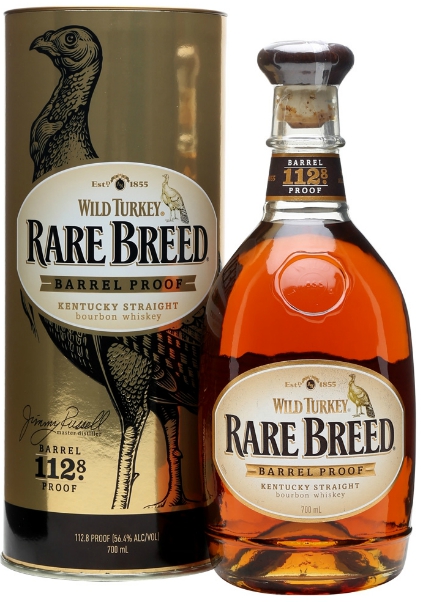
Wild Turkey “Rare Breed – Barrel Proof” (56.4%, OB, 2016, 112816A12029M)

I came across this no-batch Rare Breed in a hypermarket whilst on holiday in Poland. It sat there (two of them to be precise) on a sad little shelf made of metal wire, between some marked down totally anonymous cheap wines lit by cold light. So I just had to take these two golden orphans with me. These were also marked down considerably, so essentially a no brainer. I reviewed a Rare Breed before, one with batch number WT-03RB, and that was certainly not bad, since it scored 82 points, and I may have been a bit on the conservative side. I ended that review with the remark that Wild Turkey is axing the batch numbering and making it younger an lighter in the process. I read somewhere that Rare Breed was a blend of 12yo, 10yo and 8yo Whiskies, but more recent batches are said to be 12yo, 8yo and 6yo Whiskies, by word of WT themselves. Well, and finally here it is, one of those no-batch younger and lighter Rare Breeds.

WT-03RB was pretty good, and was almost there, (but not quite), so I’m hoping the next step will be forward in stead of backward. I might be getting ahead of myself assuming it probably got worse is also not very professional, now isn’t it? So I opened this bottle a while back, in a time when I actually was very much busy with Whisky from Scotland, so Bourbons were shifted towards the back burner, big time. After finishing a recent review, I parked myself on the couch, opened the doors of my stash, and my eye fell towards the bottom shelf, bar one, where the Bourbons are. Its just one of the bottom shelves, not “the bottom shelf” quality wise. I started with Evan Williams, decent, easy and reduced too much, so the next step was obviously to go ahead and move up with this no-batch, younger and lighter Rare Breed. Well this certainly hits the spot. I pressed repeat two times more before finishing off with Booker’s. And guess what, sometimes I like this Rare Breed better than Booker’s and almost all of the time I prefer it to the Evan Williams, which is most definitely not a dud in it’s own right. Where the previous Rare Breed had some soap, this one has none. This batch of Booker’s also has this very floral, soapy, floral perfume notes to it. It seems to me this “batchless” might be better than the WT-03RB. Lets find out for sure if its lighter and d-lighter or not.
Color: Light orange gold. (Much lighter than the WT-03RB batch)

Nose: Big on aroma, creamy and chewy. Cookie dough. Fresh spicy wood and gravy. Yes, this has a meaty note. Vanilla and sappy oak. It’s like you can discern several different ingredients in this. Toasted oak, grains and cereals and even the yeast. Next comes a more fruity note. Little forest strawberries and hints of red lemonade. This passes quickly and moves towards a more drying note. Warm desert wind, with lots of wood and showing the youngest Whiskey blended in. The more you smell it, the sharper and drier the wood note gets. Finally it smells like a wood shop altogether. Sawdust and all, turning into paper and cardboard over time. Also the yeasty bit stays around as well. The big creamy aroma, from the start, subsides quite a bit. Give it even more time, and after some sips, (the aroma I smell is also released from my mouth), the wood note itself starts to evolve into a more fragrant, perfumy note. A hint of honey even. Nice.

Taste: Hot, quite dry and woody. Not so creamy as expected, but the odd toffee and liquid caramel notes are there. Yes some vanilla and sweet corn notes as well. (Wild Turkey use 75% Corn in their mashbill, the rest is 13% rye and 12% malted barley). Sometimes a bit thin and definitely wood driven, sometimes I even pick up a licorice note in the woody bit. Still a good dose of corn and a little bit of rye. Only slightly bitter. Dry leaves. Wood seasoned by high temperatures. Nice thin layer of sweetness laughed away by the wood, but extra points to the sweetness for trying. If I remember correctly, somewhat simpler than the WT-03RB batch I tried earlier, much earlier. Hey almost 4 years ago, so give me a break! The sweetness keeps battling with the wood, and this makes it fun to drink. It just doesn’t know how to give up. Nope, even with 12yo Whiskey blended in, this still lacks a bit of complexity it should have had, but still, this is much better than many other Bourbon’s around. This is why this bottle is almost empty already. The finish is medium at best, hot and fun, but the aroma’s don’t have a lot of staying power.

This is a whisky made with a high corn mashbill, however it is also a wood driven Whiskey. It has quite a stiff backbone and enough alcohol to carry it well. Sometimes a bit simple, but nevertheless quite enjoyable.

Points: 84

P.S. rummaging around my stash I found a sample of the WT-03RB batch I reviewed 4 years ago! This older batch is definitely much darker in color, much softer in taste, but quite similar in complexity. The 2016 no-batch, easily overpowers it. Sharper and bolder, much more fresh sappy oak and more of the yeast notes as well. Seems much higher in alcohol too. WT-03RB even seems a bit less balanced with quite a lot of toasted and burned notes to it. Even though WT-03RB is older and darker, it isn’t better. I really thought I might be upping the original score of 82, but alas, after careful tasting, H2H, 82 is still the right score for that batch. Go figure.

Evan Williams 9yo 2000/2010 (43.3%, OB, Single Barrel #379)

Sometimes Master Quill tends to repeat himself, well, not really this time. Yes, In the fall of 2015, The Master did do a review of an Evan Williams Single Barrel bottling, and now here is yet another, but not a repetition, because luckily this “new” one is from a different vintage. The former review was this spicy 2003 vintage and this time we’ll have a go at a 2000 vintage. Is older better? I understand that the mash-bill for Evan Williams Single Barrel looks something like this: 78% corn, 12% barley and 10% rye. Lots of corn and not a lot of rye in this mash-bill. The “vintage” range already saw the light of day in 1986, so with this 2000 expression, Heaven Hill already had some 15 years of experience bottling this. So without further ado: take it away Evan, ehhh Master, ehhh Quill. Nevermind. Go, just take it away…

Color: Light orange brown.

Nose: Wood, lots of fresh cut oak. Perfumy. Sweetish and even more floral. Wood driven, but with lots going for it. Balanced and likeable. Greener notes come next, some hay and grass, oak and latex wall paint. More cuttings from the garden and after a while some more fruity notes appear. Slightly acidic and fresh, only adding to the balance. Hints of toffee and caramel. Excellent nose if you ask me. One moment fresh and lively and the next, deeper and more brooding. Definitely some Rye in here, but less so than expected, even though I didn’t expect a lot. After some more breathing, honey notes come forward. Smelling this after some sipping only enhance the honey notes that were almost absent from the start. Interesting.

Taste: On first entry, a bit thin to be honest. I prefer Bourbons at high strength, because especially Bourbons release their intricate aroma’s better at a higher proof. That said, this Single barrel smells very good and is definitely interesting (there is that word again), even when you like your Scotch Whiskies. Another sip. Well, this does the trick, beyond the low proof, some nice aroma’s emerge. Wood, latex paint again. Honey, hints of toasted oak and a tiny hint of leather. Definitely not as sweet as I would imagine, even though this Bourbon saw lots of corn. A slightly bitter note comes next, oak, tree sap, wax. The finish has less length than the nose and is also less complex. medium at best (and it has paper notes). Today the bitterness has some staying power which was less so on other days, so it depends on the taster (as always), time of day and the moment trying it. Aftertaste somewhat indistinct, so it definitely suffers from reduction to 43.3% ABV. Nope, in the taste department, this turns out to be much simpler than the nose promised.

For a nice evening with some Bourbons this is the starter. Well priced, and interesting, but I prefer other, (higher strength) Bourbons more. Compared to the earlier review, this 2000 example is softer (weaker is maybe a better word this time around) and less spicy, and also is lacking the licorice and cherry notes of the 2003. The 2003 is definitely a step up from the 2000. So yes, the date makes a difference. So choose your single cask vintage Evan Williams wisely!

Points: 81

Tamdhu 15yo 1991/2006 (60%, Adelphi, Bourbon Cask #1955, 257 bottles)

Well let’s continue with another oldie, shall we? Clear out some of the sample bottles to fill it up with something new. This is Tamdhu, and Tamdhu is not on Islay, nor will this Whisky be peated. I expect a lot of this Whisky. First of all it’s Tamdhu, which makes a lovely distillate. It’s bottled by Adelphi, a bottler so good, it almost seems as if they can pick any cask they like. This has 60% ABV and just look at the color. Yeah baby, bring it on!

Color: Orange gold.

Nose: Wood and sometimes a hint of an aromatic White wine. Very spicy. This must have been a very active (toasted) cask. Although you might think this cask previously held some sort of Sherry, I hardly doubt it. Creamy vanilla. American oak, all the way. No Sherry notes whatsoever and yet pretty sweet-smelling, although the dryness of the oak, soon takes over, to never let go. Ehhhm, is this all? Hints of fresh air, but it’s mostly all aroma’s that have to do with oak. It’s definitely not overoaked, mind you, but it seems to be rather mono-dimensional. I’m actually a bit disappointed now, since this is Tamdhu, from Adelphi, which has a reputation, and it’s 60% ABV. I love cask strength. Still, nothing happens for me. Sawdust and hot oak. It smells a bit like a carpenters workshop. This definitely could have done with some blueberry notes, now it smells a bit, dull…

Taste: Initially quite sweet, and again, everything you’d expect from an ex-Bourbon cask. Vanilla, powdered vanilla, creamy pudding, instant pudding powder. Milk chocolate (powder) and a totally different green feel to it, as well. My heart skips a beat right now, because, this is more or less it. Lots of oaky notes, and a strange sweetness. Not a lot more is coming to me to be honest. Earlier I already thought my nose was failing me, but tastewise I don’t “see” a lot of evolution in my glass. WYSIWYG.

Although Adelphi claim*, Tamdhu prefers ex- Bourbon casks, I guess the statement from the Adelphi website, reproduced below, is not entirely correct. What the good people at Adelphi probably meant was that Tamdhu might favour Sherry casks made from American oak, which is still a Sherry cask, and not an ex-Bourbon cask, which, yes, are also made from American oak. This particular example has no flaws, it’s nice, but it almost has no complexity, nor does it evolve a lot after pouring or whilst drinking. I’m pretty sure I will forget rather quickly, how this tasted like, and I hardly forget the taste of a Whisky. Go figure. (When reading this last sentence in November 2021, I indeed really forgot how this Tamdhu tasted like. I’m actually amazed a 15yo Tamdhu from Adelphi scored so relatively low).

Points: 83

* 15 Yr. Old Speyside, 1 of only 257 bottles from cask no. 1955

The make from Tamdhu has always impressed us for its consistency, but this cask is as good as any we have ever seen. The distillery favours American oak, ex-Bourbon casks, and this is no exception, only the whisky is such a deep amber that it might have come from a re-fill butt. The first nose is of soft sponge, filled with vanilla cream. After a short time a delectable perfume emerges (face cream or hair lacquer), and then a floral note: geraniums in a pot (there’s a mossy note as well). With the addition of water the provenance of the cask comes through loud and clear, but it retains the delightful floral/perfumed aroma, joined by a sherbert-like ‘sparkle’. A smooth mouthfeel and a flavour which remains sweet throughout, leaving an aftertaste of white chocolate. Try it frozen, with dessert!

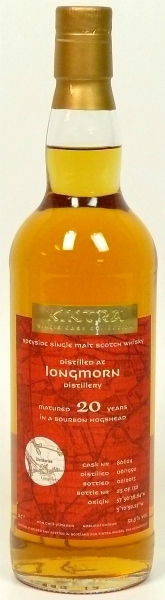
Longmorn 20yo 1992/2013 (52.3%, Kintra, Bourbon Hogshead #86624, 132 bottles)

Longmorn probably was one of the best Whiskies coming out of the sixties and seventies of the previous century. There are so many remarkable bottlings coming from that time, it’s nothing but amazing. Because of this, it also might be its curse. It is almost impossible to drink something like this (a Longmorn from the eighties and later), without having high expectations and looking back to the old stuff instead of comparing it to its contemporaries. Sure we all know stuff from “back then” is different from the stuff today, but still, Longmorn, has a special place with me…

Color: Gold.

Nose: Fruity, biscuity and malty. Fruity it is. Passion fruit and some pineapple, mixed with vanilla powder. Sugared and dried yellow fruits, but also a more waxy note. Meaty as well. Old warm dusty warehouse, more like a Kentucky warehouse than a cold and damp one in Scotland to be honest. So a lively, sunny, and dusty Whisky, from a dry warehouse with a summery feel to it. Nice fruity aromatics aided by a more creamy and vanilla note, backed by dust and oak. Character building. Nutty, with hot water. Overall laid back with a quiet disposition.

Taste: A sweet, nutty and spicy entry. Sometimes with a beer-like and hoppy note to it. The woody bit can taste this way when you try this early in the morning, when your palate is till fresh. In the evening its woody and spicy, nothing more. Typical Bourbon Hogshead Whisky. Funky green sweetness from the start, and even though not extremely high in alcohol, it does exert itself. Definitely fruity and nuttier than the nose. passion fruit again with old apricots next. Hints of toasted oak, this time more warming than sharp. Hints of clear glue and lots of fruits, apricot and to a lesser extent: peaches, even dried pineapple comes to mind. Nice touches of sweet vanilla and ice-cream, but never turning overly sweet and dessert-like by the backbone of spicy oak and toasted oak. Nice development though. It evolves over time.

Nice Longmorn, nice Whisky, but also almost anonymous. It could have been anything, apart from the amount of fruit in this one, which gives it away a bit. Keep in mind that this is from a Bourbon hogshead, so the distillate hasn’t been masked by Sherry or some kind of finish. This is pure Whisky. Its good, it does the job, however it’s almost not a ‘Longmorn” to me. Maybe I’m a bit harsh, maybe I’m a bit prejudiced and maybe I’m not truly objective as well. Am I capable to let the memories of old Longmorn go, for a review like this? I don’t know. This is a good one, but not a must buy for me, sorry. Come to think of it, this does have some similarities to the profile of the old Longmorn 15yo OB. That one is good as well, but also a bottling I don’t neccesseraly need to have. it doesn’t completely click with me. So If you really like the 15yo, by all means get this one as well when it pops up at an auction somewhere. For me, I’m glad I’m taking notes here, because after some time, I might forget how this tasted like, but thinking of the 15yo I’d probably remember.

Points: 85

Booker’s 6yo (62.45%, OB, Batch C01-A-18, 750 ml)

In 1987, Booker Noe, grandson of James “Jim” Beauregard Beam (you might have heard of Jim Beam), introduced Booker’s. Booker’s is uncut (so no added water) and thus bottled straight from the barrel. Booker’s friends and to no lesser extent, Booker himself, really liked the cask strength Whiskey, so Booker introduced it to the grand public in 1992, making it the first of Jim Beam’s “small batch series”. Already in 1984 Elmer T. Lee (you might have heard of him as well), from the Buffalo Trace distillery, introduced the first widely available cask strength Bourbon by releasing Blanton’s, so the people at Jim Beam already knew there was a market for these high strength Bourbons.

Other additions to the original Jim Beam small batch collection were: Baker’s, which is 7yo and bottled at 53.5% ABV and Knob Creek, 9yo and reduced to 50% ABV. Essentially all Bourbons made by Jim Beam come from the same recipe, and variations are only made by different ages, different ageing (hotter or cooler parts of the warehouse) and dilution with water. There is one exception though. Basil Hayden’s is a Bourbon made with the original recipe used for Old Grand-Dad which is the final addition to the original small batch series.

Color: Copper orange.

Nose: A short whiff of acetone. Very fragrant and spicy wood. Sawdust and altogether quite floral. Honey, paper and cardboard. Smells of an old barber shop (shaving cream, perfume, old furniture). Fresh almonds and more dusty wood. Cigar box and a minute amount of pencil shavings. Tiny, tiny hint of lavas. Cookie dough and leather. Not very creamy nor sweet, but there is some vanilla to it, however less than expected. Sometimes hot, lots of alcohol and it has a lot of aroma, but still you can’t call this really “big”. Sometimes its even soapy and highly drinkable. A sort of feminine counterpart to Old Grand-Dad. Definitely Jim Beam (Jug) yeast this time, with a minor role for rye. Wood driven, but all kept well in check, very balanced wood. More dust later on, and meaty notes after that. This keeps on giving. Excellent.

Taste: Starts hot, with lots of wood and woody bitterness. Next some wonderful tobacco and even more wood. Waxy, soapy and woody. More honey as well. I gather this came from the hot part of the warehouse. Nutty, fresh almonds and cotton. Slightly perfumy in the taste as well. Funky sensation. Grassy, and sometimes a bit green. Spicy old wood, like in an old attic of a wooden house, thus more perfumy notes. Indistinct hard fruit candy. Yellow fruits, not the reds. Big entry and a big body. Warming, not hot. Remarkably short finish with matching aftertaste (short), nothing mentioned above really stays behind apart from the soapy elements, which takes away a bit from this Bourbon. I can imagine other batches of this bottling have the potential to perform better than this particular expression. This is in a way a bit simple, although the nose showed a lot of complexity. At times it’s a bit to floral, so pick your moment wisely with this batch. Still, this is a very good Bourbon which I can easily recommend.

If I had to pick only a few bottles made by Jim Beam it would be this one and Old Grand Dad 114, these two sum it up for me. This the best they can do, and these two, if you can handle the high ABV. makes all the others a tiny bit obsolete. With these two yeast strains you get all Jim Beam has to offer.

Points: 83

Potter Distilling Company 15yo 1985/2000 (54.9%, Cadenhead, Indian Corn, Bourbon Barrel, 360 bottles)

For the first time on these pages we’ll have a look at a Canadian Whisky, sorry Davin, I hope you can forgive me. This is some sort of oddity considering the place this was distilled as well as the grain used. Let’s start with the latter. It’s easier. For this Whisky, Indian Corn was used. Indian Corn is better known as flint corn, with a hard (as flint) outer layer, making it also suitable for use as popcorn. It has a very low water content, so it is more resistant to freezing than other vegetables and thus pretty resilient under harsh conditions. This is actually one of the three types of corn cultivated by Native Americans hence the name Indian Corn. Most Indian Corn is multi-colored.
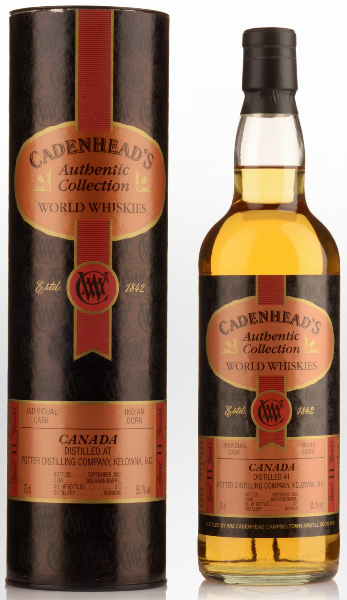
Information about The Potter Distilling Company was a bit harder to find. Potter’s Distillers was founded in 1958 by Ernie Potter in Langley B.C. The company first operated as a bottler of Liqueurs but after a few years expanded into spirits. Sometimes the distillery is also known as the Cascadia distillery. In 1962 Captain Harold John Cameron Terry (Born in Australia) bought Potter’s Distillers and headed the business for more than two decades. According to the website of the current owners Highwood Distillers, production was moved in 1990 from Langley B.C. to Kelowna B.C. where it remained until 2006, after which it moved to its roomier current location at High River, Alberta. Does this mean the label of all those Cadenhead’s bottlings are wrong? The Whisky in those bottles was distilled in 1985 (a 14yo, 15yo, 31yo and a 32yo) and 1989 (a 10yo, 11yo, 24yo and a 26yo), but state Kelowna B.C. and not Langley B.C. Oops!

The picture below is from the 11yo, 1989 bottle, but the 15yo I’m about to review, looks exactly the same. Both Whiskies were bottled in 2000. I tried both before buying and I ended up with the 15yo…

Color: Pale gold.

Nose: Sweet and fatty, yet very fresh with a nice touch of wood and Bourbon Whiskey. Very big nose. It has two sides to it. One big on creamy notes with vanilla, fudge, caramel, toffee, butter and pudding, you know where this goes. The other side is sharper, like a breath of fresh, very cold air. Nice defined wood, sharp and spicy. Toasted oak and licorice. The alcohol is quite pronounced as well. Notes of mocha. This is a big strong Whisky, which has been open for a long time and these are literally the last few drops from the bottle. Time and air can’t hurt it. Well balanced and slightly dusty now. A wonderful nose, that you need to add to your library of Whisky smells.

Taste: Sweet and tasted blind I might have said Demerara Rum, or Rhum Agricole even. Somewhere in between both. Definitely closer to a Rum, than a Single Malt Whisky. Just like the nose the alcohol is pronounced in the taste as well. Yup, sweet vanilla, warm butter and notes of a liqueur. Hints of toasted oak, tar and caramel and some slightly burnt sugar. Beyond the sweetness, there is more. It does have a certain depth to it. In a way it has something of a Rum, a Bourbon Whisky and the added freshness of a Gin. This is a Chameleon of a drink. The finish is not as long as expected, and a nice warming creamy, buttery and toffee note stays behind for the aftertaste, which is of medium length.

Another bottle finished as I’m writing a review. I’ve had this a for long time (I opened it in 2006). You can’t drink this sweet stuff very quickly. This needs its moments, and if you pick them wisely, you’ll have this around for a while, but every time you’ll get it, it’s great. I’m actually sad its empty, and for old times sake I’ll try to get another one of those Potters by Cadenhead’s. I can be a very sentimental guy sometimes.

Points: 84

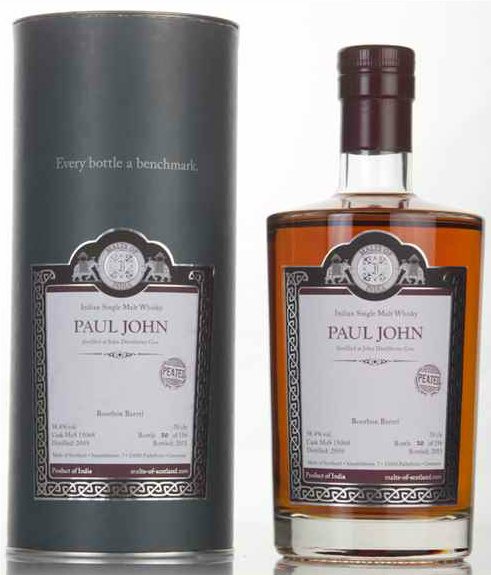
Paul John 2009/2015 (58.4%, Malts of Scotland, Peated, Bourbon Barrel, MoS 15068, 156 bottles)

Paul John already had some Whiskies reviewed on these pages, but up ’till now they all have been the official deal, and making up the standard range. Brilliance, Edited and Bold, are the trinity of entry-level Malts from Paul John, where the peat level rises gradually from left to right.

Sometimes a malt is so good, I finish it before I even get the chance to review it, or sometimes I think I reviewed it, remembering the words, and it turns out that I haven’t. This is a bottle I got because the owner wasn’t all that fond of it, even though it was half empty (or half full, depends how you look at it), and thought the stuff he got in return was better. Right now I can’t remember with what I traded it. This bottle is soon to be empty, meaning it’s good! I give you that already. Before moving on to more of the official stuff, here is the first independently bottled Paul John on these pages. This is one of four casks bottled by Malts of Scotland. Three casks from 2009 (#15065, #15067, peated and #15068, also peated) and one from 2011 (#15066).

The officially released Single Cask bottlings of Paul John, were all very nicely priced, and people picked up on them, as well as the more available bottlings. When the independent bottlers started to release Single Cask bottlings of Paul John, they upped the game asking a (much) higher price than Paul John did themselves. Luckily the casks that went to the independents all turned out to be very good casks as well, so they are worth your money. Having said that, all the official Single Casks released were pretty good as well.

When independents started asking higher prices, Paul John followed suit and new releases are more expensive than they were before. I understand Paul John asks a bit more from independents as well, so if my information is right, Malts of Scotland won’t be releasing more Single Cask bottlings of Paul John for a while. Never say never again ‘eh.

Color: Orange gold.

Nose: Soft peat and meaty. A little bit of barley and a tiny hint of dry orange skin and varnished wood. We’re talking luxury department here. Already this smells like near perfection. This is bottle is empty so soon, because I have fallen in love with how this smells. Luckily I was able to replace it another bottle from the same cask. Deep fruits and spicy warm air. A slightly sweet edge. Big nose altogether. Hints of black fruits from old Islay bottlings, salty. Fresh mint and unlit tobacco. Licorice and warm butter. The wood adds notes of pencil shavings and smoke now, adding to the spiciness of the Whisky. Stunning nose. Not a lot of development though, so maybe even in India (almost) six years is (almost) six years. Reluctantly I have to move on, but to be Frank (Not John) I can’t stop smelling this, and have a hard time moving on to taste it. (If I would score noses by itself this would get 95 Points, maybe more, utterly wonderful stuff).

Taste: Sweetish, syrupy and woody. Slightly waxy even. Not even the peat comes first, but rather the big and bold body. Wood, pencil shavings but not exclusively, and various yellow fruit marmalades, bitter orange marmalade first, followed by dried apricots. Several different bitters coming from wood and smoke. That’s about it first time around. The end of the body well into the finish seems a bit thin, but the aftertaste gets the big body back and has a lot of length, keeping you warm and giving you subliminal images of warmer places. Give it time and air to breathe folks. It doesn’t taste like 58.4% ABV. Again, this might not be the most complex stuff around, but what’s there is very good, albeit not as good as the nose though. But when you’ve swallowed this, and enjoying the long lingering aftertaste and thén smell the glass, Ahhhhh, bliss. This hits the right spots with me.

This was the deal breaker, after this one, I had to make more room for Indian Malts on my lectern. What an experience! A word of caution. I have ready and spoken to enough people to know that this might not be for everybody. Indian Malts are not Scottish, Six-row barley gives a lot of exotic spiciness compared to the barley’s used in Scotland, as well as the conditions of maturation on this continent. As I said before, the previous owner of this bottles wasn’t such a big fan of this as I am, so proceed with caution, but keep an open mind.

Points: 91

This one is finished now, and took a while to write, since I couldn’t stop smelling this. I replaced this stunning MoS bottling with another independent bottling of Paul John, a 6yo Cadenheads bottling released this year. Can’t wait to open that one.

Cotswolds Single Malt Whisky “Inaugural Release” 2014/2017 (46%, OB, First Fill Bourbon Barrels, 4000 bottles)

Every year our team attends the Whisky Show in London, and every year we come across something that surprises us. Usually it is a particular distiller. One time it was the range of Tomatin, and more recently we really liked the stuff of Indian Distiller Paul John. For example, last year, the only bottle I bought was a single cask Paul John. This year we found that the crux of the festival seemed not to be a particular distiller or brand, rather than the high quality of young Whiskies and/or new distilleries. Sure, there was a plethora of amazing old Whiskies on the Gordon & MacPhail stand and there is always nice super-premium stuff at the Diageo stand, but for us this year was about very nice young Whiskies. And guess what, they all came with age statements! Yes, it can be done! Funny enough, also young Whiskies coming from distilleries, people, (including me), tend to ignore. So, this year, I returned home with an 8 year old Tamnavulin, an 8 year old Glen Moray, a 10 year old Glenlivet and finally a 12 year old Tormore. All young, age stated, single casks and all from independent bottlers. Highly affordable as well. Before I forget, equally amazing was the Ailsa Bay and the man behind it. Today we are going to look at another young Whisky. The first release of an English Single Malt Whisky from the Cotswolds.

In my mind when a new distillery opens, it’s the brain child of two blokes who think they can do things better and try to conquer the world. Yes, I’m a romantic. Not true here, the two blokes thing, that is. This Whisky isn’t made in a shed in the Cotswolds. No, the Cotswolds distillery is the brain-child of Daniel Szor. A New York banker from Polish descent. Unfortunately his parents never learned him the language. Believe me, I tried, nope, Cotswolds is definitely not a shed. It’s a full fled distillery with tours and everything and a lot of staff, a lot, so I guess mr. Szor has some big plans, and is here to stay!

Color: Gold.

Nose: Floral, zesty, young and very perfumy. Big aroma. Cinnamon, cinnamon (again), more cinnamon and bread, cereal, sawdust and lots of notes from first fill Bourbon casks. Vanilla pods and Sinaspril pills. So yes, a nice acidic note as well. Insence sticks. No off-notes whatsoever and hardly any trace of new-made spirit. Nice wood, beautiful wood actually. Dry leaves and toasted toffee. Hints of candied yellow fruits in the distance. Spicy like an Indian Malt. Not sure this comes from the wood or are they using indian six-row barley at Cotswolds? The florality reminds me of Indian Whisky as well. Very appetizing. Well balanced and again a very big nose. Wonderful aroma’s coming together nicely. Still young and it already shows a lot of potential, which doesn’t mean this inaugural release isn’t worth it, because it is! Well done team!

Taste: On entry a wee bit thinner than expected and after that, an elegant and mouth coating young Malt emerges. Slightly sweet, slightly bitter, with toffee and caramel notes, and a lot of aromas coming from the first fill Bourbon casks. Making the body “bigger” than the entry was. Not as sweet as the nose promised. Already some nice yellow fruits though, as well as a hint of latex paint and machine oil? Wow. A desert in itself. Sweetish. Vanilla with a spicy note added to it. Just like the nose, quite Indian in style. Very appetizing stuff. The wood is almost virgin now, with a sharp spicy edge to it. Oats and crackers. Cigarette ash and toasted oak mixed with light fruity acidity. Again, lots of balance for such a young malt from a new distillery. Nice aftertaste.

Amazing inaugural release of Cotswolds. I’m told this is three years old plus one day, (some mentioned four days, but who is counting days in Whisky?). Amazing Indian style nose reminding me of some Paul John releases but foremost of this Amrut.

As mentioned in the introduction. Distilleries these days, are able to put out some very nice young Whiskies, even the ugly ducklings of yesteryear, you know, those anonimous distilleries distilling for blends only, like the aforementioned Tamnavulin. Amazing stuff, but on the other hand, we the consumer, we also had some time, by way of NAS-Whiskies, to get used to the taste of younger Whiskies. Maybe we just needed some time to adjust, and accept the times they are a-changing? Really old Whiskies these days cost the same amount of money as a new car, and something a bit younger still costs about the same as a nice vacation. So yes, we did get used to the taste of younger Whiskies, but nevertheless, there is much good stuff going around, just different from the stuff we bought 10 or 20 years ago…

Points: 84

The Balvenie 15yo 1989/2004 ‘Single Barrel’ (47.8%, OB, Bourbon Barrel #7581)

2003 will for ever be the year when The Balvenie 15yo aka ‘The Single Barrel’ from the masters of reduction, was even further reduced. Where this bottling, which often was older than the stated 15yo, used to be reduced to a nice 50.4% ABV, from 2003 on, was further reduced to 47.8%. Bugger, less tax, mo’ money? Never mind. Balvenie is always a nice distillery to review. The company usually puts much effort in reaching consistency between batches, but fails miserably, when comparing this 12yo ‘Doublewood’ to this one and this one. The 15yo however, was intended to have (some) batch variation, since they were the results of one Bourbon cask (I’m not sure if all are Barrels though). Funny enough subsequent releases, and there are many, were pretty similar, when you expected some more emphasis on the difference between casks. I guess, there is more difference when comparing two from (quite) different distilling dates. Well how convenient. Five years back I wrote a review of a 15yo ‘Single Barrel’ that was distilled in 1983, and released in 1999 @ 50.4% ABV, and now we are going to have a look at a “newer” example distilled in 1989, and released in 2004 @ 47.8% ABV. (The picture is of a similar bottling from cask #7633).

Color: Light gold.

Nose: Initially fruity and fresh. Very accessible. Vibrant and happy I would say, Summer, it’s like sunshine in a glass. Barley, some butter and brown sugar. Vanilla powder and white oak. Dusty mocha. Hint of gun powder and soap. Next a more vegetal note emerges. Half dried weeds lying around in the sun and some fresh almonds in the background. Soft rhubarb. The more it breathes the weaker it gets. Simpler as well. Pretty easy Whisky, typical of the cask it came from.

Taste: Sweeter than expected, and bigger as well. Lots of fruit, dried apricots, peach in sweet yoghurt, but also vanilla and coffee creamer notes. Pudding and custard. Milk chocolate. Chocolate mousse. This cask gave off lots of vanillin. Very green and vegetal. Nutty, almonds again. A hint of christmas spices. Cloves, that kind of thing. Apart from this, a strange cold dishwater note and add to that a burnt note as well as a slightly floral note. Green. The nose definitely was cleaner. Ice-cream and fruity liqueur (alcohol).

It is strange and typical at the same time. Typical in the way that it is where it came from (Bourbon Barrel), but some strange notes appear as well. The sweetness and the notes mentioned above make this not really a daily drinker. With this one you need some down-time or follow it up with something else. One at a time is enough, and yes this makes it different from other examples of the 15yo I have tasted, so a succesful exercise in getting some batch variation. Not my favourite of the 15’s though.

Points: 84

Bowmore 17yo “White Sands” (43%, OB, for Travel Retail, Bourbon Casks, 2014)

As announced in the previous post about the Bowmore “Deep & Complex”, here is the review for the Bowmore “White Sands”, the top offering from the previous travel retail trio. Where “Deep & Complex” has something to do with Sherry casks, this one is said to have been matured only in Bourbon casks. This 2014 travel retail release is somewhat odd though. Of the three, it is the only one not in a litre bottle, the only one bottled at the higher strength of 43% ABV, and the only one with an age statement. 17yo is also an unusual age, although there used to be a oficial 17yo that was replaced by the 18yo.

Color: Full gold.

Nose: Sweet, syrupy and some very nice, medium strength, smoke. Slightly vegetal, but mostly fruity with sweet orange oil mixed in with sweet, soft peat. Papaya and mango are noticeable too. Hints of cardboard and earwax. Cold black tea. Very accessible. Creamy vanilla and hints of soft oak. It’s almost like sugar-coated oak. I fear caramel coloring is at work here. I’m already getting slightly annoyed, and I haven’t even tasted it yet. I have tasted this bottling before, and on that occasion I found the smoke to be more up-front. That’s important for this bottling since the smoke-bit is really delicious and defining this Whisky (for me). That bottle was half full, by the way, so I’m hoping this only needs some more breathing. (I just opened this bottle). It may very well be from a different batch as well. Letting it breathe right now, already brings out some more wonderful notes from the smoke-department, so I’m confident that if you work this a bit, all will be fine in the end. This will turn out to be a hidden gem, I’m sure. Just let it breathe. Leave the stopper off for a while.

Taste: On entry; sweet (Rum) and waxy. Oak and fruit. Definitely a tad simpler than the nose and most definitely lacking some oomph. This needs at least 46% ABV. Please Bowmore, please. Cereals, soft wood and caramel. Almonds and mango chutney. Milk-chocolate powder. Nesquick. Hints of smoke and some sweet peat. A tiny hint of bitterness from the peat and oak, but not much, not much of that at all. Vanilla, vanilla ice-cream. Soft and creamy. Custard and pudding. You get the picture don’t you? It isn’t hard to taste, this suffers a bit from caramel coloring. Its aromas are glued together, a property of caramel coloring. I wonder what the chill filtration did to this expression? Is the complexity of the nose over the taste a sign of this?

Dangerously drinkable. Talisker Neist Point (a NAS bottling), is another of those peated, dangerously drinkable, travel retail Whiskies. I would love to hate both, since they are obviously flawed, but somehow they turn out better than expected. Never stellar, but good and likeable.

Although this is a good one, it still is one, I feel, has been tampered with. Chill filtered and colored, and as with the other Bowmore, reduced too much. Again a potentially stellar Whisky ruined, (at least in part it is), for the sake of how it looks on the shelves, and how money can be made, at airports. What kind of heartless, soulless people make these kinds of decisions? Do marketeers have so much to say, or are people, like us, who truly like their Whiskies, actually the odd ones out, complaining when we shouldn’t?

I can confidently recommend this Bowmore, I will give you another recommendation as well. Seek out an independent bottling of Bowmore, to find out how Bowmore actually tastes like without the tampering I mentioned.

Points: 86