Tomatin 12yo 2002/2014 “Pedro Ximénez Sherry” (46%, OB, Cuatro Series #4, 3 years Pedro Ximénez Sherry Finish, 1.500 bottles)

The fourth and final installment of the Cuatro series is the one finished in Pedro Ximénez (PX) Sherry casks. Understandably the last one of the series, since PX is a very dark and sweet dessert Sherry. The grape variety itself is white, getting its color of drying in the sun. We started out light (in color, not aromatics) with the Fino and Manzanilla expressions. Examples of Sherries that age under flor (which keeps oxygen at bay). The third expression was the Oloroso one. Oloroso is a Sherry that ages without flor and thus prone to react with oxygen. So finally the PX. Even darker than Oloroso and also very sweet as opposed to most other kinds of Sherry. Historically, Oloroso casks were always the most popular casks for ageing Whisky. Back in the day, one was sure the Oloroso butt (or puncheon) was made of european oak, giving off some more tannins than the American oak that is so popular with Sherry Bodega’s today. American oak gives off a more vanilla like and creamy aroma. Today, PX has become quite fashionable as well, for ageing Whisky, since it gives off a lot of color and a sweetish aroma. However, the sweetness does not always come through though.
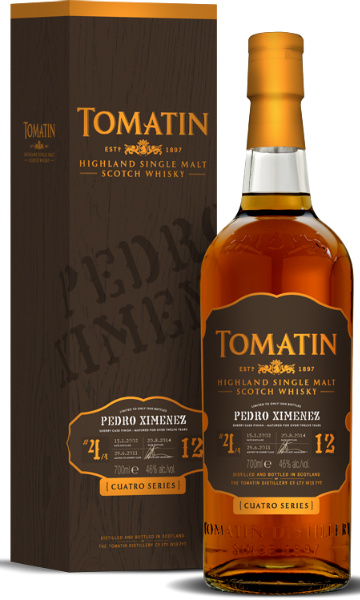
Tomatin Cuatro Pedro XiménezColor: Gold, more or less the same as the Oloroso expression, ever so slightly darker.

Nose: Thick and a very rich nose. Hints of burned wood and even some tar and coal. Nice, and right from the start a better balanced nose than the Oloroso expression. Underneath, thick, creamy and chewy, like crème brûlée. If you smell it vigorously, you can recognize the PX. On top lies a nice acidic winey note as well, adding to the complexity of the Whisky. All well-balanced here. A nice grassy note emerges, aided by some fruits. Nice overripe red and yellow fruits, but also a very distinct aroma of unripe bananas, biscuits and vitamin C pills (another acidic note). An Autumn Whisky, just for the moment the leaves start to fall. Wonderfully rich and elegant nose, better than the nose of the Oloroso expression. I hope it tastes better too!

Taste: Big. A lot from the nose comes back in the taste. Slightly tarry, burnt wood again, with hints of vanilla and butter. Burnt sugar, yet not sweet sugar. All of the (acidic) fruity notes are there, but here, even some hints of white grapes show themselves. Add to that a typically Dutch coffee bon-bon called Haagsche Hopjes, and you’ll get the picture. Nutty. Hazelnuts and even fatty peanuts. The body and the finish are not thick, chewy and cloying like a true PX Sherry, but the aroma’s are there. A somewhat Beer-like finish. The different “burnt” notes; the tar, the wood and the sugar, are on the rise, so if you don’t like that, don’t get this one. It starts out elegant, but ends a bit raw and bold.

And there you have it. The whole Cuatro range explored. Was it worth it? Yes! A very nice learing experience. Do you, and I, as consumers need the whole set of four? Yes, we do if you want to share the experience with lots of others. Four bottles of study material from the Tomatin University Distillery. Do you need a whole box to drink by yourself? No, not really.

For this end piece I did a proper H2H2H2H. Yes, that means I have four drams in front of me. Comparing the Fino to the Manzanilla is interesting, but for a drinking Whisky both are too similar. Especially on the nose. If you only want one, I would opt for the Fino expression, since it tastes slightly better. Oloroso, supposedly the best Sherry cask for Whisky, was in this case a bit disappointing. Smelled less aromatic than the first two, but otherwise surprisingly similar. Not the same but certainly very well related. On the taste it is somewhat unbalanced especially toward the finish. I would pass on that one. Finally the PX does show poise, and yes it does start a bit sweeter on entry compared to the other three. It’s well-balanced, and definitely the one to pick over the Oloroso expression. But, and there is a but, the PX does show a lot of burnt notes you’ll have to like, although those notes are more and more obvious in the Oloroso expression as well. In the end, I would take two, The Fino and the PX, Both are very tasty and somewhat different from each other, but not as much as expected beforehand. If I had to pick one, I would definitely go for the Fino, which for me is the best of the bunch.

Points: 85
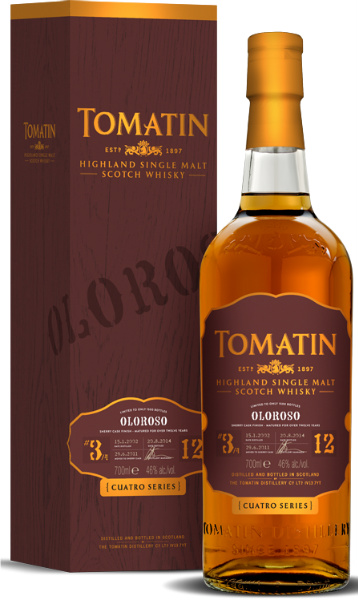
Tomatin 12yo 2002/2014 “Oloroso Sherry” (46%, OB, Cuatro Series #3, 3 years Oloroso Sherry Finish, 1.500 bottles)

Number three is the Oloroso finished one. Hands down the most popular Sherry in the Whisky industry. Somehow casks that once held Oloroso Sherries produce the best Whiskies that (once) graced the face of the earth, even though the Sherry itself isn’t seen as the best there is in the (fortified) Wine world. Oloroso Sherry is produced by oxidative ageing, meaning, there is more contact with air than the previous two expressions that age under flor. The forming of flor is suppressed by adding alcohol from distilled Wine, thus prohibiting flor to form. This oxidative ageing produces a darker more nutty Sherry which is not sweet. Dark sweet Sherry will be the topic of the next Sherry finished Tomatin. Let’s see if our precious Oloroso finish also manages to fetch the best results in the cuatro series. Up untill now the “Fino” expression managed to get the highest score so, 85 is the score to beat.

Tomatin Cuatro OlorosoColor: Gold, but slightly darker than the previous two.

Nose: Funky and dusty. Slightly acidic. New wood and raisins. Yes its nutty. Quite complex and lovely. New wood and toasted wood, slightly tarry. Spicy wood and slightly herbal. Vanilla, creamy and fruity, although new, fresh oak is always right up front. Very aromatic. Loose, unlit cigarette tobacco mixed in with the new wood aroma and licorice. Actually this smells like coming from a red wine cask. It’s sharply defined, fresh and slightly acidic. Tannins and spicy. Slightly dusty and smoky. Very nice stuff if you give it time to develop in your glass. Mocha and tar (again). Nice.

Taste: Sweet and funky on entry. Nutty with a fruity acidity, and very aromatic. If you ask me, easily recognizable as a true Oloroso. Tasting the nuttiness brings out the nuttiness in the nose as well. Milk chocolate and a sharp spiciness. Wait a minute. Where is the Tomatin in this? Where are my tropical fruits? Quite the finish ‘eh? Yup, a bit overpowering. Heaps of fruity acidity now. Red wine (finish). The new (peppery) wood from the nose comes to the fore right before the finish. Luckily it doesn’t dominate it. Breaks down a bit in the finish, which is a shame really. A hot sensation stays behind, with wood and the acidity with the longest staying power. Big and raw, but also lacking a bit in complexity as well as in elegance both the Fino and the Manzanilla expressions showed.

This one is big, but not the best balanced one. This one has its moments, but also has its flaws. Its nice, but not the best one up ’till now. Maybe the Oloroso Sherries and/or the casks they were matured in aren’t what they used to be? On the other hand, what still is…

Points: 83

Tomatin 12yo 2002/2014 “Manzanilla Sherry” (46%, OB, Cuatro Series #2, 3 years Manzanilla Sherry Finish, 1.500 bottles)

On with #2. The second installment is the Manzanilla Finished one. Quite the logical #2, since Manzanilla is also a type of Fino Sherry. Manzanilla is made in the town of Sanlúcar de Barrameda in Andalusia. Just like Fino, it is a very dry and pale kind of Sherry. The region is less hot and more humid, so the flor here is even thicker, giving an even better protection against oxygen. Manzanilla’s are therefore even fresher than their Fino-brothers. Manzanilla’s also have a somewhat salty feel to them. The Sherry ages near the sea, but should that allow for a more salty liquid? In Spain, Manzanilla means camomile tea. The Sherry is named as such, since the aroma’s are thought of resembling camomile. So salt and camomile are the things to look for in a Manzanilla Sherry, but are they also the things to look for in this Whisky?

Tomatin Cuatro II - ManzanillaColor: Gold.

Nose: Starts immediately less funky than the Fino. It also doesn’t need a lot of time to breathe, to settle, its ready for consumption right of the bat. Subtler and more restrained. Hints of burning wood and toasted cask. Dry grass, vegetal and dry warm barley. Easier than the Fino and seems less complex as well. Sweetish and again full on aromatics. Just not as thick and cloying. Smells nice. Fruity, and quite similar to the Fino expression. Tropical, ripe, sweet and aromatic fruit, which is typical for the Tomatin spirit. Dried apricots, but also a hint of bicycle tire. If you ask me, no traces of camomile in the nose. Salty? Nope again.

Taste: Sweet and boasts a fruity start. Chewy toffee. Fruity, yes, but this time slightly fresher and more acidic. Fresh green apple skin and white pepper. Not (as) hoppy as the Fino, but there are some fruity Beer aroma’s to be found towards the end of the body. The wood moves into the realm of pencil shavings. I don’t get the camomile one might expect, nor do I find it salty, although I do have slightly salty lips. Quite a simple expression. Likable, but simple. Maybe next time they should finish this for a while longer, although this finish carries just enough bitterness for me.

Slightly more approachable than the Fino, but with that also slightly less “special”. Sure, you have to work the Fino a bit, and its start can be a bit of a scare, but when it opens up, lots is happening, especially on the nose. Yes the Fino has definitely the better and more complex nose of the two. In the taste both are closer to each other. The Manzanilla expression actually doesn’t show as much development in the glass as the Fino. It is immediately clear what you have in your glass. This one is more of a daily drinker. No faults, but also no ooohs and ahhhs as well. Good, but not as special as the Fino. However, I do feel that these casks that once held Sherries that aged under flor, show a lot of potential for ageing and finishing Whiskies, and especially the tropical fruit spirit of Tomatin.

Points: 84

Tomatin 12yo 2002/2014 “Fino Sherry” (46%, OB, Cuatro Series #1, 3 years Fino Sherry Finish, 1.500 bottles)

It’s Monday, vacation is over, September is already visible at the horizon, so back to “work”. Time to pick up again with a nice box of four Tomatin’s, the highland distillery known for it’s Whisky with tropical aroma’s…

In 2014 Tomatin released a box with four full-sized bottles called the “Cuatro Series”. All four Whiskies were distilled on Tuesday the 15th of January 2002. All four were matured for 9 years in American oak, however, all received a final maturation of three years in four casks that previously held different kinds of Sherry. An excellent way to show the adventurous public the differences between finishing with four different Sherries. A novel idea and the pricing was reasonable as well. Just releasing it as four full-sized bottles in one box made for slow sales. Who wants to buy four more or less similar bottles of Tomatin where the difference lies in the details? Learing from the experience, Tomatin released several similar ideas since, but always in half sized bottles. Nevertheless, the “Cuatro Series” did sell out eventually, although the odd single bottle seem to be still available.

The four Sherries used in this series are, Fino, Manzanilla, Oloroso and Pedro Ximénez. The first expression, as numbered by the distillery, is the Fino expression. Fino Sherries are very dry and very pale. What makes Fino stand out, is the fact that maturation in the cask happens under flor. Flor is a layer of the Saccharomyces yeast strain, that lies on top of the liquid. The layer of yeast prevents the ageing fortified wine from oxidizing too much, making for a fresher Sherry. In the Wine-world Sherries like this are considered the cream of the crop, as opposed to Scotland’s favorite, Oloroso.

Tomatin Cuatro I - FinoColor: Gold.

Nose: Very musty on entry, which is not very pleasant. Luckily the mustiness dissipates rather quickly. So you really need a glass for this one. Underneath a nice note of olives, burning coal, some charcoal and lots of fruit. Yellow fruit, overripe or sometimes even candied. Some pineapple, mango and maybe even some nectarines. This nose is exploding with aroma. Dusty and creamy vanilla and nice soft oak, so the original cask did it’s work well. The Fino cask also seems to be of high quality, since it did impair some wonderful aroma’s to the Whisky. This one is wonderfully balanced and eventually smells rather nice. The fresh oak bit turns floral. More vanilla but this time with a touch of jasmine and, dare I say it, a hint of paracetamol. Wonderful nose for a 12yo. It has the tropical fruit traits Tomatin is known for. Reminds me a bit of a Fino Glenfarclas I once had.

Taste: Sweet and spicy. Beer-like hops, and again lots of fruits carried by the beer-like bitterness. Is it the yeast from the flor that does this? Again, like the nose, wonderfully balanced, but not as complex as the nose. Here the Fino impairs a nice nutty flavour as well as some italian laurel licorice (sweet). Creamy with a note of buttery vanilla. Strange enough there is an acidic top-note now. Finish has some length, with again some bitterness that carries it. And beyond that a nice lingering and fruity/nutty aftertaste. This may not turn out as the easiest of the four, but if you have mastered tasting Fino (finished) Whiskies, this is certainly no dud.

For those of you who also read my Rum-reviews, you’ll know, that I found Rhum Agricole to be wonderful stuff as long as you give yourself the time to grow into. More or less the same goes for finishing in Fino Sherry. There are examples of Whiskies with a Fino finish that work exceptionally well, but I also found Fino finishes, something I had to get used to.

Points: 85

Glen Keith 21yo 1992/2014 (57.5%, Signatory Vintage, Cask Strength Collection, Bourbon Barrels #120566 & #120569, 271 bottles)

Whereas most of the reviews written come from samples accumulated over many years, it doesn’t mean I don’t open any bottles, because I do. Just click on “Whisky from Master Quills Lectern” down below, and in an instant you can see which reviews were written about bottles I have, or had, in my collection. Bottles I believed were worthy of buying, very often without even tasting them. Glen Keith is no stranger on these pages, which is no surprise actually. I rather like my Glen Keiths, and Strathisla, it’s sister distillery. Both reside on the same premises. Pernod Ricard, the owners, aren’t doing very much with Glen Keith (yet), so it is a bit of a hidden treasure, only known to aficionados and connoisseurs (I hate those words). Strathisla’s sister-distillery has been featured already three times before on these pages. One stellar one from the sixties, just as good as the legendary Strathisla’s from that era. Two more were reviewed, both from the nineties: 1990 and even one from 1992, just like this one.

Glen Keith 21yo 1992/2014 (57.5%, Signatory Vintage, Cask Strength Collection, Bourbon Barrels #120566 & #120569, 271 bottles)Color: Full gold.

Nose: Wonderfully creamy and appealing. Only one sniff suffices to let us know we’ll be enjoy this thoroughly. I can’t imagine anything smelling so nice being not enjoyable to taste. Bourbon barrels so yes, nice vanilla and creamy notes, as well as some tension from woody spices partly young wood. Milk chocolate. Next some nice florality emerges as opposed to fruity notes often found in ex-Bourbon barrels. Fresh, not roasted, nuts. Dusty and vibrant at the same time. Not only floral, but also some acidic fruitiness comes to the fore, just don’t smell it too vigorously, the cream overpowers it then and makes it smell sweet. Enough happening in this one, although it may not be the most complex stuff around.

Taste: Fruity and nutty. Almonds. Waxy and chewy. Delayed pepper. Again with nice chocolate sprinkled wood and just like the nose, it tastes sometimes sappy and young. As if new wood staves were added to a rebuilt barrel. This would be highly unlikely though. Sawdust as well. Plywood? People who read everything on Master Quill, know that I dislike not-so-well integrated acidity that lies on top. Abuelo 12yo comes to mind. This Whisky also has an acidic note that lies on top, only this time it works a bit. Amazing. Just like the nose, the Whisky doesn’t seem to be extremely complex. However, the body of the Whisky is so big, that it manages to deal with the acidic high note.

Sure, reduced Whisky is extremely drinkable, but Cask Strength delivers a punch, but also presents flavours to you on a silver platter. The finish has great length and lingers on, seemingly forever, in the aftertaste. Smells nice, tastes even better. Water enhances the nutty creaminess of the nose and at the same time downplaying the woody aromas, making it even bigger and creamier, but also less sophisticated. In the taste, the acidity is given a lager role to play, which in the end alters the balance of the Whisky, making it less balanced in fact. It also adds some complexity with chili pepper and some mint. The finish is more about milk chocolate than it was before adding water. So it might be fun to experiment a bit with water.

For me, something like this is a no brainer. Its more than 20 years old, came from nice active barrels, and gives you heaps of flavour, and a lot of alcohol to boot, so you can play around with it, adding some water with a pipette. If you can’t find this particular bottling, don’t hesitate buying one by another bottler, or one of it sister casks bottled by Signatory Vintage instead, I understand they are all good, and some even better! Some are still available, so what are you waiting for?

Points: 87

Glencadam 30yo 1975/2006 (54.4%, Dewar Rattray, Cask Collection, Bourbon Cask #7588, 216 bottles)

Why not make it a double bill, and review our third Glencadam. Both Glencadam’s I reviewed earlier managed to score a nice 85 Points, so let’s see if this one does better. This particular on is 30 years old, and by itself it’s older than both previous examples put together. This is another one from the attic, since it was released back in 2006. The difference couldn’t be greater when comparing it to the Glencadam I just reviewed. It is twice the age and this one comes from a Bourbon cask, surely it will do better?

Glencadam 30yo DRColor: Full gold, and only slightly lighter than the 15yo.

Nose: Half sweet and nice biscuity barley. Slightly spicy and reminds me of old Dutch Jenever. Definitely some Bourbon influences. Some waxy elements, but not much. In fact the Whisky smells quite young and vibrant and not at all would you expect it to be 30 years old. Fresh, hints of citrus and only mere hints of vanilla. Dusty wood completes the nose. That’s it, not much more is happening. After a while more fruit comes to the fore. Sweetish yellow fruits. Some unripe banana skin. Adding to the structure of banana comes powdered coffee-creamer, in the smell a creamy variant of vanilla. Dusty and slightly dried out ice-cream after you spilled it and didn’t clean it right away. Given some time the freshness takes a back seat and the whole is nice but also rather dull. Not a very active cask I’m afraid. Having said that, it does smell like something from the past.

Taste: Wood, paper and cardboard and after that a short, sharp attack, quickly followed by a short sweet note. After the sweetness comes some woody bitterness. Distant dull vanilla. Waxy again. Cold candle wax. So the body is present and almost chewy, yet surrounded by dry paper and woody notes. A nice old Bourbon matured Whisky, but not a stellar one like 1972 Caperdonich or 1976 Tomatin, to name but a few. Here also some fruit emerges, but again a bit dull. Dried bits of pineapple and some old broken almond bits, you sometimes find in the couch. Luckily the sweetish and fruity note dominate the body, not leaving much room for the woody bitterness. The finish has medium length, but there isn’t much happening afterwards. What stays around for the longest, apart from general (cardboardy) creaminess, is a sour note you get from (new) oak.

Not bad, quite nice, but also not spectacular as well. No real off notes and nothing (bad) overpowering the whole. Still a nice one to pick up when all of its distant relatives are sold out. Definitely a lot better than most of the modern Whiskies though. I’ll have fond memories of this nevertheless.

Points: 85

Angels Envy “Port Cask Finished” (43.3%, Batch #113)

The Story of Angel’s Envy is, in part, also the story of Lincoln Henderson, whose signature is conveniently placed upon the bottle. Mr. Henderson used to be Master Distiller at Brown-Forman and was in part responsible for creating Woodford Reserve (personally not one of my favorites), and Gentleman Jack, as well as Jack Daniel’s Single Barrel. Since I don’t really like Jack Daniel’s Old No. 7, I never was in a hurry to try the rest. I hope this Angel’s Envy will be more to my liking.

Lincoln HendersonIn 2004 Mr. Henderson retired from Brown-Forman and in 2006, joined his son Wes(ley) and grandson Kyle in their Louisville Distilling Corporation, experimenting with finishing Bourbons in casks that previously held other distillates. The Bourbon itself is said to be made by MPG in Indiana, which is very odd for a Kentucky Bourbon, as stated on the label. The Bourbon is around 4 to 6 years old, obviously first aged in American oak, as all Bourbons are, and finally finished for 3 to 6 months in 225 litre Ruby Port barrels made from french oak. It’s a small batch Whiskey each time made from 8 to 10 barrels only.
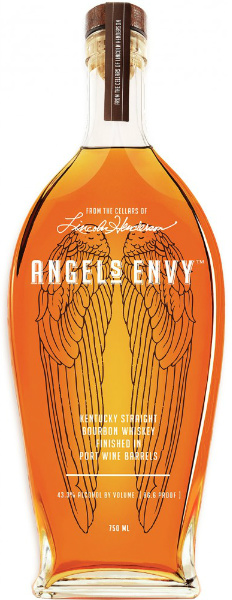
The first Angel’s Envy saw the light of day in 2012. Sadly, Mr. Henderson’s lights went out in September 2013, aged 75, becoming a spirit himself. Angel’s Envy itself, the legacy of Mr. Henderson,  was finally sold off to Bacardi in 2015.  It is said that Mr. Henderson, throughout his career, tasted some 430.000 barrels of Bourbon. Who said Bourbon is bad for you?

Angels Envy PortColor: Light copper gold.

Nose: Chewy sweet Bourbon smell with indeed an added winey note. The finish seems to be done with taste, since in no way does it dominate the profile. If tasted blind you’d still call this a “normal” Bourbon. The Bourbon part reminds me a bit of Four Roses actually, (the low rye mashbill). Nice, soft and creamy. Some worn saddle leather combined with the smell of a cold cob of corn, Give it some more time to breathe and the finish becomes more apparent as well as a different kind of oak. Honey and an appetizing fresh leafy note. I’m amazed at the wonderful balance achieved. Lovely stuff to nose.

Taste: Aiii, a bit to sweet and thin on entry. A short flash of fresh oak, with milk chocolate and honey, quickly followed by red fruit aroma. The oak returns for a moment delivering a nice balancing bitterness, Nice jammy note as well. Creamy vanilla. Again the Port finish has been done with taste and works extremely well. It is a Bourbon, but in part it has a “new” edge to it. The Finish is of medium length at best, but if you have a moment to spare you can wait for the aftertaste which leaves a nice creamy mixture of honey, and vanilla with again some hidden elements of the Port. As was the entry, the finish is a bit too sweet as well. Nevertheless, a job well done, even when reduced too much.

Probably made for a hip market, and not to scare to many people off, it has been reduced to 43.3% ABV, At this strength the Bourbon is also dangerously drinkable, which in my case would mean the bottle would be finished sooner than later. As I am based in Europe, prices here are much steeper than across the big pond. I understand the US pricing of this, but over here for such a drinkable Bourbon I find it too expensive. Pricing aside, this may look as a designer Bourbon, and it probably is, but it still carries a lot of quality and good taste from the makers. There is also a (Plantation) Rum finish, Rye with a Rum finish, as well as a cask strength edition, also finished in Port barrels. Depending on availability, these seem to be extremely expensive.

Points: 83

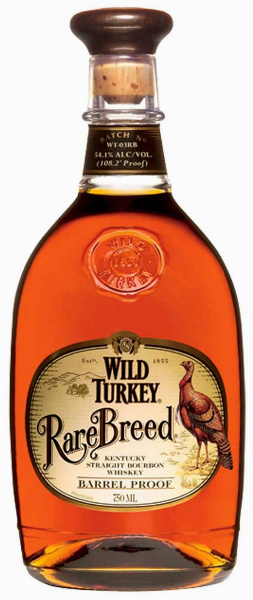
Wild Turkey “Rare Breed” (54.1%, OB, WT-03RB)

The story of Wild Turkey starts with two Irish brothers called James and John Ripey. In 1855, they came to America from Tyrone, Ireland to start a store, selling general goods. They settled on the banks of the Kentucky river near Lawrenceburg, underneath some limestone cliffs. They named their plot “Tyrone”. In 1869 they opened their first distillery. The first distillery quickly became too small, and a new facility was built in 1873, which expanded quickly. The whiskey they made had quite a reputation and was chosen to represent Kentucky at the World Fair.

During prohibition, the distillery still made some Whiskey, for medicinal purposes, and was sold by Austin, Nichols a wholesale grocer specializing in tea, coffee and Spirits, but concentrated solely on Wines and Spirits by 1939. By the way, even in 1939, there was no Wild Turkey in sight. Not the brand anyway, but there seemed to be a bird, yes, a wild turkey.

In 1940 Thomas McCarthy from Austin, Nichols took some samples of 101 proof Whiskey with him on an annual shooting trip to South Carolina, shooting wild turkeys. Since then the party asked for that “Wild Turkey Whiskey”. In 1952 the Ripey family sold the distillery to the Gould brothers, which in turn, sold it off to Pernod Ricard in 1980. By 2009 The Campari Group took ownership of the distillery.

Wild Turkey Rare Breed (54.1%, OB, WT-03RB)Color: Orange brown.

Nose: Wonderful fresh and slightly floral. Just the right amount of wood. Development starts quickly when it gets some air. Becomes very nutty and a bit funky as well. Definite aroma’s of clear glue. Velpon. Dumbed down fresh leather with cookie dough. With even some more air, the nutty part transforms into oak, with still some funky organics going on. It’s not a particular sulphury smell, but it does smell like a compound with sulphur. In the end it settles down, giving off a nice and silky smooth smell. Soft with some obvious vanilla and hints of honey.

Taste: Sweet on entry, but also with quite a white pepper attack. Lots of wood is noticeable now. With the wood the sweetness is almost gone, drying out the whole. Lots of rye florality with powdery and silky smooth vanilla with some tannins. Thin corn sweetness, definitely made with a high rye mashbill. The more this breathes, the more pronounced the rye gets. In fact, one can say the rye takes over. Especially the finish is dominated by the rye florality. The finish is multi layered because even when dominated by the rye, (for a while the rye even gets a bit soapy), the longer you wait the more the wood gets to play a role, although never the lead.

The WT-03RB batch ended somewhere in 2014, and is replaced by a new batchless Rare Bread. I’m told the new batch is younger and lighter, even in color. So the advice would be, get one of the older batches if you get the chance.

Points: 82

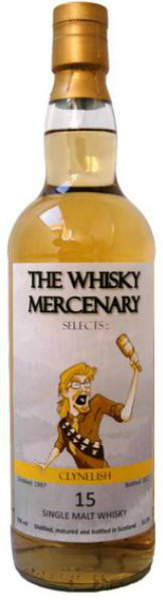
Clynelish 15yo 1997/2012 (51.5%, The Whisky Mercenary, Bourbon Cask, 59 bottles)

A few days ago I reviewed another Clynelish from 1997, and I just stumbled across this one, bottled by the Whisky Mercenary a.k.a. Jürgen Vromans. Since this is bottled in 2012, I guess Jurgen sent it to me a few years back as well. Only 59 bottles did once exist, but we know the Belgians to be enjoying life quite a bit, so I don’t think a lot of bottles of this have survived. I guess its will be even harder to find one of these today. I’ve reviewed quite a lot of Jürgen’s bottlings, and I have to give it to him, he has quite the nose for picking them, as well as being allowed to pick “dem Whiskies!” You might not know, but it’s not easy to be an independent bottler. You just don’t go into a warehouse trying all of the casks lying around and picking the best you can find, unless you have a bit of a reputation…

Clynelish TWMColor: White wine.

Nose: Buttery and malty. Fresh. Like a breath of fresh air, yet also citrus fresh. Creamy toffee barley. The cask seemed to be quite inactive, maybe the color also gives that away a bit already, but the sweetness is more like toffee and not big on vanilla you get from more first fill and more active casks. Another hint is the lack of a pronounced wood aroma. Cold apple compote with a bit of warm apple sauce, laced with a splash of calvados. All those apply associations are noticeable, but in no way overpowering. The fruity sweetness gets more and more dusty and dry, with a tiny bit of surface wood, oak obviously, with a little bit of mint. Apple pie, after some breathing the apple is joined by some freshly made dough. Nice balance with more than usual distillery character. Typical example where the wood did less to make the Whisky. It shows its other side. Fruity fresh, with shallow depth, dough aroma instead of wood, but at the same time lacking real depth and complexity. This isn’t a fault. It’s just different, and with this it shows another side of Single Malt Whisky in general.

Taste: Well, what a surprise. Sure it is fruity, but way more wood in here than in the nose. It starts with wood and paper as well as quite the peppery note. Sugary sweetness and creamy. I didn’t expect that at all. Toffee and bread. Caramel. The aroma’s grow a bit bigger with more breathing, so don’t be to hasty with this one. The lack of activity from the cask is noticeable by the weakness of the finish. It starts with a little attack, for a brief moment shows a nice body, but then it comes down very quick and leaves you a bit with a light, short and unremarkable aftertaste, which at some point in time even gets a bit bitter. Cedar wood bitterness. This bitterness even grows bigger, if you drink this Whisky after a prolonged time of breathing.

In my opinion, not the best of Clynelishes around, but there are many other who like it even better. This is from 2012, right at the start of his career as The Whisky Mercenary. Its hard then to get to pick the very best of casks, and it is a shared cask as well. Only 59 bottles was his share, but I guess at this ABV there was more Whisky in the cask, bottled or blended by others. Nevertheless educational, because here you can see that it’s more about the spirit, than it is about the wood.

Compared to the 1997 Wemyss Clynelish I reviewed a few days ago, the family resemblance is quite remarkable, but the Wemyss is definitely the more aromatic and polished expression of the two.

Points: 81

Amrut 4yo 2009/2013 (60%, OB, Single Cask, for Europe, Virgin Oak & First Fill Bourbon Barrel #3445, 172 bottles)

Maybe Amrut is a true Malternative, because it’s another Malt Whisky. If you love Scottish Single Malts best, why look at other distillates? They are just different. Other distillates can broaden your horizon, but will not replace your Single Malt that has become too expensive. For instance look outside of Scotland.

Looking back I seem to like Amrut. This is now the third review, and after the Intermediate Sherry (87 points) and the Portonova (88 points), this is something of a speciality. Maybe I should take that back. Most Amruts are in fact specialities. Something out of the box is often done. Maturing on two continents, or blending many different casks together, to name but a few of things Amrut does.

This time a single cask bottling. Often, you will have a Whisky that has matured in a first fill or second fill Bourbon cask, barrel or hogshead, but no, Amrut had to do it differently. This particular example was first matured in charred virgin oak and then transferred into a first fill Bourbon barrel. Barrels being the original casks Bourbon matures in, where hogsheads are remade casks from the staves of barrels. Hogsheads are bigger than barrels. Most barrels are shipped in staves anyway.

There is some additional useful information on the label as well. I like that. In the four years this Whisky has been maturing, 42% has evaporated over time, as compared to around 8% in that evaporates is Scotland over the same period of time. By the way, unpeated (six row) Indian barley was used.

Amrut Single Cask #3445Color: Gold.

Nose: The first whiff that enters my nose is of virgin oak. Creamy sawdust and vanilla. Although only four years old, at the fast forward maturation rate, this can be called a woody Whisky. The typical American oak notes are here, but I actually miss the typical Amrut spiciness. Amrut is indian, and Indian Whisky should be a bit exotic, not just another copy of Scottish Whisky. This Amrut does hide it Indian. After some vigorous movement in the glass and some patience, there is exotic spice emerging and apart from that the Whisky becomes a bit dusty.

Taste: Initially hot and then an explosion of sweet Vanilla. When the thick vanilla, travels down, quite some (virgin) oak, emerges here in the taste as well. So we have wood and vanilla. What else? Over the top vanilla combined with hot butter. Just as with the nose this needs air to show some exotic spices. Luckily it’s Indian-ness is here at last. Spicy hot sawdust from Massaranduba. A very hard tropical wood. It’s so hard in fact that you can’t cut it without the saw charring the wood. This slightly sour odour is very similar to the spiciness of this Whisky, especially in the taste of it.

I mentioned decanting Whisky before. This Amrut is one that needs a lot of air as well to fully blossom. This is still a pretty full bottle, but already there is a difference to the first taste of the freshly opened bottle. I will score it now (after lots of air in the glass), but I feel this will grow even better and more balanced over time. This may very well be an example of a Whisky where the last drop from the bottle will be the best drop.

Points: 88

The initial score was 86 points, but as I expected, this got only better over time. The bottle is gone now, but the last third scored an easy 88 Points. Again lesson learned. Give it time to breathe…