Here an example of an independently bottled Springbank, well, not really, since the Springbank Distillery and Cadenhead (a Scottish poet) are owned by one and the same, J & A Mitchell. J & A Mitchell bought William Cadenhead Limited already in 1969. Obviously it’s easy this way to bottle some single cask Springbank. Let’s see if they have chosen a stellar Springbank for the occasion. I case you might wonder, it’s not unusual for this to happen, a lot of Springbank got bottled this way!
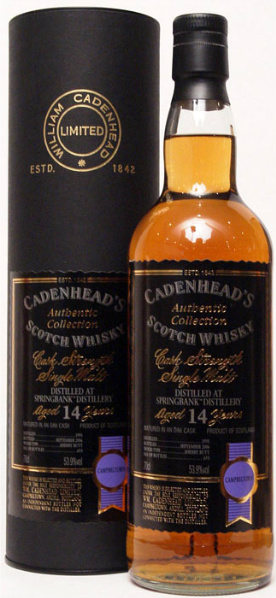 Color: Copper Gold
Nose: Sweet and floral. Very easy and likeable. A hint of soapy wood and even a hint of sowing machine oil. Hard raspberry candy. Lots of vanilla from the (toasted) wood. Old, almost dried out, lavender soap. Powdery and dusty. Lot’s of fresh air, but after that, the rest is light, but balanced.
Taste: A bit anonymous really. Initially a bit hot. Sweet and floral again, A little bit of toasted wood, woodspice. Also some fruity sourness (from the wood). Not your typical Springbank. Warm apple sauce and some acetone maybe. Diluted fruit salad syrup, from which the sweet pineapple sticks out. Initially a bit hot, but with a soothing, balmy and light finish, that is also rather short and is gone before you know it. Great contrast.
I’m very curious what kind of Sherry this cask held before. For me impossible to place. Refill Fino maybe? Not a very active cask, but nevertheless the whisky has a nice color. Do I like it? By itself it is and good whisky, but without a lot of Springbank character though. It’s very quiet and laid back. ‘nuf said.
Points: 83
 And then there is Glen Keith. Glen Keith lies a stone’s throw away from Strathisla. The spirit from Strathisla was pumped to Glen Keith for filling into casks, but also the boiler at Glen Keith warms water for Glen Keith’s production. Glen Keith’s production started in 1958 with three stills (triple distillation). In 1970 the first two stills in Scotland that are heated by gas were installed. Soon after that, the distillery stopped the triple distillation. In 1983 a sixth still is installed. The distillery is mothballed since 1999, but plans are to restart the distillery next month (April 2013).
 Color: Copper, cloudy.
 This is now my favorite Christmas malt. Just smell that dried Orange in combination with the cloves. It’s not a perfect old bottle though, but it’s so clearly a time capsule. It’s impossible to not love this. I was always a big fan of Strathisla of the sixties and seventies and this Glen Keith is therefore really no surprise at all. Merry Christmas everybody!
 So it’s time to celebrate the first anniversary of Master Quill and I’ve picked this bottle of 1979 Scapa, bottled in 2002. Well, things got off really good! Like I said, I would rip open this bottle and so I did accidentally. I broke off the cork! Bugger!
 Color: Copper
 it’s not completely balanced, but it will get there in the end. Complex, well, not exactly. It shows some sourness from the oak, but after half an hour it is pulling together, and it has a great and long finish. This again is a stunner!
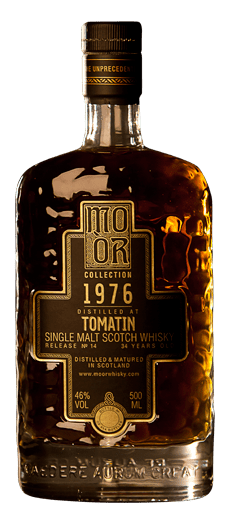 Color: Copper Gold.
 Next up Glen Scotia, also a first on these pages. Glen Scotia hails from Campbeltown, once a big place for whisky with regional status (again). Try to imagine a place that has almost 30 distilleries working at one time in the 19th Century. Not so long ago this Glen Scotia was the ‘other one’ from Campbeltown after the well-known Springbank. Today Springbank makes also Longrow and Hazelburn. And from the same owners the recent ‘addition’ that is Glengyle Distillery (Kilkerran). Let’s say that Glen Scotia is the only Campbeltown distillery not owned by the people of Springbank. Owner today is Loch Lomond Distillery Co. and the place is fairly run down. When the distillery was mothballed in 1994, the staff of Springbank restarted intermittent production in 1999, not to lose the regional status of Campbeltown. A status lost eventually, but eventually reinstated.
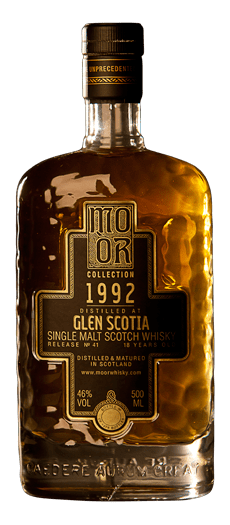 The distillery was founded in 1832 by the Galbraith family. For one reason or another the label on the bottles state 1835. Lots of changes of ownership during the years and even some closures in 1928 and 1984. Since 2000 Loch Lomond has taken over Glen Scotia and runs the distillery with its own staff.
 I was asked to keep an eye out for sulphur in this one. It’s there slightly on the nose (as a burning match). But it is more pronounced on the palate (the bite here comes not only from the wood, but also from the sulphur. Usually there is some sulphur in Sherried Glen Scotia’s. Lots of it in a 1991 Cadenheads offering if I remember correctly. It’s there on the palate and even more so in the finish (late). Is it ruining the balance or the palate? Does it disturb me? No, it’s some kind of good sulphur. it’s somewhat hidden. It’s there but not in the usual obvious way. That happens sometime, that’s why I called it good sulphur. Still, overall there isn’t a lot of sulphur in this one, so don’t worry. And hey, sulphur is good for the skin!
 Hello November! Looking outside, this month seems to bring us damn close to winter. Here we have a bottle of Brora 1981 bottled by indie bottlers Ian Macleod in their Dun Bheagan range. Ian MacLeod have a few other brands you might know. The Chieftains Range or “As we get it” for instance. The company is also the owner of the Glengoyne distillery, which is one of my favourites. Go!
 Color: Orangey Gold
 In the first weekend of October 2011 I went to the Whisky-Show in London with my friend Erik (both days). We liked the show so much that we went there again this year. Both years we tasted a lot of good whiskies. When we talk things over afterwards we always ask each other what surprised us. Last year we voted
  This Limited Edition 21yo is made out of 6 Bourbon Casks, since they don’t mention Barrels or Hogshead, I guess both are in the mix. For good measure also a Sherry Butt was thrown in. All casks were Refill casks. Casks were hand (or should I say nose and mouth) picked by Douglas Campbell. It’s called a Limited Edition since this is a one-off deal.
 Kilchoman then. The newest addition to the immensely popular Islay Whisky family. This new small farm distillery was built in 2004 near Kilchoman in the west of Islay, and therefore named Kilchoman. Operations started in 2005 and their first disaster struck in 2005 also. No distillery can call themselves a real Scottish distillery without a big fire. Well history was in the making so let’s do the fire thing quickly, they might have thought. Not hinting at any foul play of course. In 2005 the kiln burned down. Rebuild in 2006 and operations recommenced. As of 2009 but foremost 2010, Whisky started to be released. In 2009 the first release in the new core range was the “Inaugural Release”. Next up was “Autumn 2009” Let’s try our “Spring 2010” that was the third release.
 Color: Orange Gold.
 After reviewing one of the most popular official releases by Springbank, the
  Later some mint and furniture wax. Nice throat coating finish.
 Master Quill