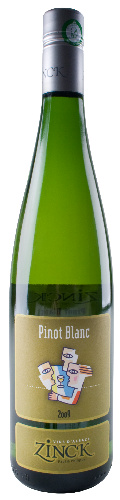
Paul & Philippe Zinck Pinot Blanc 2009

And suddenly the sun came out! Nice temperature so I felt like a nice light and refreshing wine. I have a batch of Pinot Blancs lying around for the white asparagus season, but thought I would give this one a try by itself, for me you never can go wrong with an Alsatian Wine. This Pinot Blanc is made by Domaine Zinck from Eguisheim, Alsace, France. Zinck have four great Grand Crus: Eichberg, Pfersigberg, Goldert and Rangen. The last two I also know from Zind-Humbrecht. Spectacular stuff. This Pinot Blanc is from the “Portrait” line of wines and are made as an introduction to Wine. We call that entry-level. Zinck Pinot Blanc
Color: light yellow with a slight green tint, medium viscosity

Nose: Flowery and half sweet. Meaty and buttery with hints of earth. Quite a “thick” and aromatic nose (lots of yellow fruits), seems sweet at first. Vegetal and herbal, maybe sage. Coastal (the terroir is silty), and fruity, melon-style.

Taste: Syrupy sweet. The acidity is in check. The sweetness and the acidity somehow doesn’t seem to be well married together. Something not quite right and I can not put my finger on it. The fruity melons are here too, and just like the nose, “thick”. Quite some bitterness too, that stays well into the finish. Where it shouldn’t be. Chewy and behind it all sweeter than it appears to be.

Pinot Blanc is not Alsace’s favourite grape variety, and I guess this wine shows why. It is recommended with food, asparagus. Don’t have that here at the moment, but I’ve tried it with a salad, OK and with spicy chicken legs, that was quite good actually. Since the wine is quite thick the Pinot Blanc managed the spicy chicken well. Easily drinkable. I personally didn’t like this as much as a lot of other wines from the region, but it does seem to fare better with food than on its own. Well just a matter of taste really, since my wife did love this on its own and is more than happy to drink the rest of the bottles that are in the cellar.

Points: 77

Plage du Sud Pays d´Oc IGP 2013

Next up a Rosé wine from the Languedoc region in France.

Plage du SudNot so long ago, Rosé Wines had colours almost like light red wines and were made with grape varieties like Syrah and Cabernet Sauvignon. But the fashion has changed, today the fashion is more about more elegant and more refined rosé wines from the Provence region in France and northern Italy. Very pale Rosé’s with very light old pink colours or even salmon-like colours. Plage du Sud is one of those Rosé wines from the south of France that has that pale pink colour rreferring to the Mediterranean feel from the Cote d’Azur. The wine is made with ​​Grenache (60%), Cinsault (35%) and 5% Syrah to give it a slightly heavier body.

Color: Pale old pink. Very elegant looking

Nose: Lots of aroma. Fruity with peach and banana. Sweet and sour in one gulp. The acidity is very nice and refreshing. Peach yoghurt, but also slightly floral, yes it smells of (pink) roses.

Taste: Less complex than the nose and not as aromatic as expected. Nice balance though. Light and simple. Not acidic nor sweet, keeps in the middle. All is in control and very drinkable. After a while the fruity aroma’s return. Quite nice stuff and nobody should be having troubles finishing a bottle like this. Just relax, sit back and enjoy the nice weather looking at people passing by. Do not sip this, drink this with big gulps, it tastes even better that way. Luckily they also sell nice 1,5 litre bottles 🙂

Excellent example of the modern style, pale looking Rosé wines from the south of France. The colours of these wines are really stunning.

Points: 80

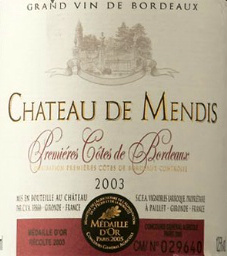
Short Stories: Chateau de Mendis Premiéres Côtes de Bordeaux 2003

Hey another short story. So no introduction, no research (or nothing to research), just a short (tasting) note about something (in most cases, a wine I had with dinner), so without further ado…

Chateau de Mendis 2003Color: Extremely dark ruby-red

Nose: Nicely spicy and warming. Oozes hot earth. Spicy and somewhat woody. Nose is nicely balanced. Again lots of earth, dusty, meaty and with deep red fruits, mainly cherries. Very pleasant nose. I don’t know why, but smelling this, I have a craving for Pizza.

Taste: The mouthfeel is a bit thinner than I expected from the nose. It still is warming and has quite the body. Fruity again with some added acidity (but not much). This most definitely is a wine that needs to breathe. It was aged for quite a bit and has developed well. I imagine this wine wasn’t made for keeping. The soft tannins are there, on the tongue, but not as much in the taste. Again a bit meaty, but in no way unforgiving. Will do well with most foods. Meat and cheese and anything in between.

Mostly Cabernet Sauvignon, but blended with a little bit of Cabernet Franc and Merlot. 12.5% ABV.

Points: 84

Ogier Caves des Papes Les Caprices d’Antoine Côtes du Rhône 2010

And here is already the last one of our trio of Ogiers. This time a more modern blended Côtes-du-Rhône made as a tribute to Antoine Ogier, the founder of the Ogier Caves des Papes Winery, located in Châteauneuf-du-Pape.

Les Caprices d’Antoine is made of classic Southern Rhone varieties like Grenache and Syrah, supplemented with smaller amounts of Carignan and Mourvèdre, making this a Southern Rhône blend (GSCM). Funny enough these are all to be found in a Châteauneuf-du-Pape wine except for Carignan, which isn’t allowed! Carignan is mostly found in Rioja-wines (in Spain it is called: Mazuelo). Carignan is mostly used to give extra body and a deep color to wines. The wine was aged somewhere between 6 to 8 months in French and American oak barrels. The wine has 14,5% ABV.

Color: Dark ruby-red with a purple and / or violet edge.
Nose: Recognizable nose of a Rhône-wine. Immediate balance and young. Again at first not very heavy. Typical of Ogier. It has vanilla from the American oak, and even a slight sourness like yoghurt. Warm earth, licorice (also from Carignan), spicy wood and lots of red fruits. Red apple skin, with raspberry and hints of strawberry. (I said it was modern didn’t I?)

Taste: Fruity and acidic. Soft tannins that hardly dry the palate. Again a light style Ogier. Licorice stays a wee bit longer on the palate. Medium finish that is quite simple. Definitely a simpler wine than the two I reviewed earlier. Very typical for this wine is the thick licorice note it has, and a slight hint of bitterness that gives the finish some character, but I would have preferred some more fruitiness.

Recommended with meat and cheese, well which red wine isn’t these days. For me it is more a sort of daily drinker type of wine that doesn’t need your attention all the time. It’s good, but nothing extraordinary. I hope Antoine wasn’t like this, although the wine is not bad.

Points: 80

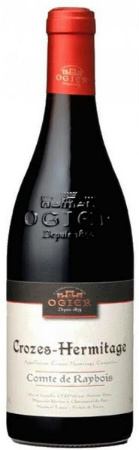
Ogier Caves des Papes Crozes-Hermitage Comte de Raybois 2009

Another red wine, another Ogier. Crozes-Hermitage lies in the northern part of the Rhône wine region and has a continental climate. Nearest town being Tournon-sûr-Rhône, where Châteauneuf-du-Pape is located more to the south near the town of Avignon, which has a mediterranean climate.

Where the previous Ogier was a Châteauneuf-du-Pape made with four grape varieties, this Crozes-Hermitage is a 100% pure Syrah. That in itself is a no-brainer since Syrah is the only red grape allowed for this appellation, or isn’t it? Strange enough two white grape varieties are allowed for use in the red wines (up to 15%). These are: Marsanne and Rousanne. Since this wine is all Syrah and the Châteauneuf-du-Pape is a blended wine of four grape varieties, I expect this wine to be rather different, albeit a Rhône wine. Syrah is a ballsy grape variety, which usually adds black and blue fruit flavors, chocolate and pepper, but knowing Ogier, this example might be lighter in style than its colleagues…

Color: Deep dark, very dark, red.

Nose: Vanilla and clotted cream. Somewhat closed, smells like a cold wine. Smallest hint of fish. (Should I be writing this? Don’t worry it’s inoffensive). After holding it in my hand, swirling it a bit, an explosion of aroma’s. Nice rich typical Syrah, warming. Hot stones. Spicy yet supple (yes still writing about the smell of it, and it smells, well…, supple). A little bit of dry but fresh uncut grass, and field flowers with strawberry jam. Nice dark fruits emerge from the jam. Nice stuff this, quite complex and interesting.

Taste: This has some more tannins than the Châteauneuf-du-Pape I reviewed last. It dries the tongue and it is a bit austere. It has the, by now typical,  Ogier lightness to it. Syrah can be very heavy, but this Syrah just isn’t. I just poured it, it is light with a light finish and a nice acidity counteracted with some butter. With some breathing it should get better. It’s a bit like Metallica played by a Finnish string quartet. After some breathing and even taking big gulps, the wine actually doesn’t get any “heavier” It just is a lighter style of Syrah, which compared to the nose, is quite simple and easy.

No pepper nor chocolate for me, so this one should be aged further in the bottle, to get the pepper out. Syrah without this most probably is young and needs more time. Leave it alone for at least five years again, but in my opinion it should age even longer than that.

Points: 84

Ogier Caves des Papes Châteauneuf-du-Pape Reine Jeanne 2010

Let’s continue with another red wine. This is a Châteauneuf-du-Pape from Ogier Caves des Papes. Not to be confused with the Ogiers from Côtes Roti.

Christophe Ogier had a wine shop established in 1859 called Ogier et Fils. In 1872, his son Etienne took over the company and he passed it over to his grandson Antoine in 1914. In the 1950’s the company joins with Bessac Caves des Papes in Châteauneuf-du-Pape. Their combined estates are all located around Châteauneuf-du-Pape.

This example of Châteauneuf-du-Pape is built around the four well-known grape varieties for the appellation of Châteauneuf-du-Pape. Grenache (versatile, easy to use and adds rich fruit flavors), Syrah (ballsy, adds black and blue fruit flavors, chocolate and pepper), Mourvèdre (spicy, leathery, gives the wine a dark red color) and Cinsault (perfumy and floral). Grenache and Syrah (and Mourvèdre) being the most popular for the region and this type of blended wine. The wine has had some ageing in oak barrels and boasts a hefty 15% ABV.

Color: Dark ruby-red.

Nose: Creamy and very fruity. Red fruits and prunes. Hot butter and warm earth. Vanilla and utterly balanced, otherwise light. It has some sweet-smelling oriental spices, most definitely some ginger and hints of licorice. Small hint of meat(loaf). Great overall perfume.

Taste: Again light, not very tannic, but still a mouth full, and a little bit drying. Licorice. Deep terroir and only slightly acidic. Medium finish with the licorice sustaining. A bit mysterious. Already needs decanting for its full aroma to show, but after some breathing (also in the glass) a very good and aromatic wine.

Very nice and somewhat light Châteauneuf-du-Pape. Today a very inoffensive wine but with a lot of quality to it. Extremely drinkable but not to be taken with heavy foods. Sometimes almost an aperitif wine! I think the wine should be aged further for at least five years. It will improve, but in which way it will develop is hard to predict. Lovely wine, but could have been better with some more body, a little bit more meat on the bone, but the meat this is there is pretty good mind you! Let’s hope it will get more body from the additional ageing. Very nice wine nevertheless.

Points: 87

Thanks Richard for the wine!

Antonin Rodet Chablis 2011

Two months ago I reviewed the first Chablis on these pages, and here is already the second one. Already, considering I mainly review Single Malt Whiskies that is.

Chablis is the northernmost part of the Burgundy Wine region. Chablis lies some 15 to 20 kilometres to the east of Auxerre. The Grand Crus all lie on one southwest facing slope just north of Chablis. The ‘terroir’ is clay with outcrops of the same chalk layer that runs from Sancerre to the White Cliffs of Dover. Chablis is made with Chardonnay Grapes and is famous for its clean, acidic, flinty and dry White Wines. Chablis Wines are more acidic due to the cool climate, compared to other Chardonnay growing regions. Not a lot of ageing in wood is done in Chablis, and this example I’m about to review has no wood ageing whatsoever.

The Chablis by Louis Moreau was pretty good, so let’s have a look, what Antonin Rodet did with his Chardonnay grapes.
Color: White Wine.

Nose: Sweet and fruity. Lychees and hints of peaches. Very fresh and lively. Wow, I always get happy smelling a white wine with a nose like this. It smells sweet and flinty. Chalk even. Also some floral notes like geraniums and it promises a nice acidity. Nice balance too. Very nice and typical Chablis nose. I like my Chardonnay. This nose, compared to the one by Louis Moreau, is cleaner, more elegant and lovely.

Taste: Zesty and acidic (Vitamin C). Very clean, fresh and likeable. I get the chalk from the nose again, but not a lot more. Not very complex, maybe even simple, but also without faults. Appetizing and easy drinkable.

As said above. The nose of Antonin Rodet is better than the one by Louis Moreau, but beauty is in the eye of the beholder, so it may depend on your mood, which one to choose. Taste wise I guess the Louis Moreau offering was a tad more interesting and had a finish with more meat on its bones, making that one slightly better in my opinion, but still, differences are small and I liked the Antonin Rodet Chablis a lot too. By the way the ABV is 12%.

Points: 84

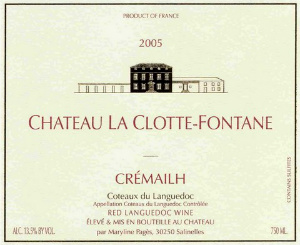
Château La Clotte-Fontane Crémailh 2007

After quite some Beers, time for another Red Wine in what turns out to be my 250th post. I’ve noticed that a lot more Whites got a chance on these pages than reds. Yet after this Château La Clotte-Fontane the next Wine will probably be a White (again) from one of my favorite regions, but more about that later. Let’s not get ahead of ourselves and have a look at his Red Wine from Languedoc. Languedoc is a Wine region in the southernmost part of France. It probably is the region that is the fastest growing in popularity by improving itself annually. Not so long ago, it was probably known only by the vast amounts of Wine produced and not especially for its quality. But as said before, that is rapidly changing.

The domaine is situated near Salinelles, between Nimes and Montpellier and spreads over 130 ha and has two types of soils. One, on the sunny eastern side, contains large pebbles. The second is rather flat and is made up of clay and limestone.
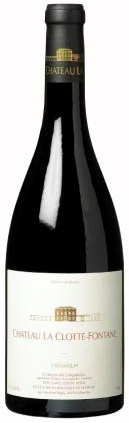
Château La Clotte-Fontane Cuvée Crémailh AOC Coteaux du Languedoc is a Red Wine with an ABV of 13.5%. It is made with two grape varieties: 60% Syrah and 40% Grenache. The Wine ages for 12 months in new French oak barrels in an underground cellar. Next to this Crémailh, the domaine also produces two other reds: Mouton La Clotte and Mathierou, but also one Rosé and one White.

Color: Intense deep red, almost black. Lets only sunlight through.
Nose: Deep and brooding, dry earth, from the clay and limestone soil. Quite modern, stylish. It presents itself as heavy, with its almost black color, but it really isn’t. Some hints of cacao and vanilla. Some fresh oak. It is almost like sharpening a pencil. The fruits are deep and sugared (not meaning sweet), plums come to mind, dried ones too. Excellent.

Taste: Full but not intense. It will probably accompany a red meat dinner perfectly, but drinking this on its own will most certainly do. Not heavy on the tannins, slightly acidic and warming. On the back of my tongue some hints of black pepper ánd clove, which gives the wine a nice ‘effect’. Fruits are more the usual reds: raspberry and essence of cherry.

After this Crémailh I’m definitively interested in the other two reds La Clotte-Fontane produces. This Crémailh is very tasty and well made. The added bonus is in the complexity (not overly complex, but there is a lot happening here) and the detail of the wine. Well done. Drink it now, it’s at it best.

Points: 87

Pierlant Blanc De Blancs Brut

Here we have some bubbles from Landiris France, and again a wine both my wife and my mother love. My wife loves champagne, but with a plethora of Champagne houses and really how many of them are really good, sometimes we venture into other sparkling wines, especially for those occasions when the lively conversation makes you almost forget what you have in your glass. So for those carefree moments we buy sparkling wines like this. Nice to drink, nothing complex, and it doesn’t mean you have to get a second mortgage.

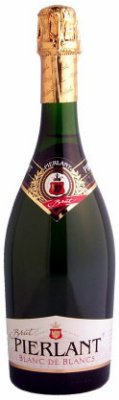
Pierlant Blanc De Blancs BrutThis wine is 100% Blanc de Blancs and produced with the following white grapes: Chardonnay, Colombard, Ugni Blanc (Trebbiano) & Gros Manseng harvested from: Bordeaux, Charentes and the Loire Valley. The wine has an ABV of 11%.
Color: White wine, with a fine mousse.

Nose: Slightly sour and sunny green apple skins, lightly fruity and elegant. Hints of spice, but overall very light. Nice aperitif wine.

Taste: The same here, light aperitif wine, without any off notes. Half sweet and slightly acidic. Nice balance. Very easy and simple and extremely drinkable. Light wine, with a light and dry finish. When drinking a lot of this the wood like bitterness gets noticeable and starts to dominate. So I wouldn’t drink a whole bottle by myself.

In our case, this wine accompanied a nice light tuna and past dinner, with a lot of fresh vegetables. and I have to say that this wine accompanied such a diner very well. Excellent match! In the end this is excellent summer stuff.

Points: 82

Domaine Louis Moreau Chablis ‘Domaine de Biéville’ 2011

After the Chardonnays from Languedoc and Chile, now we return to France for the Mother of all Chardonnays, or maybe the Stepmother of all Chardonnays: Chablis! (the mother being Montrachet).

Domaine de Biéville, located in Viviers, was founded in the 70’s by Jean-Jacques Moreau. The Domaine comprises of one piece of 65 ha, and its orientation is south /south-west. It has a mild climate. Today his son Louis with his wife Anna lead the company (it’s also a wine traders).

Domaine de Biéville has great terroir (former Truffel grounds) and orientation, which often makes it as good as a Premier Cru. The grapes for this wine grow on 40 year old vines (vieilles vignes). By the way this Chardonnay has an ABV of 12%. The website of Louis Moreau is full of Premier Cru and Grand Cru wines, so if this Domaine de Biéville is any good, it is probably safe to say that the rest is even better, or so it should…

Domaine Louis Moreau Chablis ´Domaine de Biéville´ 2011Color: White wine

Nose: Fresh citrussy (lemon) and flinty. Slight hint of meat (beef). Typical Chablis, but a bit dirty, and I like that. It the meaty/gravy bit that does that. The more I nose this, the better it gets. Fruity (hints of apricot) and creamy

Taste: Nice acidity and when that rolls of the tongue, again that fabulous flintyness and depth emerge. Even the dirty part from the nose is here. The nose and the taste match up completely, how’s that for balance. The acidity is quite up front in this one, but a very nice touch to this Chablis is that long into the finish some sweetness emerges. The aftertaste is great. Well made.

Nicely balanced Chablis. Nice acids that play the biggest part in this wine, but hiding after that  is some great meaty dirtiness and of course a typical flintiness. No off notes and for fans of Chablis, well this will come as no surprise. Very easily drinkable and not too complex. Since the acids are quite prominent, this wine can age for a few years more. Recommended with fish, crustations and some cheeses.

Points: 85

Merci beaucoup, Richard!