Lagavulin 12yo 1995/2008 (48%, OB, European Oak, for the Friends of the Classic Malts)

So with the longest day of the year at hand, some would say that this isn’t the time for Peat. Peat needs rugged shores, strong gale force winds and driving rain to be thoroughly enjoyed, doesn’t it? Why not take a light, grassy and lemony Lowlander instead, or even some tropical stuff? Well what can I say, I just felt like it, that’s all.

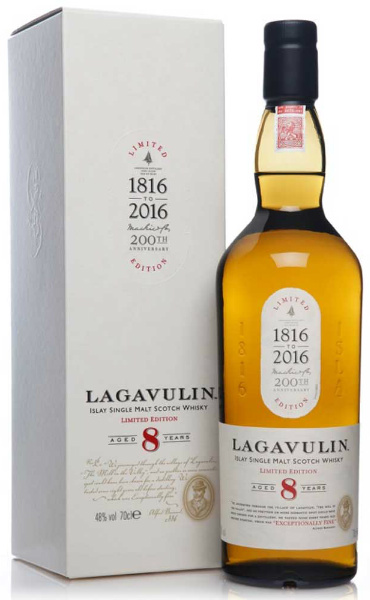
A week ago I hosted a Whisky-tasting centered around the indie bottler, Signatory Vintage. I opened some bottlings of them, which will feature on these pages soon. Of course a good tasting needs an even better after-tasting, like a good party needs an even better after-party. The after-tasting, yes you’ve guessed it: Lagavulin. The distillery that’s celebrating its 200th anniversary this year, with the release of a 8yo, which will also feature on these pages shortly.

But first this oldie (but goldie). Relatively speaking of course. This Lagavulin was released in 2008 and it took well into 2015 to sell out. It was available in shops for a whopping 7 years! Now that its gone, prices are soaring. It was available for such a long time, because there may have been a lot of bottlings around, but it also gained a bit of a reputation. A lot of people, including fans of Lagavulin weren’t very fond of this particular bottling. I consider myself a fan of Lagavulin, so I just has to open it, and try for myself! But first a thought…

Bottlings like this, baffle me to the max. All this time we hear the industry explaining to us, that colouring is done to ensure consistency in colour from batch to batch. Also, the public, when buying Whisky, or any other brown spirit, may be put off when the aforementioned spirit is too light in colour. So why then is this one-off Lagavulin, bottled in a brown glass bottle, coloured with E150, when we, the public can’t even see the colour of the spirit untill after the purchase? Boggles the mind, and mind you, don’t go around thinking that caramel colouring doesn’t affect the taste, because it does, just read Michel’s article back from the day I used to be in the “Coloured Gang”. Sure, it may be a bit lengthy, but it definitely worth it.

Lagavulin 12yo 1995/2008 FFOTCMColour: Orange brown, just like a Bourbon.

Nose: Excellent smoky nose. It starts with more smoke than peat. Sure peat is next. Earthy, sweet and fatty clay. Ashes. Nice wood, accompanied by red fruity notes and some Italian laurel licorice as well. The fruity bit smells more yellow than red. Funky chewy sweetness. Cream Sherry. Mocha cream, cookie dough and light chocolate powder. Leather. Milk chocolate shavings on vanilla ice-cream held up by the wood. Again a lovely smelling Lagavulin, which always works well when it’s matured in Sherry casks. Hints of tar and also some spices. The creamy Sherry notes overpower the spices a bit, so its hard to tell them apart. If you have read the article I mentioned above, you might remember my comments about mellowing out the aroma’s by E150. I feel that is the case here also. This Lagavulin has a nice, very nice actually, but rounded out smell.

Taste: Quite sweet and creamy on entry, quickly followed by peat and toasted cask. Small vegetal bitter note. Very nice. Lots of sweet licorice, almonds and black and white powder. Pepper & salt and definitely some smoke and nuts. Smoked nuts? Smoked sweet almonds (not the salty ones). Red cocktail cherry and a whiff of artificiality in the fruit department. The sweetness is of the typical sugar-water kind. Its fantastic on entry, but the body is losing it at bit already. Falling apart and being quite simple. In no way, has the finish the length of other Lagavulins, but the one big taste lingers on for a while in the aftertaste. However, it’s more the sweet and fruity bit, with only a hint of smoke, than the peat.

This Lagavulin has matured in first fill Sherry casks, not made with American oak. There was a time when (probably) all Sherry matured in European oak butts and puncheons, which are quite large casks. Today a lot of Sherry casks are made from American oak, impairing vanilla and giving off a more creamy feel. Also the casks made today (hogsheads) are smaller than the butts and puncheons, thus allowing for some quicker maturation.

Let me start by saying this is a good Lagavulin. It drinks easily and there is more than enough happening. I like it a lot. However, if I compare this to other Lagavulins, it isn’t the best one out there. I believe the colouring did its part in mellowing out the aroma’s and blending them together into one big (nice) taste. Nothing sticks out really. Apart from the E150, the casks themselves probably weren’t the best money could buy as well, as well as its previous contents. So for a Lagavulin its good, but nothing more than that, but it’s also a Whisky most others can only dream of producing. Lagavulin has stiff competition from… itself.

Points: 88


Bunnahabhain 8yo (43%, Gordon & MacPhail, The MacPhail’s Collection, Refill Sherry Butts, Heavily Peated)

Let’s continue with a Margadale. You might have never heard of Margadale, but that is how the heavily peated Bunnahabhain spirit is actually called. Margadale has a peating level between 35 and 40 ppm. Bunnahabhain means “mouth of the river”, now guess the name of the river itself… I would have liked it if they really would have called it Margadale, just like Tobermory and Ledaig. Now, the peated spirit Bunnahabhain produces is called Margadale, but when the spirit becomes Whisky, the bottled peated Bunnahabhain is called Moine. That’s probably a name you have encountered before. Only Berry Brothers & Rudd have once bottled a peated Bunnahabhain with a mention of Margadale. Bunnahabhain used to be an (almost) unpeated Islay Whisky, even the water used didn’t ever flow over peated land, but when the going got tough, aided by some changes in ownership, they started to make peated Whisky as well…

Bunnahabhain 8yo The MacPhails CollectionColor: Straw, light gold.

Nose: Fatty and buttery. Nice Islay peat. Sea breeze, salty and warming, but also with a soft quality to it. Peat, smoke, crushed beetle and tar. Burning newspaper. Hidden sweetness and florality. Effective and typical. Everything is there, but nothing is overpowering the rest. I would say elegant, as far as heavily peated Whiskies can be called elegant. Nice citrussy note, giving some freshness on top of the peat, smoke, tar and saltness. The floral and fruity notes are deeper and heavier and lie more on the bottom, or in the depth of the nose. Balanced and fine. With some more air it dumbs down a bit. Hints of (burning) paper (again), and the fruits come more to the fore. Dried apricots and white grape. Here you can see how the Sherry casks worked. It adds fruit and a nice woody spiciness. It somehow lacks the obvious vanilla you get from American oak Bourbon casks, although most Sherry casks these days are made with American oak as well. Sometimes you could guess its relative youth, but on the other hand, this shows enough complexity to be considered and older Whisky. Good ‘un. Nice distillate.

Taste: Right from the start we get some separation. The aroma’s aren’t very well-integrated. Interesting. Starts off with smoked salt and creamy butter and a nice White Wine acidity. Fatty peat, very fatty and buttery indeed. Licorice, sweet wood and honey sweetness. Sweetness there is, but not your regular white sugar sweetness. Yes runny thin honey it is. All the way through it keeps not integrating well. The acidity is displaced and hangs around too long in the back of my mouth, and the sweetness is trying to get too much to say underneath. Not sure this Sherry is a perfect match for the peated spirit. The more it breathes, the more it actually develops in the wrong way.

Nice stuff at 43% ABV. Sure, in times it is a bit thin, but I have no problem with the reduction. It makes this Islay Whisky very accessible. Don’t let it breathe though. It allows the acidity to develop and hold it hostage. The wood makes the Whisky, but in this case the wood broke the Whisky. It’s not terrible, but especially in the details this Whisky fails a bit.

Points: 80

Ardbeg 10yo “Ten” (46%, OB, 2012)

Earlier we had another Ardbeg 10yo, but that one was bottled by independent bottler, Cadenhead. Here we have an official 10yo bottled by the distillery itself. I wonder which one will be best. More than “ten” years ago I had another official “ten” on my lectern, and I liked that one very much. Rumour has it however, that the current “ten”, or those of the last few years, are significantly different. More sweet and accessible and less oomph, just like the road taken by Laphroaig. Together with Lagavulin, those were always the heavy hitters from the south shore of Islay. Today it’s Bruichladdich (once unpeated), that makes the peatiest of Whiskies on Islay with Port Charlotte and the Octomore monster.

Ardbeg TenColor: White Wine.

Nose: Well peat first, but is seems to me a very accessible, creamy and fresh, almost citrussy peat. No big oomph, but almost elegant peat. It behaves like a good kid. Reliable. It smells like a very luxury Ardbeg now, since it also has some lovely floral notes with well hidden sweet barley. Wet earth, nice smoke, yet no real barley nor wood. Only of you really want it, you can detect some soft wood. Smelling this for a while, it still does remind me of an Ardbeg, so it hasn’t lost its identity (yet), and I hope it never will.

Taste: It really is the sweetness that first hits you. No crisp dry peaty and smoky dram. It’s peat lemonade. First impression. Yup, in business to sell a brand, and to win over lots of people you don’t want to scare away. Yeah, wonderful. Another sip. I want to taste what comes after the sweetness, but it is so distracting. Lets try again. Sweet yes, we’ve covered that, but what else. Toffee, citrus freshness, lemon curd and vanilla pudding. Almonds, fresh and lightly roasted. Luckily the acidity is just right for this profile. Nutty, yes, but not a lot. What else? This fruity peat, not waxy. It starts sweet, so it takes some time to get the rest, but also the body as not that long, nor is the finish. It does have a warming and likeable aftertaste. A bit thin but fruity nevertheless. Only in the aftertaste I recognize to Ardbeg form not so long ago.

From the smell alone, this is not the Ardbeg 10yo, or “Ten” as it’s officially called, I remember from ten years ago. I don’t think my palate has gone to ruins, because I can still recognize heavy hitting drams that are out there, but this Ardbeg isn’t one of them anymore. But it’s not Ardbeg alone. All the big boys from the past seem to have less oomph these days. Don’t get me started on Laphroaig for that matter. Laphroaig today has nothing to do with the Laphroaig that got me into peated single malt Whisky in the first place. The export strength “10yo” and the “Cask Strength” (green stripe). Those days seem to be gone for good.

So I already feel lots of protests, as if I’m disliking this classic Ardbeg 10yo. That’s not true. This is still very likeable, and still a good dram. If you like your peat but you’re not into heavy peat, than this is for you. It shows quality, and worth your money. It isn’t all that expensive. Good dram.

The problem here is that I know, and have, older bottlings of the Ardbeg “Ten”, so for me comparison in inevitable, and going down that road, well, there is no other conclusion. It has changed a lot. It used to be a crisp, dry and clean heavily peated malt, almost a real young masterpiece, nicely battling it out on the store shelves with Laphroaig 10yo, which had a much longer history. Both having avid fans defending it with their lives. Not me, I loved them both, just like The Beatles and the Stones. This Ardbeg is not that Ardbeg anymore, but today’s Laphroaig most certainly isn’t that Laphroaig anymore too, just like The Stones really. I kid you, but the real problem is that I can’t come up with a real alternative if you want the old heavily peated Ardbeg or Laphroaig back, so I have really high hopes for the new 8yo Lagavulin!

Points: 84

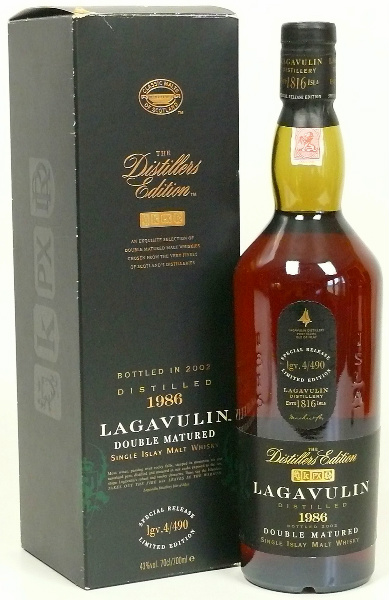
Lagavulin 1986/2002 “Distillers Edition” (43%, OB, lgv. 4/490)

Lagavulin is one of my all time favorite distilleries. It’s almost impossible to encounter a bad Lagavulin. I can’t believe this is just the third review of Lagavulin on these pages the other two being the other two from the current standard range. The 16yo and the 12yo. The 16yo is the modern classic (It used to be the 12yo with the cream label) and right at the time there was a rumour the 16yo would be quite scarce, the new cask strength 12yo was released. As I said, the current standard range is the 16yo, this distillers edition I’m about to review, and the 12yo cask strength version. The latter two come to us as “annual releases”. Just like Springbank, this means that there is some batch variation. A wanted batch variation, to buy more of the same and compare them to other releases, identified by  bottling year.

Just like NAS today, batch variation was always a dirty phrase, it’s not a word isn’t it. But marketing turned that around, just as they are trying with NAS. For me NAS means younger, less matured Whisky, so less contact with wood and as Gordon & MacPhail so aptly put it: “The wood makes the Whisky”. I’m not really happy about NAS, but I never disliked batch variations (again, look at Springbank), unless if the only way seemed to be down. There always has been a lot of discussion about our very Lagavulin 16yo, losing power, balance and character, but I hear the latest batches are becoming better and better again. Today Laphroaig seems to suffer from that…

This is the fifth Lagavulin Distillers Edition (DE). The first was distilled in 1979, the second in 1980, the third in 1981, and the fourth in 1984. Just like all the other distillers Editions, this Lagavulin has undergone a second maturation (a finish) in Pedro Ximénez (PX) casks.

Lagavulin DE 2002Color: Copper orange.

Nose: Fantastic peat. Lagavulins from the eighties can have this excellent peat, I never get tired of. Peat, tar, seashore, you name anything maritime and its in here. Sure the more recent DE’s are still pretty good, but they don’t smell like this. That’s why Whisky lovers still pay a great deal of money for these older bottlings. Smoke comes next and it smells a bit electrical. It has vanilla and a slight fruity nose. You know it’s there, but so hard to distinguish what it is. Ahhh lots of smoked (dry) sausage and slightly dried out onions and pear. Excellent, what a combination. Where have you smelled that last in a Whisky? This Lagavulin is all about balance (again some kind of dirty word for some). The whole is so fantastic, and goes on and on. Wonderful. Hard to put down. With time the fruit, still distant, finds it’s place in the whole and adds a more fresh and fruity part to the whole. Just smelling it is quite the experience, and still getting better. Lagavulin is such a big aroma, that even the thick and sweet PX can’t overpower it, just add a little something. I guess the finish was done intelligently. I’m putting off tasting it for just a while longer to put on my fisherman’s sweater…

Taste: …in the end it would be a shame not to taste this, so here goes. Well somewhat less special than the nose is the first thing that comes to mind. The PX is more upfront as well. It starts out chewy. Nice licorice, black and white powder and a thick sweet Sherry without most of its sweetness. Does that even make sense? Waxy and again very coastal and raw. Masculine. Puffer’s smoke. Burning hay. Fishy, as it should be. Smoked fish of course. Smearing tar on the hull of a boat. Get yourself something like this, because modern peated Whiskies are nowhere near this profile. I wouldn’t add water to it, because reducing it to 43% shortened the finish already. Big body, with only a medium finish. In the aftertaste the balance is slightly gone. It could have been even better than it already is! Wow.

It’s been a while, but I do understand why Whisky lovers in general pay lots of money for Whiskies like this. This is great and they sure can’t make them like this anymore. Drinking this put you in a different place and time altogether. It changes you as a person (for a while). Sure it puts you back a few hundred euro’s pounds or dollars, but try to imagine what a trip to Islay in 1986 would cost you now. It’s a time-machine and time-bomb in one. A must have.

Points: 91

Caol Ila 11yo 1994/2005 (58.2%, Gordon & MacPhail, Cask Strength, First Fill Sherry Butts #12423 & #12424)

I actually picked the 1990 Caol Ila and this 1994 Caol Ila, to compare Bourbon cask matured and Sherry cask matured young Caol Ila’s. However I don’t think the 1990 was aged in a Bourbon cask, but rather in a Fino or similar type of Sherry cask. However, American oak is probably the wood of choice for the 1990, and maybe the comparison with the two types of Sherry is maybe even a more interesting one. I’m a bit on thin ice here, since nowhere it is said in what kind of cask the 1990 has matured, nor is there any mention for both of what type of Sherry previously inhabited the casks.

Caol Ila 11yo 1994/2005 (58.2%, Gordon & MacPhail, Cask Strength, First Fill Sherry Butts #12423 & #12424)Color: Slightly orangey gold.

Nose: Fatty and funky Sherry. Raisins and wax. Stale rainwater and some muddy peat. Peaty clay, not very fatty or round, as some might say. The raisins do remind me a bit of a Highland Park bottled by Gordon & MacPhail as well. Although that one is much, much darker, it is the same raisiny aroma. Probably the same kind of Sherry. Wood spice and salty smoke. Nice creamy wood, smoky licorice. Perfumy sandalwood and a buttery acidity. Creamy and slightly meaty. Burning candles. Enough happening in this one. Vanilla comes late, it is just overpowered by so many other elements in the nose. A nose from an old house at christmas.

Taste: Initial sweetness with some toffee. Lots of wood, slightly dry, but it is soothing and not harsh nor sour. Some sweet licorice again, with some dusty spice and Cappuccino. After the dusty part comes a woody and slightly acidic wine-note. A fruity acidity that doesn’t fit this Whisky. It makes all the tastes up ’till now, fight each other, instead of becoming a band of brothers. It is obvious that this Sherry didn’t integrate that well. Dries the lips. Finish has only a medium length and quite bit of an unbalanced aftertaste, an apply acidity, which is not entirely tasty if you ask me. The aftertaste ruins it a bit for me. I definitely prefer the previous Caol Ila.

It almost seems as if you can’t go wrong with Caol Ila. Let’s say this is from a Oloroso Sherry or even a PX, both are considered somewhat “normal” Sherries, by wine-people, and considered of a lesser quality then a Sherry that has matured under flor, a “hat” of fungus that grows on the surface of the Sherry. The hat prevents contact with air. The G&M Caol Ila I reviewed the day before yesterday, I believe came form such a Sherry. For me that is the superior one of the two. I do usually prefer Oloroso ageing, especially when it is a Whisky that was aged a while back. Good Oloroso Sherry matured in European oak, instead of the American oak preferred by the Sherry industry these days. Vanilla, people, Sherry drinkers prefer a more creamy Sherry these days. European oak also seems to need longer ageing, to deal with the tannins, and that is time we don’t seem to have…

Points: 80

Caol Ila 13yo 1990/2003 (55.6%, Gordon & MacPhail, Reserve, Cask #1114, 283 bottles, JC/GF)

I got up this morning seeing that it is a nice and sunny day, just with a chill in the air. Ice on the windscreen, and couldn’t be bothered de-icing the car, so I did the school run on foot. Luckily no wind so it wasn’t so bad. Walking towards the winder I did pick up the inspiration to review some Islay Whisky. Yeah! Rummaging a bit in the sample bank I dug up two Islay babies, that will together well, or make for interesting comparison. Once not so readily available, today impossible to miss. Caol Ila is the name and peat is the game. I love Caol Ila because it ages really well. So lets educate myself and have a look at a younger example of Caol Ila. This 1990 Caol Ila was bottled by Gordon & MacPhail in 2003. The outturn was 283 bottles at cask strength, and considering the color and wood management policies at G&M, I would be surprised if this wasn’t matured in a remade Bourbon Hogshead although a Fino or Manzanilla Sherry hogshead is also possible. Two of its sister casks were also bottled in 2003: #1115 (JC/AEG) and # 1116 (JC/CEB). More sister casks exist. In 2011/2012 at least three more were bottled: #1120 (for La Maison Du Whisky, France), #1121 and #1122 (both for Van Wees, The Netherlands).

Caol Ila 13yo 1990/2003 (55.6%, Gordon & MacPhail, Reserve, Cask #1114, 283 bottles)Color: White wine.

Nose: Dry and smoky peat, with an underlying sweetness. So it’s not the fatty peat you sometimes get. This is drier and a wee bit more spicy. Cow organics in cold weather. With hints of hay and quite some buttery and lemony notes as well as hints of shiny aromatic apple skin (not acidic). Some flowery elements were present in the peat, lavender as well as there is some crushed beetle (sounds strange doesn’t it?). Vanilla and more creamy, fresh buttery notes. The wood smells a bit meaty and well aged, so not young and sappy. Hints of cured meat. Smells a bit toned down and maybe older than it actually is. Very well-balanced. More about fresh and fruity notes than heavy peat. Accessible. Garden bonfire burning off old branches combined with powdered vanilla and powdered coffee creamer. It’s not really a big Whisky, but a well constructed one. Wonderful nose, especially by the wonderful vanilla and floral nose. I would say Fino Sherry hogshead. made from American oak.

Taste: More peat and quite sweet, which works quite well this time. There is enough going around to balance the sugary sweetness out. Burned leaves and a lot of vanilla and clotted cream, custard, pudding. These notes are quite big and it takes a while for those to pass, to let a more paper and (spicy) wood note through. Distinct hints of soap. It breaks down a bit in the finish, with a creamy note that goes down my throat, but in the same time a more acidic wood note stays behind in the roof of my mouth, the soap also has some staying power under my tongue. These flaws are easily forgivable, looking at the whole. Good Caol Ila.

This went under the radar a bit when it came out, as well as its sister casks, but what a treat this is. Definitely American oak and probably Sherry that aged under flor instead of Bourbon. All aroma’s work together well. I wish I had more of this, but at least I had the experience of a whole bottle of this. Worth seeking out at auctions, but a lot of it was probably drunk back then.

Points: 87

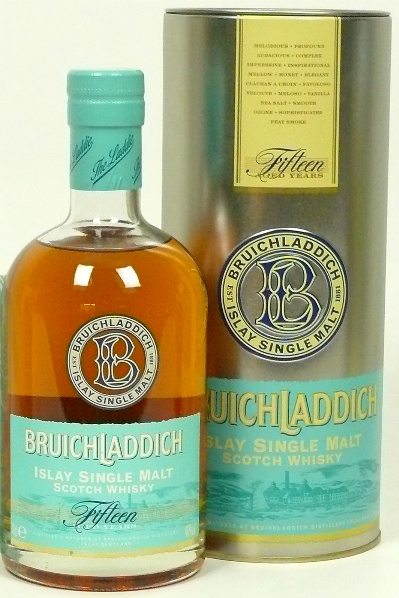
Bruichladdich 15yo (46%, OB, First Edition, 2003)

Earlier I reviewed the Bruichladdich 10yo. That was one from the first batches to be released, right after the distillery was sold to Mark Reinier & Co. The first releases were that 10yo, the 15yo I’m about to review and a 20yo. Ten years ago that is how a standard range looked. Age was everything back then. Today we’re not that far removed from an age, where age statements seem to be only for people with Lamborghini’s. Real ones, and I don’t mean the tractors too. It’s all about demand people. The 10yo I mentioned before didn’t float my boat, so I’m not sure what to expect with this 15yo. Let’s have a go shall we?

Bruichladdich 15yo (46%, OB, 2003)Color: Medium gold.

Nose: Reminds me of the 2003 10yo with just some more of everything, in fact, this one doesn’t want to stay in your glass! Fresh citrussy barley. Hint of peat and a little bit of smoke. Smells quite sweet for such a Malt. Garden bonfire. The sweetness is fatty and oily, or you can call these aroma’s well-integrated.  The more I smell this, and the more air it gets, the better it becomes. By now it’s already way better than it’s 10yo brother (or sister). Nice succulent wood, again integrated with the sweetness. Hints of vanilla, not much, and fresh, some distant fruitiness. I spoke too soon. The vanilla part grows bigger with more air and becomes creamy. Sweet yoghurt with peach. Lovely. Great balance and quite appetizing. I hope it tastes as good.

Taste: Quite sweet and very creamy with a woody, bitter edge to it. Again the sweet yoghurt with peach and toffee. Reminds me a bit of the great Bourbon casked Whiskies from the seventies. Great entry and a similarly great body. Not a lot of development though, but with something that tastes this great, who cares? Towards the end of the body the slightly peated toffee sweetness takes a step back and lets the wood through. It’s there, without taking over, barely though. You felt it coming: “but”. The flaw is in the finish. It breaks down a bit and is slightly shorter than the nose and the great body suggested. A wee bit too much reduced? Yes I know, its 46% ABV., but that doesn’t matter. This is how reduction with water, sometimes alters the finish. The aftertaste moves in to the territory of soap and stale beer and a minute amount of hops, but that sounds worse than it actually is, so don’t worry. Not a lot is left in the aftertaste, and there is only one remedy for that. Take another sip so it all starts all over again.

Points: 85

Octomore 5yo “Edition 02.1 / 2_140” (62.5%, Bruichladdich, Ochdamh-mor, American Oak, 140 ppm, 15.000 bottles, 2009)

After the sweet and weak Glenfiddich, time for a potential beast. This Octomore, the brainchild of Jim McEwan was, when it was released, the most heavily peated Whisky in the world. Today we look a little bit differently at 140 ppm, since Octomore 06.3 is peated to a level of 258 ppm! Octomore 06.3 is a lovely Whisky and shows quite some fruits and the peat doesn’t even seem that heavy as it sounds. But time to rewind a bit and have a look at Octomore 02.1 that was already released in 2009. The first Octomore that was released is known to the world as 01.1, peated to a level of  131 ppm and bottled in 2008. The first ever Octomore distilled by Jim has never been released, but a small group of people had the chance to try it at the Whisky Show 2015 in London earlier this month, and Jim has probably brought it with him elsewhere too. The first ever Octomore was distilled in 2002 and peated to a level of 80.4 ppm. Filled into a first fill Oloroso butt and bottled at 62.3% ABV. I didn’t take notes since I was listening to Jim, but managed to score it 91 Points.

Octomore Edition 02.1 / 2_140 (62.5%, Bruichladdich, Ochdamh-mor, American Oak, 140 ppm, 15.000 bottles)Color: Very light gold.

Nose: Fatty peat and hints of red fruits, mostly berries. Peated barley and slightly medicinal, iodine. Smoky. Actually this smells like a lot of Whiskies from Islay do. In nothing you get that it is more than heavily peated. When you let it breathe for a while, a more (yellow fruity) sweetness emerges. Altogether for this to reach a more balanced state, you must give it some time. More meaty, smoky, tarry and salty aroma’s emerge. Burning off dry plants. Licorice, sweet wood and smoke in the mist. Wait even longer and hints of menthol and lemon can be smelled. the whole gets even softer. Old furniture and even creamy. Vanilla Ice cream with pepper and salt. Old paint and some nuttiness emerge late. Cotton candy. If you handle it well, if you are patient with it and use a glass that can handle air well, you’ll be rewarded. Wonderful nose which keeps on giving and giving.

Taste: Again  very creamy. Peppery and lots of it. Peppery attack with lots of licorice and sweet wood. Matches the nose perfectly. Quite sweet, but the rest of the aroma’s are pretty “there” as well so it handles the sweetness perfectly. Hints of old wood integrated with the licorice. Lots in common with Port Charlotte (obviously). Taste is very balanced, but less complex than the nose. It will be great to see Octomore (and Port Charlotte) mature.

Excellent example of a Whisky you have to work hard for, to be rewarded. It needs a lot of time and air to be at it’s best and show you all it’s got. Use the wrong glass or being impatient with it, will degrade this to nothing special at all. This is a wonderful yet modern spirit, which already is great if you know where to look. Lots of potential. The aroma’s are so big it even hides the high strength. I didn’t try it with water, but I’m sure it will take water well. Pour yourself a dram and then drink something else first, come back to this later.

Points: 87

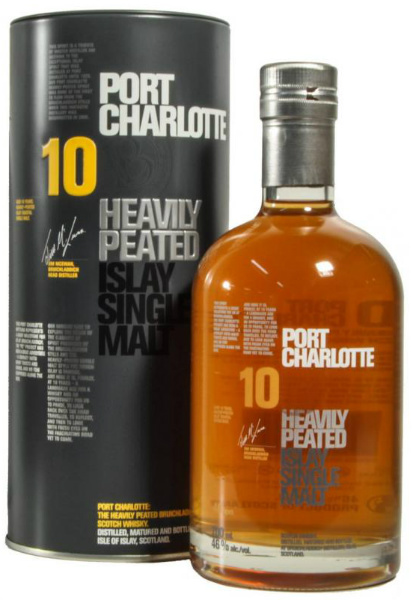
Port Charlotte 7yo 2001/2008 PC7 “Sin An Doigh Ileach” (61%, OB, 24.000 bottles)

Since 2006 with the release of PC5, once a year a PC edition is released. All distilled in the first year of distillation. As we know by now, the first distillation of Port Charlotte was done on the 29th of May 2001. In 2007 we saw the release of PC6 and in 2008 we saw the release of PC7, which we’ll review here. At this moment, I don’t have any more PC editions around, but it would be nice to follow the evolution of PC’s someday…

Port Charlotte PC7Color: Full gold.

Nose: Funky and meaty. Can this be Sherry influence? Pudding. Pencil shavings and mild fatty peat. Very creamy with small hints of banana. Nice interaction between the wood and vanilla. Cold black tea. Perfumed tea mixed with breaths of fresh air. Hints of sweetish yellow fruit yoghurt, what? Peach, passion fruit & maracuja. Heaps and heaps of aroma carried by a menthol/mint concoction. Hints of, wood, hay, ashes and again licorice like the An Turas Mor I reviewed last. Again good stuff to nose.

Taste: Powerful ABV yet not as warming as the An Turas Mor. It’s ABV does dry out the throat a bit. Creamy. It’s all there again. Lets call this vanilla pudding, shall we? Vanilla pudding with salt and pepper, that is. The way the peat comes across in Port Charlottes, makes them very tasty. Aloe Vera lemonade and hints of florality. Nicely integrated wood. Here we have some more wood to function as a backbone. Vegetal notes whiff in and out and the wood is somewhat floral. Slightly salty. Latex paint and mocha. Hardly any bitterness at all. Port Charlotte is growing more and more complex. Still its quite youthful and that shows in the weaker finish compared to other Islay Whiskies. But don’t worry, there is a lot going on before the finish.

Really nice distillate Port Charlotte. Well made stuff.

Points: 88

Port Charlotte “An Turas Mor” (46%, OB, American Oak Casks)

In 2000 Murray McDavid bought Bruichladdich for £6.500.000 (from Jim Beam, current owners of Bowmore and Laphroaig). After acquiring the distillery guess what was the first distillate made? Yes! Port Charlotte, not the unpeated Bruichladdich itself. The guys behind Murray McDavid are no fools. We all know Mark and Jim to be very shrewd guys. So the first stuff they wanted to make with their new distillery was peated Whisky. On the 29th of May 2001, the first Port Charlotte was made. The first Bruichladdich under new ownership was somewhat later distilled in July. (2001 which was also the year the first newly bottled Bruichladdich was released; the 10yo I just reviewed, the 15yo and the 20yo). Finally on the 23rd of October 2002 the first Octomore was distilled.

Port Charlotte "An Turas Mor" (46%, OB, American Oak Casks)Color: Pale gold.

Nose: Mild, fatty vegetal peat, with butter and vanilla, pepper and salt. It smells like lavas was one of the plants that makes up the peat. Quite soft and unobtrusive. Some smoke and a tiny hint of burnt plastic and traces of soap. Sappy licorice twig. Wood lying around in the forest. Fresh (air) and un-complex. Dry kippers with hints of tar. Dusty vanilla and some paper. Nice to smell. The nose is worth the price of admission.

Taste: Sweet and peat. Sugar water with slightly bitter peat. Sweet licorice and black and white powder (yes, licorice again). Slightly warming. Licorice and licorice twig. Very tasty (the sweetness helps it along), but not very complex, but who cares when it’s so drinkable. Reduced, brooding peat that resembles coffee a bit. After a decent body, comes alas a sort of weak finish. A finish full of paper, barley, hints of soap and sweet licorice, but I guess we can blame its youth for that.

Lots of young Whisky is noticeable in An Turas Mor, but it shows a lot of potential though. This will become a great peated Islay Whisky when it becomes of age. I feel that Port Charlotte is a sweet Whisky that can be high on aroma, but struggles a bit with its length when it’s young. Highly drinkable, likeable and definitely worth its money. Get it, it’s not as expensive as the PC’s.

Points: 84