Jim Beam “Black” 8yo (43%, OB, Circa 2004)

Jim Beam white was my first Bourbon ever, in fact is was my first Whiskey ever! Especially for the money I always considered the bulk produced White quite decent. Later in my “career” I bought this Black label, which looks more serious and brooding. Just like a bride stands out next to the Terminator. This used to be 8yo, and it said so on the label, but todays version became a NAS. I don’t think it got much younger, but this way, I guess, the company has the possibility to mix in some 6yo and 7yo Whiskies.

Jim Beam BlackColor: Light copper orange.

Nose: Honey, and lots of it. Nice creamy wood. Vanilla. Very friendly and appetizing. Whiffs of burning newspaper, and sometimes a tiny, tiny whiff of fireworks. Toasted cask, but again, not much. The honey never takes a step back, its omnipresent. The more time you are able to give this the more the wood comes to the front. At twice the age of the “White” that should hardly come as a surprise. Well balanced stuff. Still, after the wood, caramel and toffee show themselves more as well as some white pepper and some, wait for it… rural organics. This is pretty good, considering the price and the industrial amounts that are made of this.

Taste: Quite light. Floral. Honey again. After a short delay that warm honey runs down my throat, quickly turning into slightly burnt sugar and oak. Very friendly and not the big hitter the label seems to promise. Definitely family of the White label, with more of everything, just maintaining the friendliness of it all. Extremely easily drinkable. Creamy vanilla and honey again. Quite sweet and lovely, with nice woody characteristics. Oak stays behind after you swallow. Not very complex, but very well-balanced. Especially when given some air and time. Mellow stuff.

The profile of Jim Beam Black fits that of Evan Williams Single Barrel, but half the price. I have to say I don’t know how a more recent “Black” will perform, but this 2004 bottling performs just nicely. Compared to Binny’s Buffalo Trace, the “Black” has way more honey, and seems soapier, which is something I haven’t picked up on, trying it by itself. The Buffalo Trace is more strict and in a way more fruity and even better balanced. I guess now it becomes a comparison of yeast strains. Jim being more floral and the Buffalo being more fruity.

Points: 80

Four Roses “Single Barrel” (43%, OB, H294D, 2003, 70 cl)

After the Four Roses in disguise, called Bulleit, let’s compare it to a true Four Roses (with a similar profile). In 2012 I reviewed the current 50% ABV version of the Four Roses Single Barrel and I refered to this discontinued 43% ABV. version, calling it: “Too weak, very light and too floral and girlie for my taste”. At the time of writing I thought I finished the bottle, but as luck would have it, I found a box of archive sample bottles filled with different Bourbons I used to have. I guess it pays to save something for later! So many years later, let’s find out if this 43% ABV version is as hideous as I seem to remember it! By the way, this one is said to be 8yo and was bottled on 12 April 2003.

Four Roses Single BarrelColor: Orange gold.

Nose: Yup it’s the floral rye again. Lilac and Lily of the valley. Easily recognizable and even more pronounced than the new 50% ABV version, the only bottle I had, I forgot to fill up an archive sample of, so no direct comparison is possible, only from memory and notes. Fruity and floral, it’s almost a perfume. Powdered vanilla and coffee creamer. Almonds and fresh cookie dough. With air dusty wood comes into the fold. Elegant and perfumy. Not a lot of wood actually. Well integrated. A lot of honey is starting to emerge too as well as some turkish Delight and licorice, and anise. Don’t like how the honey and floral aroma’s turn out together. Add to that a slightly acidic fruit note, and you’ve lost me a bit. No notes of toasted cask. It comes across as a designed Bourbon. A Four Roses for people who wear a bow-tie, not for rugged lumberjacks. It is actually a Bourbon for the metro man. Although it’s not quite clear what I am, this is my least favorite Four Roses expression to date, but wait, I still have to taste it again after all those years. The nose is something I don’t always like, although I do recognize the quality.

Taste: Paper and wood, pencils (cedar). Quite a lot of waxy notes. Lightly sweet, but the sweetness washes away with the added water to be replaced with some sour, and slightly bitter oak. Honey and creamy sweetness, but here these two do a better job at integrating with each other. A bit weak on entry and not so long a finish, built around the paper and weak woody note, especially when compared to its stronger brother. Good aftertaste though, nice aroma’s return and a great creaminess is added to the aftertaste. Nice delayed effect. The aftertaste even seems stronger than the finish itself, nicer too. The move to 50% ABV was a good move. Alright, this isn’t my least favorite Four Roses anymore. Now it is the “Yellow Label”…

Even though I prefer the 50% ABV “Single Barrel”over this one. Both are well made and do resemble each other. This 43% ABV has some exaggerated floral Rye and doesn’t combine all that good with the honey and fruity notes. The 50% ABV is the same, but for me is better balanced. Having said that, this may be a tad more special, more unique, so it is definitely worth seeking out.

Points: 83

Bulleit 6yo “Frontier Whiskey” (40%, OB, Circa 2010)

Bulleit is a brand owned by Diageo. Diageo is the biggest drinks company in the world and they are known for loving to make a buck. Nothing wrong with that. Making booze is not a charity you know. In 1983 sensible economics made Diageo close a lot of distilleries in Scotland, and Diageo are also the ones who closed the legendary Stitzel-Weller distillery, their only distillery in the US, correct me if I’m wrong. Why then put out a Bourbon Brand? Economics, getting a foot in the door? The regret closing Stitzel-Weller? Who cares what the reasons are. They decided to put out a brand of Bourbon and had it made by Four Roses. The mashbill contains around 28% Rye, which is right in the middle of Four Roses’ own B (35% Rye) and E (20% Rye) mashbills. And at Four Roses they know what they are doing. By the way, The old Stitzel-Weller distillery is now a centre for promoting Bulleit.

Bulleit BourbonColor: Light orange gold.

Nose: For me, Rye Whiskies always smell a bit floral, even though they (should) have a taste with a bite. I don’t know how to describe it differently. This isn’t a Rye Whiskey, but it does smell like it, sort of. High Rye mashbill it is. Dusty, floral and vegetable. Buttery with dry leather. Delayed mint. Funky stuff like crushed beetle and cold dishwater. Old honey and do I detect a wee whiff of urine in there? Well, don’t be fooled, this smells rather nice, but we already know, Four Roses know what they are doing, but i might have said that already. Powdery and dry with some charcoal. Well balanced, especially considering its age.

Taste: Smoother than the nose led me to believe. Slight dryness, but also quite sweet. Sugar water. Funky rural toffee and a bit of leather. Some toasted oak, but the focus lies more on the toast then the oak. Nevertheless, the oak is there, but it’s hardly woody at all. Creamy, but a bit too thin. I believe 40% ABV. is a bit too low. Spicy and chewy Rye. Light, but good. Medium to short finish, with a slight bitter edge towards the aftertaste. I do believe the distillate to be promising, but it is a bit killed by the low ABV.

I didn’t like it when I first opened it, but I warmed up to it now. I remember I didn’t like the pronounced florality of it, and it may have been slightly soapy when it was freshly opened. In the end Four Roses make a pretty good Whisky, even if they do it for Diageo. I would ditch the 40% ABV version and get the 45% ABV version if you have the chance, but it isn’t available in all markets.

Points: 81

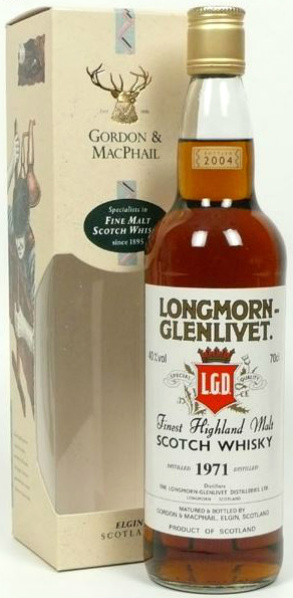
Longmorn 1971/2004 (40%, Gordon & MacPhail, Distillery Label, JD/AII)

The old Jameson opened my eyes for old bottles. Not true actually. I’ve known it all along. I just needed a kick in the bee-hind, to open some more, before I one day, kick the bucket. Luckily I had a birthday two months ago, and that is always a good reason to pick a nice one from the collection and “because you’re worth it…”. Of course, “Thursday” is also a good reason in my book. 1971 is quite a legendary year for Longmorn. At Longmorn nobody will concur, because they haven’t done anything different in the years before and since 1971. However, there somehow are a lot, very good sherried, and otherwise matured, Longmorns from around 1971. I particularly love the 1971 from Scott’s Selection, although true Longmornado’s tell me there a many better ones. Great!

Longmorn 1971/2004 (40%, Gordon & MacPhail, Distillery Label, JD/AII)Color: orange gold.

Nose: Waxy. Old black fruits and just like the Jameson I reviewed last a bit of steam. Buttery and beautiful Sherry and black coal. It doesn’t leap out of the glass and I believe that is due to the reduction to 40%. I’m not worried yet, because these old distillates can handle a lot of water. Today’s Malts do need a higher strength. Nevertheless it seems the nose suffered a bit in power. Maybe this is one for a Cognac copita (the big balloon glass). Luckily I have a whole bottle of this, so I can experiment a bit. Slightly tarry but right after that a fresh note of faint menthol/mint. Way down deep into the nose some licorice pops up, well hidden in the dark fruitiness. Again, a wonderful old bottle.

Taste: Sweetish black tea, and again pretty fruity. Raspberry hard candy, and some cherries. The whole is quite soft, so again, maybe this was reduced too much. It’s great as it is, but I can’t shed the feeling, a lot was taken away from this Malt as well. Now it’s too damn drinkable, so I don’t think this will last me a long time. I’m sorry the body isn’t a bit bigger. I’m accepting this now and I move on. This is great stuff extremely well-balanced. A nice nuttiness comes to the fore and then even some honey. Hurray for air, breathing and developing Whisky. Great combination of fruit and the hints of tar and black coal. Tiny hint of burnt Sugar towards the end. The finish could be longer, but we’re rewarded with a wonderful aftertaste. It even reminds me a bit of some Rhum Agricole in the finish. Be patient and give it time to breathe. It opens up. wow!

I’m a sucker for Sherried Longmorns from the second half of the sixties through the first half of the seventies. These Whiskies are so good. Sure there are a lot of Longmorns around that are better than this one, but there are not a lot of Whiskies better than Longmorns like this. Give it time to breathe, it will open up and become bigger than it initially was.

Points: 91

This one is dedicated to David Urquhard (1952-2015) who passed away on 30 November 2015, aged 63.

Caol Ila 13yo 1990/2003 (55.6%, Gordon & MacPhail, Reserve, Cask #1114, 283 bottles, JC/GF)

I got up this morning seeing that it is a nice and sunny day, just with a chill in the air. Ice on the windscreen, and couldn’t be bothered de-icing the car, so I did the school run on foot. Luckily no wind so it wasn’t so bad. Walking towards the winder I did pick up the inspiration to review some Islay Whisky. Yeah! Rummaging a bit in the sample bank I dug up two Islay babies, that will together well, or make for interesting comparison. Once not so readily available, today impossible to miss. Caol Ila is the name and peat is the game. I love Caol Ila because it ages really well. So lets educate myself and have a look at a younger example of Caol Ila. This 1990 Caol Ila was bottled by Gordon & MacPhail in 2003. The outturn was 283 bottles at cask strength, and considering the color and wood management policies at G&M, I would be surprised if this wasn’t matured in a remade Bourbon Hogshead although a Fino or Manzanilla Sherry hogshead is also possible. Two of its sister casks were also bottled in 2003: #1115 (JC/AEG) and # 1116 (JC/CEB). More sister casks exist. In 2011/2012 at least three more were bottled: #1120 (for La Maison Du Whisky, France), #1121 and #1122 (both for Van Wees, The Netherlands).

Caol Ila 13yo 1990/2003 (55.6%, Gordon & MacPhail, Reserve, Cask #1114, 283 bottles)Color: White wine.

Nose: Dry and smoky peat, with an underlying sweetness. So it’s not the fatty peat you sometimes get. This is drier and a wee bit more spicy. Cow organics in cold weather. With hints of hay and quite some buttery and lemony notes as well as hints of shiny aromatic apple skin (not acidic). Some flowery elements were present in the peat, lavender as well as there is some crushed beetle (sounds strange doesn’t it?). Vanilla and more creamy, fresh buttery notes. The wood smells a bit meaty and well aged, so not young and sappy. Hints of cured meat. Smells a bit toned down and maybe older than it actually is. Very well-balanced. More about fresh and fruity notes than heavy peat. Accessible. Garden bonfire burning off old branches combined with powdered vanilla and powdered coffee creamer. It’s not really a big Whisky, but a well constructed one. Wonderful nose, especially by the wonderful vanilla and floral nose. I would say Fino Sherry hogshead. made from American oak.

Taste: More peat and quite sweet, which works quite well this time. There is enough going around to balance the sugary sweetness out. Burned leaves and a lot of vanilla and clotted cream, custard, pudding. These notes are quite big and it takes a while for those to pass, to let a more paper and (spicy) wood note through. Distinct hints of soap. It breaks down a bit in the finish, with a creamy note that goes down my throat, but in the same time a more acidic wood note stays behind in the roof of my mouth, the soap also has some staying power under my tongue. These flaws are easily forgivable, looking at the whole. Good Caol Ila.

This went under the radar a bit when it came out, as well as its sister casks, but what a treat this is. Definitely American oak and probably Sherry that aged under flor instead of Bourbon. All aroma’s work together well. I wish I had more of this, but at least I had the experience of a whole bottle of this. Worth seeking out at auctions, but a lot of it was probably drunk back then.

Points: 87

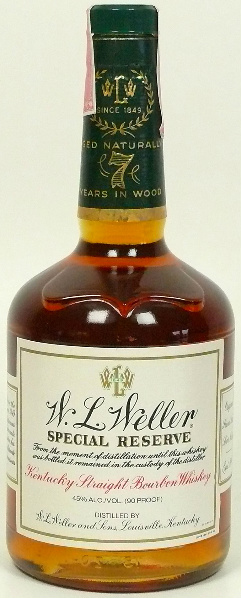
W.L. Weller 7yo Special Reserve (45%, OB, Circa 2007)

Just like the Old Fitzgerald, W.L. Weller is a Wheated Bourbon that used to be made at Stitzel-Weller Distillery.  When that closed down, the Old Fitzgerald brand was sold to Heaven Hill and W.L. Weller was sold to Sazerac, owners of Buffalo Trace. The W.L. Weller 7yo “Special Reserve” is no more. After this one, a similar looking bottle was released, but without the 7yo age statement. Later the look was altered altogether. It’s still called “Special Reserve” and it still lacks an age statement. Other Wellers that are still around are the W.L. Weller “Antique” bottled at 53.5% ABV. and a 12yo, which is bottled at 45% ABV, just like our 7yo. Finally there is a William Larue Weller that is part of the Buffalo Trace Antique Collection (BTAC), which is bottled annually at barrel strength, something in between 65 and 70% ABV.

W.L. Weller 7yo Special Reserve (45%, OB, Buffalo Trace)Color: Medium orange brown.

Nose: Lots of cream and toffee, very appetizing. Honey, vanilla and wood, nutty and dusty. Again toffee and warm runny caramel. Nice spicy wood in the distance even reminiscent of a dry (salty) meaty aroma, beef jerky or polish kabanosy. Sappy charred oak. Savvy and supple. Sawdust, perfumed caramel and chocolate bonbons. A hint of sweet corn and charred cask, and dare I say it, minute amounts of smoke and ashes, probably from the toasted cask. This smells like it owns it. Very well made, interesting and nice. Love how this smells.

Taste: Sweetish, nutty, fresh and well-balanced. Quite some wood influence as well as paper. Sawdust I would say. Bassetts Liquorice Allsorts and lots of vanilla ice-cream with caramel sauce on top. Small hint of dry bitter wood trailed by some, but not much, vanilla sugar sweetness. This works well and gives the Bourbon some backbone. Again, this is a very appetizing Wheated Bourbon. This is a perfect example where all the aroma’s come together nicely, but having said that, this doesn’t seem to be your most complex Wheated Bourbon. It’s very tasty in an almost simple kind of way, but I don’t consider this a daily drinker. It pack a wee bit too much for that and it deserves to be savoured.

Who said that Wheated Bourbons are light and dull? After this one I’m curious if the new “Special Reserve” comes near this one, because this 7yo is quite the winner for me. I like it a lot. I compared it to the Old Fitzgerald 12yo I reviewed earlier, but that one almost seems soapy compared to this one.

Points: 86

Old Fitzgerald 12yo “Very Special” (45%, OB)

I finished the Four Roses single barrel as well as the Old Grand Dad 114, so it’s time to open some fresh bottles. One was very easy to pick, and  that was the Old Fitzgerald 12yo “Very Special”, the next, well you’ll see later I guess. Old Fitzgerald 12yo is a Wheated Bourbon made by Heaven Hill in Louisville Kentucky. If you happen to stumble upon a very old bottling of this, or even a “Very Very Old Fitzgerald”, you’ll have a distillate of the legendary Stitzel-Weller distillery, worth quite some money today. The Old Fitzgerald brand was created around 1889 by Charles Herbst maybe even as early as the 1870’s. Pappy van Winkle bought the brand during prohibition and changed the mashbill of the Original Old Fitzgerald by adding “a whisper of wheat”.

As you might know, the Bourbon mashbill must have at least 51% of corn, and usually Rye is used as a secondary grain with some malted barley. For Wheated Bourbon, the Rye is substituted by Wheat. Apart from these two, also Rye Whiskey (at least 51% Rye) and Wheat Whiskey (at least 51% Wheat) exist, and of course Whiskies with both Rye and Wheat.

Old Fitzgerald 12yo VSColor: Orange brown.

Nose: Dry and dusty, cold soft ashes. Hints of glue. Dry leather, honey and soft almonds. Tiny hint of apple skin, dried out orange skin and some unripe banana. The wood itself is quite floral, like old lavender soap mixed with cocoa powder. Not a lot of spicy wood or toasted cask, even after 12 years. Quite a surprise considering the color of this Bourbon. The age dulls out the fruity notes it probably had when it was younger. Still the nose is built around a dry and dusty wood and leather notes.

Taste: Wood most definitely is the first aroma you taste. Dark cocoa powder, with soft sweetish cinnamon comes next with an elegant sweetness (corn), meaning not too much. The sweetness was toned down by the time this Bourbon spent in cask. The Whiskey goes down like a syrup, very slowly, taking its time, giving a little heat and good length in the finish. Some unbalanced acidity from the wood shows itself in the aftertaste, especially on the tongue, but it’s easy to deal with, even though it has some staying power. Even later in the aftertaste the more powdered creamy notes emerge, buttered popcorn and toffee.

It’s rumoured that Heaven Hill wants to stop making this, but that really would be a shame. It’s good stuff and definitely one you want to try if your favourite wheated Pappy Van Winkle is getting worse a bit, or becoming to expensive to enjoy properly. Also a nice one to try against some of the Weller’s that are around, which are also Wheated Bourbons.

Points: 85

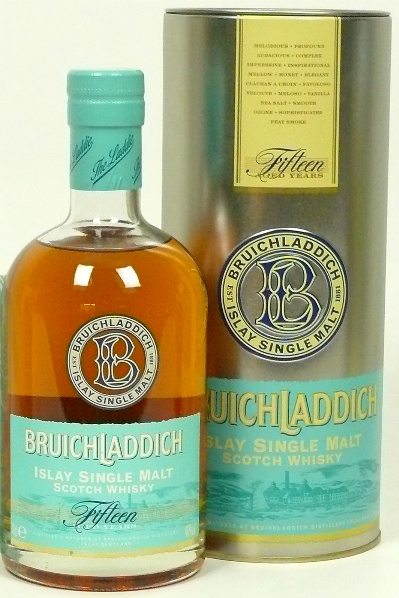
Bruichladdich 15yo (46%, OB, First Edition, 2003)

Earlier I reviewed the Bruichladdich 10yo. That was one from the first batches to be released, right after the distillery was sold to Mark Reinier & Co. The first releases were that 10yo, the 15yo I’m about to review and a 20yo. Ten years ago that is how a standard range looked. Age was everything back then. Today we’re not that far removed from an age, where age statements seem to be only for people with Lamborghini’s. Real ones, and I don’t mean the tractors too. It’s all about demand people. The 10yo I mentioned before didn’t float my boat, so I’m not sure what to expect with this 15yo. Let’s have a go shall we?

Bruichladdich 15yo (46%, OB, 2003)Color: Medium gold.

Nose: Reminds me of the 2003 10yo with just some more of everything, in fact, this one doesn’t want to stay in your glass! Fresh citrussy barley. Hint of peat and a little bit of smoke. Smells quite sweet for such a Malt. Garden bonfire. The sweetness is fatty and oily, or you can call these aroma’s well-integrated.  The more I smell this, and the more air it gets, the better it becomes. By now it’s already way better than it’s 10yo brother (or sister). Nice succulent wood, again integrated with the sweetness. Hints of vanilla, not much, and fresh, some distant fruitiness. I spoke too soon. The vanilla part grows bigger with more air and becomes creamy. Sweet yoghurt with peach. Lovely. Great balance and quite appetizing. I hope it tastes as good.

Taste: Quite sweet and very creamy with a woody, bitter edge to it. Again the sweet yoghurt with peach and toffee. Reminds me a bit of the great Bourbon casked Whiskies from the seventies. Great entry and a similarly great body. Not a lot of development though, but with something that tastes this great, who cares? Towards the end of the body the slightly peated toffee sweetness takes a step back and lets the wood through. It’s there, without taking over, barely though. You felt it coming: “but”. The flaw is in the finish. It breaks down a bit and is slightly shorter than the nose and the great body suggested. A wee bit too much reduced? Yes I know, its 46% ABV., but that doesn’t matter. This is how reduction with water, sometimes alters the finish. The aftertaste moves in to the territory of soap and stale beer and a minute amount of hops, but that sounds worse than it actually is, so don’t worry. Not a lot is left in the aftertaste, and there is only one remedy for that. Take another sip so it all starts all over again.

Points: 85

Campbeltown Loch 30yo (40%, Springbank Distillery, 09/507)

I get this all the time. “You always write about Single Malt Whisky, as if there is no other Whisky”. Yes, those people might have a point, but I do prefer Single Malt over today’s Blends, but forgetting about blends altogether, would be a mistake. Just have a go with a blend from the olden days to convince yourself. Mind you, most of them still are very inexpensive at auctions, so it doesn’t cost a lot to be adventurous.

Here we have a Blend that was brought to you by the good people of Springbank. Hence the use of the standard Springbank bottle. For now, let’s give this 30yo blend a go, and more about the ingredients of this Blend later…

Campbeltown Loch 30yoColor: Gold.

Nose: Grainy, dull at first, with some paper notes. Cola freshness. The whole is very malty and light, so there probably is a lot of Grain in this Blend. Not a lot of old Whisky aroma is oozing out of my glass. Hints of old Sherried Malt, yeast and cardboard. Next some old wood emerges with dusty and, slightly smoky, notes of very dried out apricots. So slightly fruity and waxy, typical for old Bourbon casked Malt. Oak spice and some woody mint, but not as much as you would expect after 30 years.

Taste: Grainy, Malty and sweet. Very light. Light mocha and milk chocolate notes. Nice cookie dough and waxy depth and although quite thin, it has a bit of chewiness to it. Still, the body remains very light and fragile, grainy and lightly fruity. Towards the end a vegetal and a soury note from the oak leads into the weakish and quite short finish. It comes across as watered down, and hardly seems 40% ABV at all. You know what my next remark would be…

Before we continue, here is what Springbank had to say about this Blend: “Around 45% of the Campbeltown Loch 30yo is made up of the old 25yo, which was allowed to mature on. That 25yo blend was almost 100% malt and contained some 1964 Springbank along with other single malts including 1977 Ardmore, 1977 North Port, 1978 Tomatin, 1977 Imperial, 1976 Glengarioch, 1976 Ardbeg and 1976 Glen Grant. 30yo grain from Girvan was added to that, to complete the new 30yo Campbeltown Loch.“ Well I couldn’t have said that any better myself.

The old 25yo they mention was made from almost 100% Malt Whisky, so it almost was a Blended Malt, or Vatted Malt we used to call it back then. This 30yo however, contains only 40% Malt Whisky, so a lot of that Girvan was added to the old 25yo.

Yes it’s nice, but also very light. This Blend has a lot of fans and why not, just read the list of its contents again. Check out the age again. Personally, I don’t really get a lot of the old malts in this blend and I don’t think the Girvan was matured in very active casks, that mask the old Malts even more. Nevertheless, nice stuff and I won’t have a problem finishing this, but I can’t help but feel this could have been even better by adding less Girvan and bottling fewer bottles, since there weren’t any more old Malts available. I do hope I get to try the old 25yo Blend someday…

Points: 85

Ledaig 16yo 1997/2013 (56.8%, Gordon & MacPhail, Cask Strength, for The Whisky Exchange, Refill Sherry Hogshead #465, AC/AEHI)

Third of October and right now the doors are opening for the 2015 Whisky Show in London, England. As many years before I’m attending this wonderful Whisky fest, the best few days of the year. Maybe not even the Whisky, but the people. I really can’t wait for it to begin. For those of you that are not there I’ll have a go here at a Ledaig (a.k.a. peated Tobermory) that was picked by The Whisky Exchange. This was a Whisky that was bottled a few weeks after the Whisky Show 2013, but luckily I got a chance to try from Gordon & MacPhail, before it was bottled. People from the Netherlands will know its sister cask #464 which was also excellent but much lighter in color.

Ledaig 16yo 1997/2013 (56.8%, Gordon & MacPhail, Cask Strength, for The Whisky Exchange, Refill Sherry Hogshead #465)Color: Copper orange gold.

Nose: Fatty peat and candy sweetness. Animalesk and organic. Wild stuff. Hints of burnt cable. Unlit tobacco and dark chocolate powder. Very vegetal. Thick and full of itself. Big. Hints of vanilla and cream. Some dried grass and yes some wet grass from a muddy field in October as well. Funky fresh fungi. This never stops giving. Great peat that is balanced out nicely by the Sherry, but the former is the more dominant in this bottling.

Taste: Excellent entry. Sweet, mixed perfectly with licorice and lots of almonds. Even the wood is almondy. Utter and perfect balance. What a great integration of flavours. Red fruits and berries and hints of Gin. Fresh at times. Sea spray and hints of blobs of fresh fatty tar. Remember Lightning McQueen? Hints of stable (cow) and a bit of wood, but not much. Strange enough, with this amount of aroma and at almost 57% ABV., this only  has a medium finish, it gone sooner that you would want. Great aftertaste though. Almonds and red fruit. Salty lips!

If this would be older (tasting), had a longer finish and had even more added depth it would score well into the nineties. If it had more notes of curry and red peppers you could eat this dram. What a near-perfect modern dram this is. Excellent stuff can still be made. I’m happy I had some prior knowledge to snap this up when it was released.

Points: 90