Bolívar Petit Belicosos Edición Limitada 2009

Bolívar LogoAhhh, finally a Bolívar. This is a first one on these pages. Bolívar isn’t a big global brand for Habanos, but it is available in a lot of markets nevertheless. Not a big brand, but it has a specific and fanatical following under seasoned Cigar smokers. Bolívar is known for heavy and strong Cigars.

This 2009 is the first of two Edición Limitadas there are. In 2014 the second and last was released, which was a Super Corona. Don’t think that this means there aren’t a lot of special releases around, because there are. A lot of Edición Regional versions were made. These are limited editions, released in specific countries or markets. In 2006 the first was released for the German market only, and since then 25 more saw the light of day.

This Petit Belicosos is just like its bigger brother the Belicosos, just 15mm shorter. Another difference is that just like other Edicíon Limitadas the tobacco was aged for two years. As far as I know this Petit Belicoso is made in three different factories and thus boxes exist with three different codes: STA MAY 09, OMA JUL 09 and LRE AGO 09.

Bolívar Petit Belicosos EL 2009

Bolívar Petit Belicosos Edición Limitada 2009 (52 x 125mm, Petit Belicosos, Petit Pyramid, Box code unknown).

Color & Looks: Oscuro. Dark brown. No veins, quite stiff to the touch. When it warms up it becomes more flexible.

A cru: Strong leather smell. Cigarette ashes, mocha coffee and dark chocolate. Sawdust and (old) wood in general. Promising power.

Taste: Good smoke and the draw is good as well. Dark taste with hints of petrol. Stong mahogany wood. The whole is also quite on the woody side. It lacks the creaminess we know from Hoyo de Monterrey, but both brands couldn’t be further apart. This Bolívar is dry and sharp. Heavy indeed. Maximum strength dark chocolate. No stuff for beginners. This definitely isn’t one to start the smoking season with, so to speak. Strong powerful stuff, but by now I believe you get the picture. Extremely dry and woody, almost hard to smoke by itself. I wonder with what to combine this to balance the strength out a bit.

To be honest this doesn’t show a lot of development, even after six years in my humidor. Over halfway through some soapyness appears. The dryness is aided by some herbal notes like cumin and some restrained basil. These are all mere hints since the whole is wood, even more wood and some paper. I don’t know if my palate was anesthetized by this Cigar, but even given its power it doesn’t even have a long-lasting aftertaste, like I had with some Partagás from the past, which I could still taste the next day.

Well built and smokes very easily, but it does burn unevenly. It has a thick wrapper. Luckily the uneven burn is easily corrected. In the end I expected more of this. Ashes is darkest grey, black and brown. No white ashes at all. All the way through I had a craving for apple pie with lots of cinnamon, which I don’t even eat that often, so what does that mean? Will it go nicely with pie? I can tell you it went well with very strong coffee, two hammers, hammer as one.

What can I say. This is a heavy Cigar, and for me it was too much. Did I recognize the quality then? No, not really. I found it harsh, lacking development and it didn’t have a long and lasting aftertaste. Having said that, people who like these heavy Cigars do like this one very much, so I won’t argue with that. It probably is not for me. I have still a few of these lying around, so I’ll let them age more, and see what will happen. Maybe the Cigar will change or maybe I will.

Points: 77

Brora 22yo 1981/2004 (56.4%, Signatory Vintage, Cask Strength Collection, Sherry Butt #1561, 611 bottles)

600Post number 600, so lets break out something special. Special for me is Brora. Sure Port Ellen, Ardbeg, Lagavulin, they all are Cohiba’s, but Brora is Trinidad. Brora is extra special (to me). 600 is a round number but it’s not 1.000, 10.000 or even a million. It’s 600, so I won’t be reviewing a 1972 Brora, which for me is the pinnacle of them all. The 30yo OB from 2004 contains lots of 1972 Brora, so look at that review how great 1972 Brora can be. Back to this Signatory bottling from 1981. In 1981 Brora was in production, obviously, but were all over the place. Some expressions are full of peat and some are not. I wonder if this one has some peat to it…
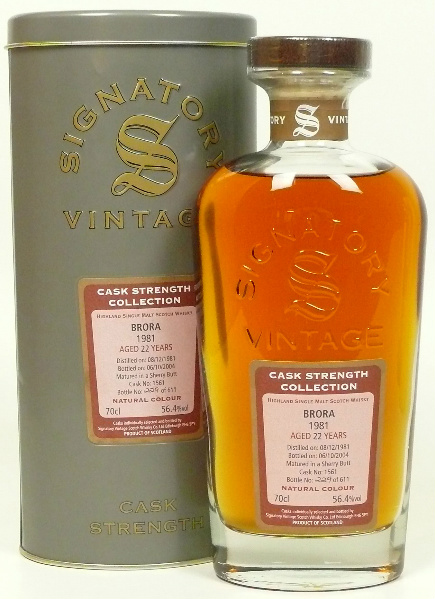
Brora 22yo 1981/2004 (56.4%, Signatory Vintage, Cask Strength Collection, Sherry Butt #1561, 611 bottles)Color: Copper gold.

Nose: Fresh and vivid. Definitely Sherry, but in no way funky. Quickly a fresh creamy and toffee note develops and only a mere hint of peat, just inhale vigorously. Needs to breathe a bit. Nice soft woody note, which sometimes take a turn towards old paper turned yellow. A bit dusty as well, (with whiffs of white peach). In no way dry. Quite spicy. I tickles the nose, and again toffee mixed with wax. Chewy would be the word. Mild yellow fruit notes appear, adding some acidity and yet more freshness to the nose. It’s not typically peach, white or other, but some whiffs come across as peach in semi-sweet yoghurt. The wood stays soft and is part of the fruity and creamy mix, instead of giving it a spine. Its nice overall, and does develop al lot, where initially it didn’t seem very complex. Hardly any peat at all and just a splash of smoke.

Taste: Thick, waxy and fruity. Definitely a profile we get from fruity Speysiders from the seventies. Nice soft wood. Toffee, without being very sweet. It has some fruity sweetness, but just the right amount. It has more than 56% ABV, but it’s still friendly. Not hot, nor burning my throat. Very drinkable. To my amazement, a lot disappears towards the finish and the finish itself is medium at best. Only in the aftertaste it starts to come apart a bit, fading out. Just the right moment to take another sip.

This one isn’t about the peat and the smoke, and the ruggedness of highlands, and sea storms after which you need warming. This one is for those moment you need an old Speysider, Bourbon matured, with lots of fruit and wax. Remember this isn’t from a Bourbon cask, but is from a Sherry butt. It has hints of peat and smoke. It’s a bit like the profile Benromach is going for today with the new 10yo and 15yo.

Points: 89

Frapin Château Fontpinot XO (41%, Grande Champagne, Single Vineyard)

You know what they say, with a good Cigar you need a good Cognac. Cigar? Check! Cognac? Check! We’ll have another Frapin, and with a name like Château Fontpinot XO Single Vineyard Cognac, who am I to pick something different. Earlier I reviewed another Frapin, the VSOP, and was all but impressed with it. The nose was great, but the taste, and especially the finish were big let-downs. Lets give Frapin another chance and move on up to this XO. You know you’ve hit the jackpot when you find out this isn’t bottled at 40% ABV, but at a mind-blowing 41% ABV. Surely this will do the trick? As you know, XO must be at least 6 years old, but this XO is blended with liquids, 18 to 20 years old, part of this, a finish for 6 months in new oak casks.

Frapin Chateau Fontpinot XOColor: Copper gold.

Nose: Nice and strong aroma. Fruity, but it also has quite some depth to it. This isn’t closed at all, it leaps out of the glass to entice you. Spicy. Wet and funky cinnamon. Leather and breaths of fresh air. Nice woody notes and a plethora of fruity notes. Mostly apple and some cherries. It’s almost like standing at the green grocers. Quite some wood, with only a mere hint of licorice (and some tar). Floral and leafy notes appear as well as some vanilla. Give it even more time to breath and the smell of a nice and luxury fresh cologne appears. Well this one has it all. Give it lots of time, because the nose shows a lot of development. Put it in your glass, aireate it for a while and then cover it up with a lid. Leave it for a while and then sniff it again, Stellar!

Taste: Starts sugary sweet, and a bit thin. Next the fruity notes release themselves on my tongue. Some tannins and woody notes stay behind when the liquid is making its way down, warming me. Chewy unripe walnut bitterness. The darker brooding notes from the nose are even bigger in the taste. Funky cinnamon again, combined with brown sugar. I’m not sure the taste is as complex as the nose, but I’m not complaining. The walnut bitterness (not a lot of it, so you can sit back again) stays behind, as well as some mint from old wood. Apply notes are here too. It’s definitely a Cognac, but it has some traits of a good Calvados. This is definitely a better blend with more age behind its belt compared to the VSOP, which also has a hideous looking bottle, but let not get distracted now. Ugly bottle, that VSOP has. There I said it again.

So we have a good nose, and we do have a nice entry and a good body. The weak point is again the finish. It gets more rustic and organic, but that is not the problem. The problem is the balance of the finish. It starts to unravel a bit. Not every aroma stays well-integrated. The finish is also a bit simple, but hey, we’ve come a long way compared to the VSOP. This one I do like, and I didn’t even get to try it with a Cigar yet. Not perfect but very enjoyable nevertheless.

Points: 85

Benromach “Traditional” (40%, OB, 2004)

This is quite a unique bottling. In 1993, Gordon & MacPhail acquired the distillery, but it took them ’till 2004 to release this “Traditional”. The very first Benromach made by the new regime. Alas, today the traditional is no more, it has been replaced, last year, by the 5yo. For me this is a unique bottling, whereas everybody is coming up with, sometimes, silly names for their Whiskies, Gordon & MacPhail decided otherwise. They mothballed the “Traditional” name and replaced it with the 5yo, yes an age statement, so it’s not a NAS anymore. For some, “5” is a pretty low number, but at least you get a better sense of what to expect. Luckily this trend is gaining momentum as well, since there will be a Lagavulin 8yo shortly, and I expect quite a lot from that one. Back to the “Traditional”. It is said to be 20% first fill Sherry and the rest comes from first fill Bourbon. All first fill casks, so they must have impaired quite some aroma to this young Whisky.

Benromach TraditionalColor: Straw.

Nose: Barley, butter and lemon water. Very light and does not want to come out of the glass. Hints of Sherry and spicy oak. More barley and grassy notes come next. A bit dull, restrained, as in it doesn’t greet you, popping out of the glass with lots of fresh and citrussy notes. No, it’s restrained, like an English butler. By now, we have gotten used to the slightly peaty and waxy notes, but here it was something of a first. For those of you who know the new 10yo, both the reduced or the 100 proof version, this is definitely family. The peat is typical, and the waxyness of the spirit as well, so for me this is easily recognizable as a modern Benromach. The Cragganmore I reviewed last, had Fino Sherry written all over it, but I have to say, this one has some notes of that kind of Sherry as well. Hints of new make spirit, so a bit immature. There is also something missing here. This is said to be 80% first fill Bourbon, but where then is the vanilla? It’s there but the peaty notes overpower it. Nice.

Taste: Barley again and definitely sugar-water, with some hidden vanilla and paper underneath, did I mention that it is a bit restrained? At first that’s all there is. Soft. Pudding and paper again. Paper-like and peaty bitterness. Fatty. Diluted liquid honey. Hints, really only mere hints of red fruits (from the Sherry I guess). Slightly warming finish, with peat and again a lot of sweetness. Although it has a very light and uneventful (restrained) finish, it does have some staying power. Totally un-complex, which has a slightly different meaning than “simple”. A first offering but not quite there yet. The bitterness stays behind for the aftertaste.

This brings me to the subject of blind tasting, believed to be the most fair of all ways of tasting spirits. First of all, blind tasting is not entirely objective, since the taster is not objective, and not blind for that matter. You also have different moods and different expectations. Second, a blind tasting is usually done with several Whiskies, so you tend to compare the one to the other, both interact with each other, you like one over the other, but what if in a particular flight is this NAS Benromach as well as a Lagavulin 37yo, which would you prefer? I first tasted this in such a flight and my initial score was 65 Points. This time I’m tasting it by itself, and I know what it is. If I’m in the mood for a Whisky like this, I wouldn’t grab the Lagavulin 37yo now would I? Just like every other Whisky out there, every one has their time and place, but yes the Lagavulin is a way better Whisky, with a way better price-tag as well…

This Benromach is young and simple (un-complex). And not every aroma seems to fit, especially in the taste, but it is also light, grassy, citrussy and fresh, as well as peaty and bitter (and sweet). So it has its moment. Some would call it their summer Whisky. Its nice, simple and…restrained.

Points: 72

Hoyo de Monterrey Le Hoyo du Prince

Hoyo de Monterrey LogoThe year 2015 passed, without even one Cigar review. How is that possible? Did I quit smoking? No way, but I do have to admit I never started smoking either. Cigarettes are not for me. From the start it was always about Cigars. I smoke for taste I used to say and I never smoked a lot. The place I write from, The Netherlands, is not a tropical country, and I do have to find me a spot for smoking and reviewing Cigars somewhere, since I don’t want to smoke inside the house. As long as I don’t have a place for smoking, I’ll have to wait for some nice weather, and especially time. I need to be left alone with my Cigar for as long as it takes, and that is maybe the real problem here.

Getting the Cigar part of Master Quill back on track, we’ll start with another Hoyo du Monterrey. Hoyo du Monterrey has been featured before on these pages with the Epicure No. 2 and Le Hoyo du Maire. As I said before Hoyo de Monterrey is known to be a light Cigar yet meant for the connoisseur, aren’t we all? I do like Hoyo de Monterrey, untill now they have always been full of aroma, well-built and all smoked very good. I like the blend of tobacco used for this brand. The Cigar I’m about to review is and old one. Aged for a long time. The band you see in the picture was introduced around 2005, and mine doesn’t have that, and no, it hasn’t been removed. I bought a batch of old Hoyo’s quite some years back. Today this Cigar is only released in an SLB 25 (Sliding Lid Box, containing 25 Cigars).

le Hoyo du Prince

Hoyo de Monterrey Le Hoyo du prince (40 x 130mm, Almuerzos, Corona, Box code unknown)

Color & Looks: Light brown, with small veins and very straight. Tightly packed.

A cru: Light chocolate. Leafy with some nice leather notes. Still smells young and leafy. Grassy even. Fresh mown grass. Well I didn’t expect that from this old Cigar.

Taste: For a tightly packed Cigar this still had a reasonable draw. Starts out nice and friendly, not hitting you over the head like some Bolivars. Creamy. Doesn’t produce a lot of smoke, yet tastes great. Warming and creamy and is and goes together well with my coffee. What a great smell. Even second-hand smoke smells great. Becomes slightly spicy with young wood. The leather aroma is young and fresh. A freshly made and oily saddle. Great. The wrapper turns into white ashes and inside it turns black and grey. It’s just a shame it is a bit plugged, and I have to work at it so hard. Maybe this needs to be smoked at a lower humidity. This one here, has a RH (relative humidity) of around 70%.

After 1/3 the wood becomes more serious. Sandalwood and definitely less creamy. Hints of menthol on my lips. Since this is plugged, the smoke gets channeled and flows rather fast and hot. The whole experience gets dryer and more herbal. Half way through, the creaminess surprisingly reappears keeping the whole rather tasty and keeping it relatively mild. Second hand smoke is still great with added mint. That is what ageing will do. The great taste stays untill the very end when you almost burn your lips. It doesn’t become harsh at all. After putting it down I taste some thyme in the back of my throat.

Very tasty and accessible Corona. Definitely worth trying out. I loved it, even this tightly packed one.

Points: 84

Cragganmore 14yo 1989/2003 (46%, Cadenhead, Original Collection, Sherrywood, 696 bottles)

Early on in my “Whisky career” I used to be a “regular” at one of the few Cadenhead Shops that were around. Amsterdam had one of the first shops outside of Scotland. I tried quite a few Cadenhead bottlings in those days and bought maybe even more, so I still have quite a few of those older bottlings. However, almost all the Cadenhead bottlings I brought home were cask strength versions, called Authentic Collection. At the same time Cadenhead bottled part of the same cask at 46% ABV, calling it the “Original Collection”, although I suspect, sometimes the whole cask was reduced and bottled at 46%. I’m not sure if there exists a cask strength version of this Cragganmore. I have to admit I hardly own an “Original Collection” bottling (if any). Cragganmore of course is one of the Diageo Distilleries, and is represented in the Classic Malts range. Since Diageo hugely promotes these Malts, it is always nice to compare that to one of the independent bottlings. I’ve already reviewed some of them on these pages. The 12yo, the 1988 Distillers Edition and the 29yo Special Edition. I also had a great 1993 Sherried Cragganmore, bottled by Duncan Taylor. Lets see how this 1989 Cadenheads offering will do.

Cragganmore Cadenhead 1989/2003Color: Copper gold.

Nose: Rich and sweet. Fruity. Waxy apple skin. Funky raisins, honey and cherry water. The initial fruity acidity is quite thin so after a while you don’t smell it anymore. If you use a lid for a while, the acidity gets concentrated and is noticeable again. Without this acidity, this is a dark and brooding offering. A bit goth I would say. Damp earth and slightly rotting leaves on forest floor. Still smells quite toffee-sweet and underneath there is some vanilla as well. Dusty with notes of dull wet wood mixed in with more toffee and caramel. Quite aromatic but at the same time sweet and syrupy. A two-faced puppy this is. Put a lid on it, and its more fruity and acidic, let it breathe and it becomes more brooding. Very interesting malt though. Smells nice and appetizing.

Taste: Almond and toffee sweetness (which dissipates quickly). Lots of toffee. Short licorice attack. Apple skins and apple aroma’s more akin to Calvados. Very nutty (Sherry) this is. Probably a Sherry that aged under flor, so not from our usual Oloroso and PX casks. No, this is more Fino or Amontillado. Wine people believe this is Sherry royalty, much better than Oloroso and PX, which are the most popular casks for ageing Whisky these days. Just check out the bottlings of Glendronach. Having said that it, obviously doesn’t automatically mean the Whisky is better off as well. This has some wood, with a slight bitter edge, but also vegetal bitterness, like you get from biting fresh leaves. Strange? Get out of your chair then and spend some more time in nature! The body starts big, but gets light quickly and the finish isn’t as long as expected, and the aftertaste, with a strange chemical fruitiness to it, is otherwise, with, paper, sweet toffee and caramel, quite anonymous too. One to take in in big gulps, to maximize the flavour. Seems likeable, but also a bit unbalanced and short. Many flaws, but still likeable.

Personally, I find Fino Sherry casks can produce very nice, but different Whiskies. For me it was something I had to grow into, and I guess I’m not finished growing just yet. I really do recognize the quality of the result, but it somehow is not something that like right off the bat. It needs some work. On the other side, I believe, this profile suits a nice Cuban cigar, if you are able to pick the right one for it.

Points: 82

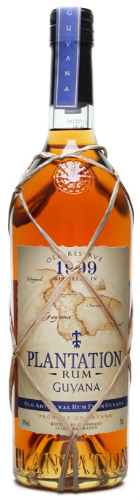
Plantation Guyana 1999 (45%, Old Reserve, 2009, Guyana)

Walk into a spirits shop which sell quite a few Rum’s, you have a big chance to find at least a shelf worth of Plantation Rums. I don’t know if this is true in all the corners of the world, but here in Europe it is. There are several reasons for this. They look quite interesting, quite a lot of Rum producing countries are available, and the price is quite nice. Especially if you are a novice it ticks all the boxes you care about. Having tried some of those, I can also say that they seem to be not bad.

Who is Plantation? Plantation is the Rum brand of Cognac Ferrand. Cognac Ferrand being the mother company that has quite a few brands in its portfolio. If you punch in Cognac Ferrand in your browser, you are quickly transferred to Maison Ferrand and there you can see that Ferrand is definitely more than Cognac alone. Back to Plantation Rum then. Plantation buys casks of Rum and ages them where they have found them. At the end of maturation, the casks are transferred to France, where they receive a second maturation for up to 18 months in small oak casks. Although it is not said that the cask previously held Cognac, we do assume that’s the case most of the time.

Here, we’ll be looking at one of the vintage releases from the Plantation Old Reserve. This particular example comes from Guyana, but according to the website there are six more Old Reserves available: Barbados, Grenada, Jamaica, Nicaragua, Panama and Trinidad. I don’t know if they discontinued some versions, but I do have a St. Lucia version as well. All are vintage releases, so there are multiple vintages available. I have tried several of the vintages of the Jamaican version and found that not only is there some batch variation between the vintages, but also that there can be more than one batch of only one vintage. Jamaica 2000 comes to mind…

Plantation Guyana 1999Color: Full Gold

Nose: Big, fatty and yet not entirely Demerara (yet). Initially, and momentarily, it has this high ester quality and funkiness like a Jamaican Rum, but in a slightly different way. With some more breathing this becomes more like a Demerara and the funkiness disappears completely, or is this my nose getting used to it? Quite fruity and has a very mild acidity to it. Is this the Cognac? Yes, maybe. The slightly off-acidity reminds me a bit of standing in the produce section of an outdoor market in the cold. Hmmm, never saw that before in a tasting note, Crazy Quill. Since these bottlings have seen wood that previously held Cognac, I’m guessing, that must be its origin. Slightly dusty with some paper-like qualities and yes some wood obviously. Hot oak. Old oak planks, yet freshly sawn. Soft. Hints of orange juice (the acidity mentioned above) and maybe banana (it does have a deeper layer, close to concentrated banana aroma). Dry soft wood and old toned down sawdust. yes, its dusty. Black, slightly sweet, tea and hints of licorice. The fruity notes start to integrate better after prolonged breathing and move back a bit, giving way to a more thicker, nutty, funky and waxy toffee character. Ok, letting this breathe seems to be the crux.

Taste: Wood, nutty, fruity and extremely syrupy (syrupy, not necessarily only sweet) at first. Yellow fruits on light syrup, so not thick or cloying. Sugar and burnt sugar (nice) and more nutty notes. A bit hot. Chewy and tasty, in a complex way. It’s not typically toffee of caramel, more like a combination of earwax and toffee. Slightly bitter. It’s in there but its more complex than that. Fresh oak notes and some licorice. Now its (sweetish) Demerara. The second Cognac cask maturation suits the original Rum. Wax with bitter notes of burnt sugar and burnt wood. The body is thick and in your face, but towards the finish that loses ground. It breaks down a bit in the finish, which otherwise has quite some length to it. It feels like a cloaking effect of added sugar. Nice note of almond in the aftertaste and the more breathing, the bigger the licorice note. Not bad, but Demerara can be better, but you will be hurting your wallet these days to try some really good ones. At this price point, it might be hard to find a better deal, but definitely not impossible. Even the El Dorado range of the 12yo, the 15yo and the 21yo do come to mind. Which also has some sugar added, but probably to a lesser extent than the Plantations.

This Plantation offering is in no way perfect, does have a good drinkability, and seems fairly priced. Good ABV as well (at 45%). Not every Plantation Old Reserve is bottled at 45% ABV though. This is an older bottle, from, April 9, 2009 (laser printed on the bottle), and has a slightly different look from current bottlings, which have a thicker glass base and a different icon on the shoulder. It’s also slightly higher in ABV (45% ABV). I fear that subsequent releases may be a bit sweeter than this one, I have already tasted some of them, and 42% ABV. might be the new strength.

Points: 84


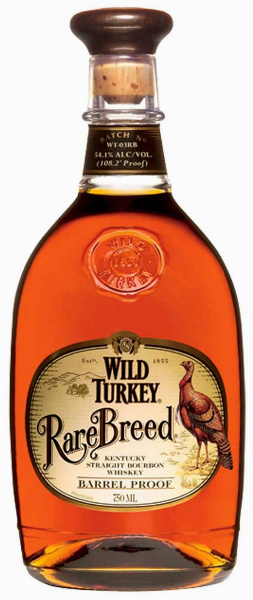
Wild Turkey “Rare Breed” (54.1%, OB, WT-03RB)

The story of Wild Turkey starts with two Irish brothers called James and John Ripey. In 1855, they came to America from Tyrone, Ireland to start a store, selling general goods. They settled on the banks of the Kentucky river near Lawrenceburg, underneath some limestone cliffs. They named their plot “Tyrone”. In 1869 they opened their first distillery. The first distillery quickly became too small, and a new facility was built in 1873, which expanded quickly. The whiskey they made had quite a reputation and was chosen to represent Kentucky at the World Fair.

During prohibition, the distillery still made some Whiskey, for medicinal purposes, and was sold by Austin, Nichols a wholesale grocer specializing in tea, coffee and Spirits, but concentrated solely on Wines and Spirits by 1939. By the way, even in 1939, there was no Wild Turkey in sight. Not the brand anyway, but there seemed to be a bird, yes, a wild turkey.

In 1940 Thomas McCarthy from Austin, Nichols took some samples of 101 proof Whiskey with him on an annual shooting trip to South Carolina, shooting wild turkeys. Since then the party asked for that “Wild Turkey Whiskey”. In 1952 the Ripey family sold the distillery to the Gould brothers, which in turn, sold it off to Pernod Ricard in 1980. By 2009 The Campari Group took ownership of the distillery.

Wild Turkey Rare Breed (54.1%, OB, WT-03RB)Color: Orange brown.

Nose: Wonderful fresh and slightly floral. Just the right amount of wood. Development starts quickly when it gets some air. Becomes very nutty and a bit funky as well. Definite aroma’s of clear glue. Velpon. Dumbed down fresh leather with cookie dough. With even some more air, the nutty part transforms into oak, with still some funky organics going on. It’s not a particular sulphury smell, but it does smell like a compound with sulphur. In the end it settles down, giving off a nice and silky smooth smell. Soft with some obvious vanilla and hints of honey.

Taste: Sweet on entry, but also with quite a white pepper attack. Lots of wood is noticeable now. With the wood the sweetness is almost gone, drying out the whole. Lots of rye florality with powdery and silky smooth vanilla with some tannins. Thin corn sweetness, definitely made with a high rye mashbill. The more this breathes, the more pronounced the rye gets. In fact, one can say the rye takes over. Especially the finish is dominated by the rye florality. The finish is multi layered because even when dominated by the rye, (for a while the rye even gets a bit soapy), the longer you wait the more the wood gets to play a role, although never the lead.

The WT-03RB batch ended somewhere in 2014, and is replaced by a new batchless Rare Bread. I’m told the new batch is younger and lighter, even in color. So the advice would be, get one of the older batches if you get the chance.

Points: 82

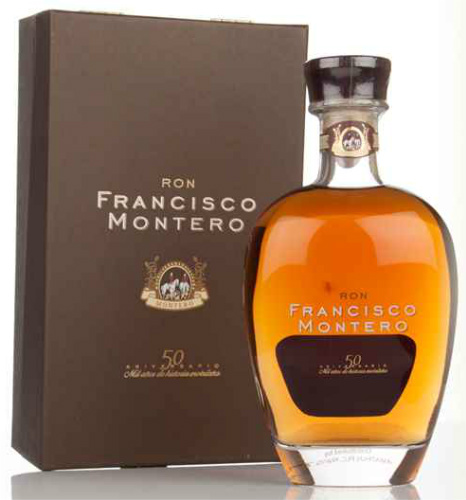
Francisco Montero “50th Anniversary” (40%, 7.000 bottles, 2013, Spain)

Francisco Montero Martin was born on April fools day 1929 in Motil, Grenada, Spain. Motil is unsurprisingly also the place Spanish sugar cane came from. For a long time Francisco dreamed about making Rum, or Ron as it is called in Spain. Finally when in his thirties, in 1963, the year of the demise of JFK, Francisco decided that life is short and started his own Rum-distillery called the Azucarera Montero distillery. Quite a bold move since (domestic) Rum was still unknown in Spain. In 2006, Sugar cane cultivation was seized and one year later, Joaquín Martín Montero, nephew of the founder buys the distillery. His daughter Andrea Martín Targa manages the place, so the business remains in the hands of the family.

Although there is a lot of history concerning sugar cane, the Rum is not distilled from sugar cane juice, but rather from the molasses from the locally grown sugar cane. The cultivation of sugar cane seized in 2006, so the distillery imports molasses made from sugar cane, from Brazil, Egypt, India or Mexico. Sometimes nice molasses from other countries can be brought in as well.

The Rum of Francisco Montero is a light style Rum. Fermentation is done for only 24 to 30 hours and the distillery uses four continuous column stills, of which the first operates under vacuum. This allows for distillation at a lower temperature, claiming less flavour is “boiled off”. However, nothing is said about the conditions provided in the other three columns and their effect on flavour of the final product. Ageing is done exclusively in 500 liter, new American oak casks, configured in a Solera system. And last but not least, in the blending process caramel coloring is done.

Francisco Montero 50th AnniversaryColor: Full Gold.

Nose: A breath of fresh air and a nice floral touch. There is a nice elegant woody nose with an edge of scented paper. Fruity black tea with a little bit of sugar in it. Definitely a molasses based Rum, bot nowhere near the thick and syrupy big Rums. No, it smells refined and elegant without being a completely different Rum, like Agricole. Hints of licorice and more fresh air, but also some wood pulp and breakfast cereals. Sweetness becomes more like a warm liquid of diluted refined sugar. Development in the glass stops rather soon, so after a short while WYSIWYG (What you smell is what you get). I like the floral tough that stays throughout.

Taste: Thin toffee and caramel. Aided by some liquid wood in the background. Lots of warming toffee, vanilla and caramel candy notes. Hints of waxy apple skins and a bitter walnut skin note, but these hints are pushed way back. You have to work for them. Quite unexpected, because the very smart and luxury packaging as well as the speciality of a “50th Anniversary” made me expect something very deep, in part old, and special, just like Abuelo Centuria stands out from the rest of the Abuelo range. This comes across as quite young. Initially very appetizing, with the toffee notes. Towards the finish the taste breaks down a bit. The nice toffee note gets weaker and thinner, and isn’t really replaced by something else. The finish is quite short, and you’re left behind with only an echo of a Rum.

Considering the packaging and the occasion, I was quite disappointed really. I expected a lot more. By its own merits I am disappointed as well. Sure, its a lighter style Rum, but just look at the Cuban Rums I reviewed earlier. The same lighter style but way more happening there. It is all right to sip, but if I would place this according to its merits it would sit right next to the most inexpensive of Abuelo’s, the Añejo, making this Montero way to expensive for what you would get. If you like the style, go for a Cuban.

Points: 78

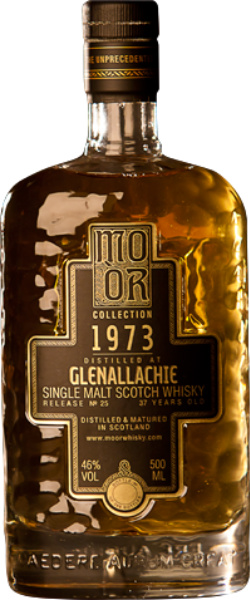
Glenallachie 37yo 1973/2010 (46%, Mo Òr, Bourbon Hogshead #6746, 266 bottles, 500 ml)

After all those fairly recent distillates, I guess its time to look at something older. This time we’ll have a look at a 37 year old expression of Glenallachie bottled by the Dutch Whisky Investors: The Whisky Talker. The Mo Òr line of Single Malt Whiskies was thought of as an investment, or as a luxury gift for business people. Sometimes you can even encounter a bottle like this in a super-duper hotel bar. Yes, Whisky is the new Swiss Watch or a premium golf-set. Glenallachie though, is one of the workhorses of Pernod Ricard, a laborer, meant for the Clan Campbell blend, not really a luxury brand isn’t it? But if you are worrying about the size of your next yacht, who cares? Ignorance is bliss. Let’s see if this old Glenallachie is any good.

Glenallachie 37yo 1973/2010 (46%, Mo Òr, Bourbon Hogshead #6746, 266 bottles, 500 ml)Color: Almost gold.

Nose: Soft and fruity. Next, some old bottle effect and great Speyside seventies fruity wax. Anoraks know this from Caperdonichs from 1972 and Tomatin’s from 1976, to name but a few. Vanilla plays a nice part in keeping the whole together. Definitely a (second) refill Hogshead. The cask wasn’t very active, but over almost 40 years, the wood did play it’s part in ageing this Whisky. Just let this breathe and it gets even better and better. Hints of old soft (sugared) mint in the background. Almond cookies with a bit of dust on them. Old wooden floor and a very distant smoky touch. The mint holds its ground and keeps accompanying the rest of the aroma’s from the nose. Great old malt, but it has its limitations. Lacks a bit of development compared to some of the (non-Sherried) greats from that era, but the whole is still fantastic and a treat to nose. Don’t get me wrong. Maybe this one shouldn’t have been reduced, although at 46% it’s still no dud.

Taste: Quite light and fruity. Sure, Speyside peach from old American wood. Hints of paper. Slightly sweet black tea with raspberry flavour. Especially here tasting it, the reduction shows itself. Making the whole a bit thin and shortening the finish. Also the cask seems to have been a bit tired. Hints of wood and sawdust and a hint of white wine. Sweaty high quality Sauvignon Blanc from the Loire. The wood shows a more soft mocha note now. Sawdust and pencil shavings. The mint from the nose stays behind in the back of my throat.

Whisky from a great time, but not the best expression from that time though. Probably a bit too tired a cask, and certainly should have not been reduced. It may have been already a bit frail and reducing it may have dulled it down. However, it still is an example of aged Speyside Whisky from the era, with this wonderful fruitiness and lighter style. I don’t know why, but this screams for some Roxy music from 1973. “The Bogus Man” sounds just right.

Points: 87

Followed this up with the 1976 Benromach. Both are 46% ABV, and both score 87 points, but the The Glenallachie is lighter, and smells more like a Whisky from another time. I would prefer the Glenallachie, especially for its nose.