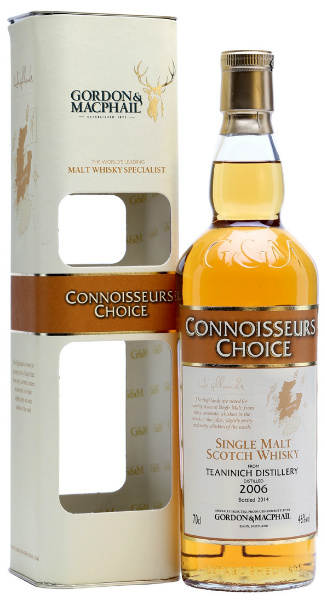
Glencadam 15yo 1989/2005 (58%, Signatory Vintage, Cask Strength Collection, Sherry Butt #6014, 578 bottles)

Another one I found in the attic. Although this hasn’t been bottled ages ago, this time around I have a Signatory Glencadam bottled back in 2005. That’s already 11 years ago. Time flies. This is just the second Glencadam on these pages and it seems not to be a Malt with a big reputation. Having said that, the “new” 10yo I reviewed last time around, was something of a nice surprise for me. Quite impressive for an officially bottled 10yo. However, I have seen it before that the first release of something is better than most subsequent releases. Just sayin’…

Glencadam 15yo SigVColor: Copper gold.

Nose: Creamy and strictly Sherry. Smells like a Red Wine cask actually. Whiffs of stale Beer. Wow, where is this going? Hints of caramel and licorice. Creamy and perfumy. Definitely more floral than most Whiskies I recently tried. Floral pudding. Sure some dried apricots underneath, but not enough to call this fruity as well, although the fruit aroma becomes stronger with prolonged breathing, so it may be more fruity then I initially thought. Hardly any wood. Fruity and floral it is and dry warm wind blowing over the top. After even some more time the floral part seems to have disappeared. Interesting effect. It’s all about what evaporates the first. It becomes nicer over time, and better balanced as well.

Taste: On entry again the feeling this comes from a Wine cask. Apart from the slightly harsh winey note, a lot of paper and cardboard notes. A Beer-like carbonation taste (not saying there are bubbles in this one, an effect I know from a certain Teaninich, also bottled by Signatory (not reviewed yet, but I do have a bottle of that somewhere). Lots of pronounced Italian laurel licorice. Cumin and slightly minty. Hidden sweetness and a nice bitter (hoppy?), and slightly soapy, edge well into the finish. Well this one seems to have it all doesn’t it?

If you work on this a bit it is quite nice and wonderfully complex. For some it may be an acquired taste. You need to let this breathe for quite some time though, although seeing it change with time is quite nice as well. Interesting Malt. Recommended for aficionado’s. I liked the feel of the 10yo I reviewed earlier, and this one doesn’t disappoint as well. However, I’m not that positive about some of the other regular releases by the owners themselves, so be careful with buying those without trying.

Points: 85


Millstone 12yo “Sherry Cask” (46%, OB)

Non Scottish Single Malts a.k.a. world Whiskies are taking over the…uhhh…world. Sure, Scottish Single Malts are still in high demand, especially in countries that are fairly new to them. They are embracing them with much love, as long as the local government permits them to. However, there isn’t enough well aged Whisky to go around the world. Thus, opportunity knocks for the rest of the world to step up their game. Add to that the growing interest of local products and you know where this is heading. Some countries already had a prosperous Single Malt culture, but were ahead of their time, and almost didn’t manage to stay afloat for the current boom. Just look at the history of Irish and New Zealand Whisky to name but a few.Luckily most of them have survived and see a bright future ahead. Then there is a second group. Whisky from countries that didn’t have a blooming local Whisky culture, like Sweden and The Netherlands, again to name but a few, because there are many, many others. I already reviewed a Rye Whiskey from Millstone (Zuidam) from the Netherlands and this time we’ll have a look at a proper Single Malt Whisky. I still have an old expression with the cream label. As far as I know there were two small batches of this, one made up from only two casks, and one made up with three. I only don’t know which of the two I have here…

Millstone Sherry Cask 12yoColor: Orange brown.

Nose: Sherried, definitely Oloroso, but quite dry and elegant as well. Spicy with nice wood, but also some honey sweetness. Wonderful fresh (and slightly soapy) fruity acidity. Good spirit in good casks. I also get some licorice, quite surprising for a Dutch malt. Creamy vanilla, maybe from American oak. Towards the end some nice red fruit notes appear as well as some lavas. Nice development.

Taste: Very creamy but less integrated than the nose suggested. Some light raisins and warming. Almonds and a bigger nutty aroma altogether. The Sherry cask bestows even a winey note to the Whisky. On entry, the cream has a sweet edge to it, although the wood and the Sherry quickly overpower it with a nice and spicy dryness, never to let the sweetness take over again. I’m guessing Oloroso again, but probably a high quality one. A two-faced Malt. Towards the finish a medium kind of bitterness emerges, but in a soft way. It like chewing on a pencil. The finish itself is of medium length. In the aftertaste a slight burnt note, with even a hint of tar.

A Whisky which is great already and still shows lots of potential and is definitely something The Netherlands should be proud of. Kudo’s for Patrick and the Van Zuidam family.

Points: 84

Bunnahabhain 8yo (43%, Gordon & MacPhail, The MacPhail’s Collection, Refill Sherry Butts, Heavily Peated)

Let’s continue with a Margadale. You might have never heard of Margadale, but that is how the heavily peated Bunnahabhain spirit is actually called. Margadale has a peating level between 35 and 40 ppm. Bunnahabhain means “mouth of the river”, now guess the name of the river itself… I would have liked it if they really would have called it Margadale, just like Tobermory and Ledaig. Now, the peated spirit Bunnahabhain produces is called Margadale, but when the spirit becomes Whisky, the bottled peated Bunnahabhain is called Moine. That’s probably a name you have encountered before. Only Berry Brothers & Rudd have once bottled a peated Bunnahabhain with a mention of Margadale. Bunnahabhain used to be an (almost) unpeated Islay Whisky, even the water used didn’t ever flow over peated land, but when the going got tough, aided by some changes in ownership, they started to make peated Whisky as well…

Bunnahabhain 8yo The MacPhails CollectionColor: Straw, light gold.

Nose: Fatty and buttery. Nice Islay peat. Sea breeze, salty and warming, but also with a soft quality to it. Peat, smoke, crushed beetle and tar. Burning newspaper. Hidden sweetness and florality. Effective and typical. Everything is there, but nothing is overpowering the rest. I would say elegant, as far as heavily peated Whiskies can be called elegant. Nice citrussy note, giving some freshness on top of the peat, smoke, tar and saltness. The floral and fruity notes are deeper and heavier and lie more on the bottom, or in the depth of the nose. Balanced and fine. With some more air it dumbs down a bit. Hints of (burning) paper (again), and the fruits come more to the fore. Dried apricots and white grape. Here you can see how the Sherry casks worked. It adds fruit and a nice woody spiciness. It somehow lacks the obvious vanilla you get from American oak Bourbon casks, although most Sherry casks these days are made with American oak as well. Sometimes you could guess its relative youth, but on the other hand, this shows enough complexity to be considered and older Whisky. Good ‘un. Nice distillate.

Taste: Right from the start we get some separation. The aroma’s aren’t very well-integrated. Interesting. Starts off with smoked salt and creamy butter and a nice White Wine acidity. Fatty peat, very fatty and buttery indeed. Licorice, sweet wood and honey sweetness. Sweetness there is, but not your regular white sugar sweetness. Yes runny thin honey it is. All the way through it keeps not integrating well. The acidity is displaced and hangs around too long in the back of my mouth, and the sweetness is trying to get too much to say underneath. Not sure this Sherry is a perfect match for the peated spirit. The more it breathes, the more it actually develops in the wrong way.

Nice stuff at 43% ABV. Sure, in times it is a bit thin, but I have no problem with the reduction. It makes this Islay Whisky very accessible. Don’t let it breathe though. It allows the acidity to develop and hold it hostage. The wood makes the Whisky, but in this case the wood broke the Whisky. It’s not terrible, but especially in the details this Whisky fails a bit.

Points: 80

Brora 22yo 1981/2004 (56.4%, Signatory Vintage, Cask Strength Collection, Sherry Butt #1561, 611 bottles)

600Post number 600, so lets break out something special. Special for me is Brora. Sure Port Ellen, Ardbeg, Lagavulin, they all are Cohiba’s, but Brora is Trinidad. Brora is extra special (to me). 600 is a round number but it’s not 1.000, 10.000 or even a million. It’s 600, so I won’t be reviewing a 1972 Brora, which for me is the pinnacle of them all. The 30yo OB from 2004 contains lots of 1972 Brora, so look at that review how great 1972 Brora can be. Back to this Signatory bottling from 1981. In 1981 Brora was in production, obviously, but were all over the place. Some expressions are full of peat and some are not. I wonder if this one has some peat to it…
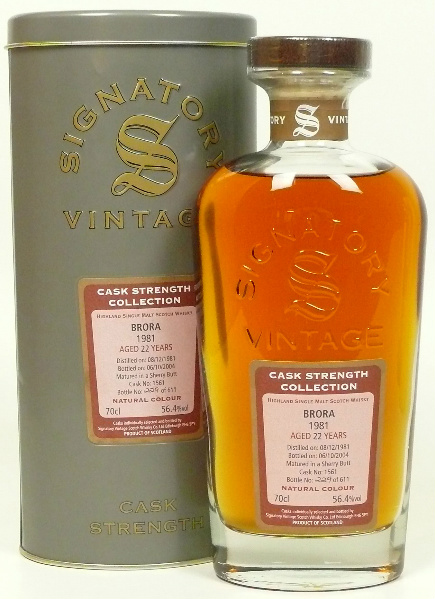
Brora 22yo 1981/2004 (56.4%, Signatory Vintage, Cask Strength Collection, Sherry Butt #1561, 611 bottles)Color: Copper gold.

Nose: Fresh and vivid. Definitely Sherry, but in no way funky. Quickly a fresh creamy and toffee note develops and only a mere hint of peat, just inhale vigorously. Needs to breathe a bit. Nice soft woody note, which sometimes take a turn towards old paper turned yellow. A bit dusty as well, (with whiffs of white peach). In no way dry. Quite spicy. I tickles the nose, and again toffee mixed with wax. Chewy would be the word. Mild yellow fruit notes appear, adding some acidity and yet more freshness to the nose. It’s not typically peach, white or other, but some whiffs come across as peach in semi-sweet yoghurt. The wood stays soft and is part of the fruity and creamy mix, instead of giving it a spine. Its nice overall, and does develop al lot, where initially it didn’t seem very complex. Hardly any peat at all and just a splash of smoke.

Taste: Thick, waxy and fruity. Definitely a profile we get from fruity Speysiders from the seventies. Nice soft wood. Toffee, without being very sweet. It has some fruity sweetness, but just the right amount. It has more than 56% ABV, but it’s still friendly. Not hot, nor burning my throat. Very drinkable. To my amazement, a lot disappears towards the finish and the finish itself is medium at best. Only in the aftertaste it starts to come apart a bit, fading out. Just the right moment to take another sip.

This one isn’t about the peat and the smoke, and the ruggedness of highlands, and sea storms after which you need warming. This one is for those moment you need an old Speysider, Bourbon matured, with lots of fruit and wax. Remember this isn’t from a Bourbon cask, but is from a Sherry butt. It has hints of peat and smoke. It’s a bit like the profile Benromach is going for today with the new 10yo and 15yo.

Points: 89

Talisker 1989/2002 “Distillers Edition” (45.8%, OB, TD-S: 5DP)

Since the 2002 Distillers Edition of Lagavulin was such a success, I managed to unearth the 2002 Distillers Edition of Talisker as well. This 2002 version is the direct successor of the 2001 I reviewed a few years ago. This is only the fourth Distillers Edition since with there wasn’t a Talisker DE released in 1999. Both the Talisker and the Lagavulin DE’s were first released in 1997. In 1999 the Second Lagavulin was released and since 2000 both were released annually.

Talisker DE 2002Color: Light copper orange.

Nose: Compared to the Lagavulin this can be called elegant, which is obvious, since Talisker is peated to a lower level and the Whisky itself is much younger. Lightly peated, more fruity and fresh. Fresher, younger and livelier. Slightly grassy. Creamy overall feel. Hints of pudding and vanilla. Nice soft wood. Although this has been finished in a Sherry cask, the finish is quite sparse. It’s typical peatiness is recognizable as a Talisker. Slightly oily and waxy, like an elegant distant relative of Springbank. Hints of old herbs from an old wooden grocery shop. Tiny hint of Islay-esk tarry rope. Hints of yellow fruits even. Sometimes this reminds me of white peach in sweet yoghurt, with some soft, slightly burnt wood added to it. Where the Lagavulin was very in-your-face, this Talisker is not. It’s even less so than the 10yo (from 2002).

Taste: Here the wood comes first after which a toned down little peppery attack announces it’s a Talisker all right. Fatty soft peat. Lovely. Cute almost. With some air, quite nutty. Again a slightly burnt note, which must be from the inside of the Sherry casks. Towards the finish a more smooth and sweet note appears, which I feel is not completely right for Talisker. Creamy towards the finish. Sure the peat is here, but most if it seems hidden by the unexpected sweetness. Medium finish with indeed a fishy part, and alas not much going on in the aftertaste…

Where Whisky buffs will almost always prefer Oloroso Sherry casks over PX Sherry casks. Just look how quickly the Oloroso versions of the vintage Glendronach’s sell out before the PX-versions. In the wine world, Oloroso is not considered the best of Sherries. The PX finish for Lagavulin seems to be a perfect match and nobody would even wonder, at least I didn’t, how a Oloroso finished Lagavulin would be. (Alright, plenty of them around), but for the DE-version at least, I didn’t wonder. For this Talisker however, I’m less happy about the choice of Sherry cask. For me it’s slightly off, so I’m wondering now how other finishes would have worked for Talisker in the DE-series.

Points: 85

Same score as “Neist Point” and a quick comparison between the two warrants the score of both. If offered at the same price, I would go for the Distillers Edition.

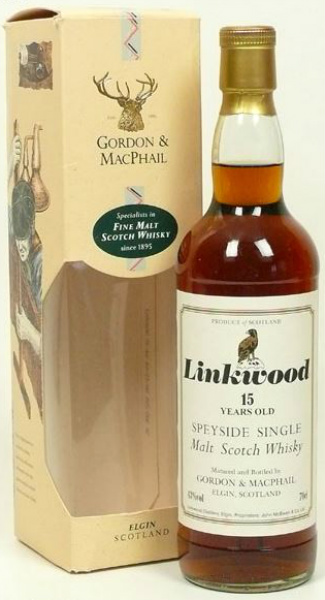
Linkwood 15yo (43%, Gordon & MacPhail, Distillery Label, First Fill & Refill Sherry Casks, Circa 2006)

Gordon & MacPhail release Whiskies in many series. Gordon & MacPhail Reserve, Gordon & McPhail Cask Strength, Gordon & MacPhail Exclusive to name but a few. Whisky Geeks call the series like this Linkwood the “Licenced Bottlings”, but I have heard the people of Gordon & MacPhail calling it the “Distillery Labels”, though both names aren’t anywhere to be found on the label. Bottlings in this series consist of Whiskies, where there isn’t (really) an official bottling of, again, like this Linkwood, and to a lesser extent Strathisla and Longmorn, like the 1971 I reviewed not so long ago, of which an official bottling did exist, although not many. If memory serves me correctly, Whiskies in this series were always reduced to 40% ABV and later 43% ABV.

Linkwood 15yo G&MColor: Light copper gold.

Nose: Dusty and funky Sherry. Slightly raisiny. Deep, dark and brooding. Nutty not fruity, so lacking the Sherry cherry of fresh and fruity Whisky. This is all but lively. Its darker and more brooding than I’ve come to expect. Very old calvados. It is apply but in a dense and syrupy kind of way. It’s some kind of hybrid between old Calvados and raisins. It is quite old and unusual smelling and definitely does not smell like a distillate from the early nineties. Hints of charred oak and vanilla powder. Nice, deep and complex. Oily baking paper. Dull brown sugar and some soft wood spices, and sometimes a short whiff of old soap.  More a sort of floral note than a real soapy note.

Taste: Paper and wood, again deep and all but fresh. Old raisins. Dried apples. Red apple skins and definitely from Sherry casks. Quite restrained. This does not shout out its presence, it more sort of sits in the corner quietly. Distant burnt note. Apart from the (burnt) woody (paper) and Sherried traits, this is also has qualities of refined sugar without being very sweet. Does that make sense? Hidden sweetness overpowered by the aroma’s described above? Second half lacks a bit of development and the finish concentrates around the wood and paper notes, with hints of old Sherried Whiskies ending in a medium walnut bitterness and of medium length. It end with the finish, there is no noteworthy aftertaste.

Actually this particular bottling, and beware there are more batches of this, is quite restrained and is unlike many of the Whiskies that are on the market today. This also makes it less likely choice for a daily drinker. Although it is alright at 43% ABV, I wouldn’t have minded some extra 3%, just to carry and strengthen the aroma’s that are presented to us.

Points: 83

Aberlour 13yo 1989/2003 “Warehouse No 1” (58.7%, OB, Single Cask Selection, First Fill Sherry Cask #13330)

Yes, it’s still not over. Just like the 2003 Bourbon Cask Aberlour, I have also a Sherried one. The 1995 16yo Sherry was impressive, let’s see how this 1989 13yo compares…

Aberlour 13yo 1989/2003 Warehouse No 1 (58.7%, OB, Single Cask Selection, Sherry Cask #13330)Color: Mahogany.

Nose: Wow! This is more like it. This smells of proper Sherry cask. From proper European oak. Whisky from the old days. Wonderful wood and dry leafy quality. warm milk chocolate, no raisins. The Sherry is extremely well-integrated and immediately make the right connections in my mind. Wonderful (there is that word again!). Hints of tar and black coal. Remember this from the dark 1971 Scott’s Longmorns? Hints of warm machine oil. Warm steam locomotive, but not as strong as the aforementioned Longmorns. Dry and dusty wood. Old wood, just stripped of 50 years of paint. Wonderful dry fruit. Black berries and such. I love a Sherry profile like this. I just hope it tastes just as good…

Taste: Wow, it starts with wood and the high ABV. Careful. Extremely smooth. Here, there are some raisins put in the chocolate mix. Earwax and nice powdery wood. Cough syrup and wonderfully deep. Thick and cloying. A tad sweeter than the nose lead me to believe. Lacks the tar and black coal from the nose. In itself that’s a shame, but the overall taste and the sheer balance make up for it. This cask had much to give, that they were right to bottle it after 13 years. It would have been over the top with wood if would have aged a few years longer. Stellar aftertaste as well. Near perfect stuff.

I just finished my bottle of a heavily Sherried 1989 Mortlach, but Aberlour also had something going for them in 1989. Tasted blind I might have gone with a Japanese Whisky. I wish I visited Aberlour Distillery in 2003…

Although the Bourbon Aberlour’s are nothing to scoff at, the Sherries are the way to go. Aberlour and Sherry are a made for each other. This 13yo Aberlour is better than all the A’bunadh’s I’ve ever tasted.

Points: 93

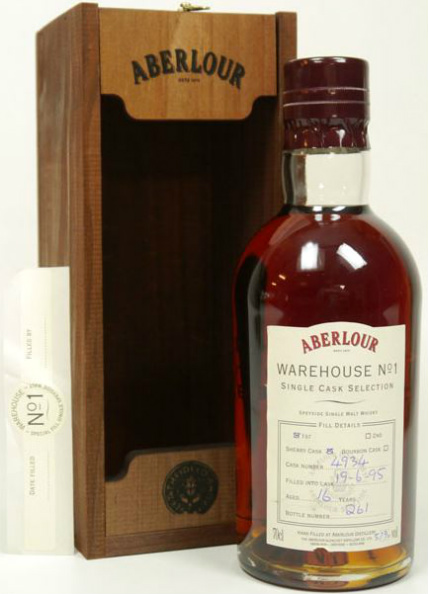
Aberlour 16yo 1995/2012 “Warehouse No 1” (57%, OB, Single Cask Selection, First Fill Sherry Cask #4934)

That’s not all! There is more. I hope you didn’t think I would have only hand-filled Aberlours from ex-Bourbon casks now didn’t you? This is a case of saving the best for last, at least so I hope. Experience showed me that the Aberlour spirit fares well in Sherry casks, and often something wonderful emerges. Just take a look at one of the best NAS bottlings in the Marketplace: The Aberlour A’bunadh. Up ’till now I reviewed two batches on Master Quill: #13 and #33 and calling both pretty good would be an understatement. Here we have a sort of A’bunadh only older and coming from a single cask. So who knows, maybe it’s even better!

Aberlour 16yo 1995/2012 Warehouse No 1 (57%, OB, Single Cask Selection, First Fill Sherry Cask #4934)Color: Warm and dark orange brown.

Nose: Wonderfully sherried. Toffee and cherries. Slightly tarry and very reminiscent of A’bunadh, so I would go with Oloroso Sherry for this one. Nice soft oak. Slightly burnt caramel and the whole comes across with nice toffee notes, without its sweetness though. Well balanced and definitely older than A’bunadh. With some air more rubbery notes appear and more dry wood. Very dusty actually. Tiny hint of cola sweetness and even a hint of florality? Where A’bunadh sometimes can smell a bit harsh, this oozes softness. Excellent stuff.

Taste: Yes more A’bunadh. Starts with a high note of acidity, that quickly moves into cherries and a tarry woody depth. Nice liquid toffee temporary sweetness. Mocha and cream. Latte Macchiato (with a wee bit too much milk). Sticky toffee pudding. Schwarzwalder kirsch trifle, all again without their usual sweetness. Dusty. Extremely drinkable. Lovely.

Even though its twice the age of A’bunadh, it’s very similar in its initial profile. Forgetting the smoothness and softness brought to this Whisky by ageing, you can see this as a single cask A’bunadh. Both share a lot. Having said that, and more or less claiming this is (easily) recognizable as an A’bunadh, I have to say that it also reminds me a lot of the 1996 Ultimate (and Signatory) Longmorns. Earlier I reviewed three of those: cask 72315, cask #72319 and cask #105091.

Points: 89

A.H.Riise X.O. Reserve Christmas Rum (40%, 875 bottles, 2013, Saint Thomas, U.S. Virgin Islands)

Albert Heinrich Riise was born on the 11th of September 1810 on the Danish Island Ærø. In 1932 he graduated as a pharmacist in Copenhagen. In 1838 he followed his dream to work as a pharmacist in the Danish West Indies in St. Thomas. In 1842 he married Henriette Marie Worm (1821-1889) on St. Croix. The couple had 13 children. I guessed he felt at home in the Carribean! In 1843 he had his own pharmacy which he turned into a succesful business. Being an excellent pharmacist Riise used Caribbean plants and herbs for the manufacture of pharmaceutical alcohols and cosmetics. He especially was succesful in selling Riises Bay Rum, yes you guessed it, a perfume! He also started distilling Rum and bitters as medicine. Way to go Albert. In 1868 an epidemic broke out of cholera, yellow fever and smallpox. No Rum would cure that, so the family decided to go to Denmark for a year, but in the end never returned to live on St. Thomas. Albert passed away in 1882 and his wife Henriette followed him in 1889.

A.H. Riise X.O. Reserve Christmas Rum has aged up to 20 years, and was finished in PX Sherry casks. Each bottle comes from a single cask.

A.H.Riise X.O. Reserve Christmas Rum (40%, Saint Thomas, U.S. Virgin Islands)Color: Brown with an amber hue.

Nose: Nice Demerara type of Rum nose with notes of cloves in (partly dried) orange skin and cinnamon. Old wood, speculoos cookies and very festive smelling. Its like visiting and old distillery museum where a lot is done with spirits and spices or a bakery museum where all the spices are stored for making cookies. Vanilla, hot butter and fruity acidity. Very aromatic. Also hints of ginger, cardamom, dust and nutmeg. Very nostalgic, appetizing and tasty. Based on the nose alone a must-have so lets see if it also tastes as good…

Taste: Thick and sweet. Syrupy. Sugared red fruits. White pepper and some wood. Fresh cookie dough. The orange skins are present too, but without the cloves. Noticeable is the finish in PX casks. Not the longest of finishes, but warming and just right. The part that stays on the longest is the fruity acidity, but wait…the cloves return for the finish, excellent!

The nose alone puts me in a melancholic mood and puts me in a bakery or Jenever distillery where spices and botanicals are used for the spirit. It makes me feel like it’s the 1930’s again (or so I imagine, since I wasn’t born yet in the 1930’s). The nose is very nice and suits the Christmas name they use for this Limited Edition. The taste is somewhat simpler and the finish shows that 40% ABV was  a little too light for this kind of rum. On the website the claim is made, or maybe that’s just how I read it, that the typical aroma’s come from the PX casks that were used for the finish and not by added spices, so it should not be a spiced Rum. In the end that’s not entirely important, since it is a very nice Christmas Rum, and even if it was spiced, isn’t Christmas a time to forgive? Wink, wink, nudge, nudge. Merry Christmas everybody!

Points: 87

Caol Ila 11yo 1994/2005 (58.2%, Gordon & MacPhail, Cask Strength, First Fill Sherry Butts #12423 & #12424)

I actually picked the 1990 Caol Ila and this 1994 Caol Ila, to compare Bourbon cask matured and Sherry cask matured young Caol Ila’s. However I don’t think the 1990 was aged in a Bourbon cask, but rather in a Fino or similar type of Sherry cask. However, American oak is probably the wood of choice for the 1990, and maybe the comparison with the two types of Sherry is maybe even a more interesting one. I’m a bit on thin ice here, since nowhere it is said in what kind of cask the 1990 has matured, nor is there any mention for both of what type of Sherry previously inhabited the casks.

Caol Ila 11yo 1994/2005 (58.2%, Gordon & MacPhail, Cask Strength, First Fill Sherry Butts #12423 & #12424)Color: Slightly orangey gold.

Nose: Fatty and funky Sherry. Raisins and wax. Stale rainwater and some muddy peat. Peaty clay, not very fatty or round, as some might say. The raisins do remind me a bit of a Highland Park bottled by Gordon & MacPhail as well. Although that one is much, much darker, it is the same raisiny aroma. Probably the same kind of Sherry. Wood spice and salty smoke. Nice creamy wood, smoky licorice. Perfumy sandalwood and a buttery acidity. Creamy and slightly meaty. Burning candles. Enough happening in this one. Vanilla comes late, it is just overpowered by so many other elements in the nose. A nose from an old house at christmas.

Taste: Initial sweetness with some toffee. Lots of wood, slightly dry, but it is soothing and not harsh nor sour. Some sweet licorice again, with some dusty spice and Cappuccino. After the dusty part comes a woody and slightly acidic wine-note. A fruity acidity that doesn’t fit this Whisky. It makes all the tastes up ’till now, fight each other, instead of becoming a band of brothers. It is obvious that this Sherry didn’t integrate that well. Dries the lips. Finish has only a medium length and quite bit of an unbalanced aftertaste, an apply acidity, which is not entirely tasty if you ask me. The aftertaste ruins it a bit for me. I definitely prefer the previous Caol Ila.

It almost seems as if you can’t go wrong with Caol Ila. Let’s say this is from a Oloroso Sherry or even a PX, both are considered somewhat “normal” Sherries, by wine-people, and considered of a lesser quality then a Sherry that has matured under flor, a “hat” of fungus that grows on the surface of the Sherry. The hat prevents contact with air. The G&M Caol Ila I reviewed the day before yesterday, I believe came form such a Sherry. For me that is the superior one of the two. I do usually prefer Oloroso ageing, especially when it is a Whisky that was aged a while back. Good Oloroso Sherry matured in European oak, instead of the American oak preferred by the Sherry industry these days. Vanilla, people, Sherry drinkers prefer a more creamy Sherry these days. European oak also seems to need longer ageing, to deal with the tannins, and that is time we don’t seem to have…

Points: 80