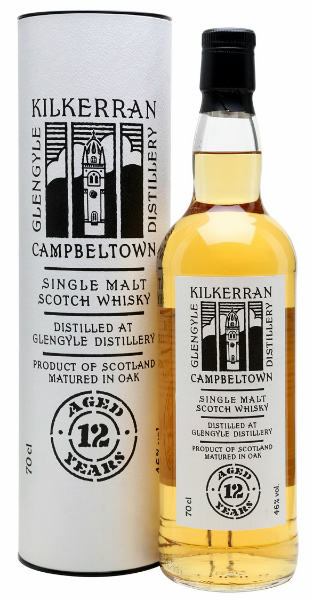
Kilkerran 12yo (46%, OB, 70% Bourbon Casks, 30% Sherry Casks, 16/468)

After many WIP’s, Works in Progress, 2016 finally saw the release of the official 12yo. As far as I know there were four, 700 ml batches released in 2016 (16/316, 16/326, 16/363 and 16/468), and one 750 ml batch. The one I’ll be reviewing here should be the fourth, and last, 700 ml batch released in 2016. Earlier I reviewed two WIP’s. First the grey WIP #2 from 2010 (6yo) and the green WIP #3 from 2011 (7yo). Thus fast forward to this 12yo. Both WIP’s were amazing and just like the Bruichladdich 2007 Islay Barley, I reviewed last, perfect examples that good Whisky doesn’t need to have to have heaps of age. Amazing young stuff is coming out these days. The future still looks bright if you can accept the change…

Color: Straw pale gold.

Nose: Definitely some autumn-like-peat happening here. Fatty, floral, green and lots of summery and fresh yellow fruits. Sweet and acidic. Nice waxy, slightly smoky, edge accompanied with nice wet and dry oaky aroma’s. All well-integrated (now). Kilkerran, just like most other Whiskies from the people of  Springbank, needs to breathe a lot. Freshly opened, I was quite disappointed with this one, lacking depth concentrating on all the wrong flavours and overall not very nice to drink, and that’s saying something, since I love the output from Campbeltown. At the time of writing my bottle is half-full (or half empty if you are a pessimist), and the change is remarkable. Coal and some tarry bits, unbelievable it got this well-balanced and downright delicious, after the more than poor start. Peaches and smoked pepper. Excellent stuff.

Taste: Sweet entry with yellow fruits in sweet yoghurt. White Peaches and old dried apricots. Smoke in the back of my mouth and again after extensive breathing so remarkably tight, big and balanced. All fits together quite well. A bit less complex than the nose was, but it makes up for this “simplicity” with big and luscious aroma’s. Green, and nutty (from the 30% matured in Sherry casks). Again a typical example of a bottle that won’t be around for long on my lectern. It’s not without its flaws, mind you. It hasn’t got the strongest finish. The finish is a bit thin, or seems thin after the big body, and falls apart a bit. Aftertaste reprises the big body with a creamy, vanilla feel to it.

So give it lots of time to breathe. Big from the start, big body, complex nose, a somewhat simpler taste with a medium to weak finish. Still nice and recommendable. I will most definitely pick up another 12yo after a few years to see what they’ve done with it, as well as other Kilkerran releases.

Points: 86

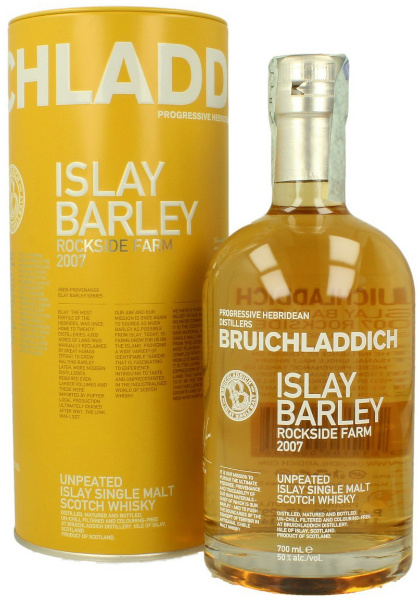
Bruichladdich 6yo Islay Barley 2007 (50%, OB, Rockside Farm, 13/126, 2013)

If you click on Bruichladdich in the right column, you’ll find that the last few reviews of “Bruichladdich” were written about an Islay Gin and two Rums. Yes, Bruichladdich is quite a progressive and busy operation, not only distilling three different kinds of Whiskies (The unpeated Bruichladdich, the heavily peated Port Charlotte and the insanely peated Octomore). They also bottle a range of Rums under the moniker of the Renegade Rum Company, mostly if not all finished in a wine casks. Yes, before I forget, they make a Gin as well, and not any Gin, it’s Gin made with botanicals from the Island of Islay. So a local Gin, and as Bruichladdich say themselves, Terroir matters. A now I have a chance for a bridge, al be it a terribly un-smooth one. Since we are on the subject of terroir…

Where Springbank lead the way with Whisky made from “Local Barley” Bruichladdich takes it one step further. Whisky-nerds always want a lot of information about their dram and Bruichladdich is sure one of those who are happy to provide, combine this with the “terroir” philosophy here we have a Whisky of which we now know it’s not only made from local Barley, but we also know how local. The barley used, Optic, was grown on Mark & Rohaise French’s Rockside farm, and not on the whole 2,500 acre farm, no, it was grown exclusively on one particular field called ‘Minister’s Field’. Two years after this 2007 Islay Barley was released, the French’s decided to sell their farm to Kilchoman, which is built on Rockside Farm land, and leave the Island…

Color: Light Gold.

Nose: Barley, bread and cereal. Warm and sweet-smelling. Vanilla, custard and pudding. Although supposedly unpeated, this still has some peat, paper and smoke. Fresh and fruity, and quite honest. A lot happening already after 6 years. Develops in my glass. Hay, citrus and fresh ripe Cherries. Appealing and appetizing. Depending on the moment, sometimes, and it’s not often, I pick up some petrol. Brings back moments of a warm silent summer in the countryside. No wind and being alone. On top of the fresh and fruity notes lies this sharper smoky note. The whole experience is less broad than the 2006 Bere Barley offered by Bruichladdich as well. Sure this is 6 years old and I guess this makes lots of people thinking it is probably simple or doesn’t offer a lot of complexity. Bollocks. I feel, this offers an amazing complexity. Yes it’s 6yo and it has youthful elements to it, but not typical youth, as in hints of new make. A nice drinker, but this time an even better one for comparison to others like it from Bruichladdich (different vintages of Islay Barley and Bere Barley), Kilchoman 100% Islay, or even the likes of the aforementioned new Springbank Local Barley’s. Yes you need more of these open at the same time. a terrible thought indeed!

Taste: Sweet, with cookies, cereal, and very fruity right out of the gate. Tiny hint of soap and wax. Nothing to worry about. Big, dirt, soil, oil and rural notes, but also creamy with vanilla powder and old dried out toffee bits. Sweet. Hard to imagine now that the Bere Barley was even more aromatic than this one. Just like Springbank, this needs some breathing before showing its true potential, but when it does, it delivers nicely. Nice presentation too by the slightly higher ABV. 50% instead of the new standard which seems to be 46% ABV. Both are great improvements over “old” 40% ABV. Yes, the alcohol is noticeable people. Mocha and milk-chocolate come next. Vegetal, grassy, linseed oil and butter. A healthy sensation gets over me now. The finish could have been better balanced and longer. First of all the Alcohol (sometimes) slightly anasthetizes my tongue and the roof of my mouth. Secondly it gives off a slightly acidic aftertaste which somehow doesn’t really fit the profile. It’s not an off-note but it just doesn’t fit in this picture. It gives too much separation (of tastes and balance) and leaves the finish in a bit of confusion. (gets better with more air). Hardly any aftertaste, which means youth I guess… This luckily doesn’t spoil the fun though, and I still love this dram. Not as complex as the nose but more than enough, especially considering, again, that this is a mere 6yo. It’s a way to go with modern Whiskies. I love this series as well as I do the Bere Barley series. Well done Bruichladdich.

It is quite nice to try several different releases from the Islay Barley series side-by-side. The differences are bigger than one would expect beforehand. In my Whisky Club we also compared this 2007 Islay Barley to the 2006 Bere Barley 2nd Edition. Both are in their own right quite good Whiskies (can we get some older examples too please?), but trying the one right after the other was for me te true way to try these, hence I feel you need several of these open at the same time. They complement each other quite well. The differences are big enough to warrant this…

Points: 86

Cotswolds Single Malt Whisky “Inaugural Release” 2014/2017 (46%, OB, First Fill Bourbon Barrels, 4000 bottles)

Every year our team attends the Whisky Show in London, and every year we come across something that surprises us. Usually it is a particular distiller. One time it was the range of Tomatin, and more recently we really liked the stuff of Indian Distiller Paul John. For example, last year, the only bottle I bought was a single cask Paul John. This year we found that the crux of the festival seemed not to be a particular distiller or brand, rather than the high quality of young Whiskies and/or new distilleries. Sure, there was a plethora of amazing old Whiskies on the Gordon & MacPhail stand and there is always nice super-premium stuff at the Diageo stand, but for us this year was about very nice young Whiskies. And guess what, they all came with age statements! Yes, it can be done! Funny enough, also young Whiskies coming from distilleries, people, (including me), tend to ignore. So, this year, I returned home with an 8 year old Tamnavulin, an 8 year old Glen Moray, a 10 year old Glenlivet and finally a 12 year old Tormore. All young, age stated, single casks and all from independent bottlers. Highly affordable as well. Before I forget, equally amazing was the Ailsa Bay and the man behind it. Today we are going to look at another young Whisky. The first release of an English Single Malt Whisky from the Cotswolds.

In my mind when a new distillery opens, it’s the brain child of two blokes who think they can do things better and try to conquer the world. Yes, I’m a romantic. Not true here, the two blokes thing, that is. This Whisky isn’t made in a shed in the Cotswolds. No, the Cotswolds distillery is the brain-child of Daniel Szor. A New York banker from Polish descent. Unfortunately his parents never learned him the language. Believe me, I tried, nope, Cotswolds is definitely not a shed. It’s a full fled distillery with tours and everything and a lot of staff, a lot, so I guess mr. Szor has some big plans, and is here to stay!

Color: Gold.

Nose: Floral, zesty, young and very perfumy. Big aroma. Cinnamon, cinnamon (again), more cinnamon and bread, cereal, sawdust and lots of notes from first fill Bourbon casks. Vanilla pods and Sinaspril pills. So yes, a nice acidic note as well. Insence sticks. No off-notes whatsoever and hardly any trace of new-made spirit. Nice wood, beautiful wood actually. Dry leaves and toasted toffee. Hints of candied yellow fruits in the distance. Spicy like an Indian Malt. Not sure this comes from the wood or are they using indian six-row barley at Cotswolds? The florality reminds me of Indian Whisky as well. Very appetizing. Well balanced and again a very big nose. Wonderful aroma’s coming together nicely. Still young and it already shows a lot of potential, which doesn’t mean this inaugural release isn’t worth it, because it is! Well done team!

Taste: On entry a wee bit thinner than expected and after that, an elegant and mouth coating young Malt emerges. Slightly sweet, slightly bitter, with toffee and caramel notes, and a lot of aromas coming from the first fill Bourbon casks. Making the body “bigger” than the entry was. Not as sweet as the nose promised. Already some nice yellow fruits though, as well as a hint of latex paint and machine oil? Wow. A desert in itself. Sweetish. Vanilla with a spicy note added to it. Just like the nose, quite Indian in style. Very appetizing stuff. The wood is almost virgin now, with a sharp spicy edge to it. Oats and crackers. Cigarette ash and toasted oak mixed with light fruity acidity. Again, lots of balance for such a young malt from a new distillery. Nice aftertaste.

Amazing inaugural release of Cotswolds. I’m told this is three years old plus one day, (some mentioned four days, but who is counting days in Whisky?). Amazing Indian style nose reminding me of some Paul John releases but foremost of this Amrut.

As mentioned in the introduction. Distilleries these days, are able to put out some very nice young Whiskies, even the ugly ducklings of yesteryear, you know, those anonimous distilleries distilling for blends only, like the aforementioned Tamnavulin. Amazing stuff, but on the other hand, we the consumer, we also had some time, by way of NAS-Whiskies, to get used to the taste of younger Whiskies. Maybe we just needed some time to adjust, and accept the times they are a-changing? Really old Whiskies these days cost the same amount of money as a new car, and something a bit younger still costs about the same as a nice vacation. So yes, we did get used to the taste of younger Whiskies, but nevertheless, there is much good stuff going around, just different from the stuff we bought 10 or 20 years ago…

Points: 84

The Balvenie 15yo 1989/2004 ‘Single Barrel’ (47.8%, OB, Bourbon Barrel #7581)

2003 will for ever be the year when The Balvenie 15yo aka ‘The Single Barrel’ from the masters of reduction, was even further reduced. Where this bottling, which often was older than the stated 15yo, used to be reduced to a nice 50.4% ABV, from 2003 on, was further reduced to 47.8%. Bugger, less tax, mo’ money? Never mind. Balvenie is always a nice distillery to review. The company usually puts much effort in reaching consistency between batches, but fails miserably, when comparing this 12yo ‘Doublewood’ to this one and this one. The 15yo however, was intended to have (some) batch variation, since they were the results of one Bourbon cask (I’m not sure if all are Barrels though). Funny enough subsequent releases, and there are many, were pretty similar, when you expected some more emphasis on the difference between casks. I guess, there is more difference when comparing two from (quite) different distilling dates. Well how convenient. Five years back I wrote a review of a 15yo ‘Single Barrel’ that was distilled in 1983, and released in 1999 @ 50.4% ABV, and now we are going to have a look at a “newer” example distilled in 1989, and released in 2004 @ 47.8% ABV. (The picture is of a similar bottling from cask #7633).

Color: Light gold.

Nose: Initially fruity and fresh. Very accessible. Vibrant and happy I would say, Summer, it’s like sunshine in a glass. Barley, some butter and brown sugar. Vanilla powder and white oak. Dusty mocha. Hint of gun powder and soap. Next a more vegetal note emerges. Half dried weeds lying around in the sun and some fresh almonds in the background. Soft rhubarb. The more it breathes the weaker it gets. Simpler as well. Pretty easy Whisky, typical of the cask it came from.

Taste: Sweeter than expected, and bigger as well. Lots of fruit, dried apricots, peach in sweet yoghurt, but also vanilla and coffee creamer notes. Pudding and custard. Milk chocolate. Chocolate mousse. This cask gave off lots of vanillin. Very green and vegetal. Nutty, almonds again. A hint of christmas spices. Cloves, that kind of thing. Apart from this, a strange cold dishwater note and add to that a burnt note as well as a slightly floral note. Green. The nose definitely was cleaner. Ice-cream and fruity liqueur (alcohol).

It is strange and typical at the same time. Typical in the way that it is where it came from (Bourbon Barrel), but some strange notes appear as well. The sweetness and the notes mentioned above make this not really a daily drinker. With this one you need some down-time or follow it up with something else. One at a time is enough, and yes this makes it different from other examples of the 15yo I have tasted, so a succesful exercise in getting some batch variation. Not my favourite of the 15’s though.

Points: 84

Benrinnes 15yo “Flora & Fauna” (43%, OB, L15P00535367, Circa 2001)

Long time no see! I took a month off, since a lot happened lately. First of all, a new job, which is nice, takes up a lot of time though, and the moments I did have left for writing reviews, were also spent differently than I initially expected. Apart from that, also The Whisky Show in London happened. Today, instead of reviewing something new from that show, I chose an oldie from my lectern.

Just like the Flora & Fauna Mortlach bottling I reviewed earlier, this is a bottle I brought with me to a gathering of my Whisky club, and as can happen when opening old bottles, the cork broke quite easily, crumbled to a pulp. You gotta love those corks now don’t you? Of all the Flora & Fauna bottlings, Mortlach, Dailuaine and this Benrinnes are the really Sherried ones (but there are more). Experience also shows us there is definitely some batch variation going on in the Flora & Fauna series. Here we have an oldie, supposedly bottled in 2001 (or 2002), so not a recent one, which might be entirely different.

Color: Orange brown.

Nose: Heavy on the Sherry. Nice and earthy. Meaty, cold gravy. Thick aroma. Coal and steam. Is it already a sherried bottling from a different time than ours? How would a more recent example compare? This was distilled in the eighties, which was a different era compared to a Gordon & MacPhail Longmorn from 1971. So heavy on the Sherry. Thick and astringent. Dry and not as fruity as Longmorn. If you ask me, this compares more to the style of Glenfarclas, drier and not-so-fruity. Funky, tarry, musk, brown sugar, coffee creamer and definitely Vanilla. American oak. Still not a lot of fruit though. Hints of very ripe cherries mixed in with oak. Dry, dusty and quite spicy. Hints of cask toast including the smell of molten plastic. Meaty, cooked vegetables with more oak and spices. Hard to tell which spices though, although anise and cloves come to mind, as well as some crushed beetle (that’s not a spice isn’t it?). I can’t help but feel there are some older casks used for this particular expression. Good and interesting, but also a bit “strange”. A hint of soap (not of the perfumy kind) and mocha.

Taste: On entry, a brief light moment, almost like a underproof Whisky (which it is not). Soft, but luckily not “smooth”. It has wonderful raw edges and does show some bitter (and soapy) notes as well, which do work well. Fruitier than the nose, and already one that needs to breathe. Somewhat sweeter than expected, caramel but also the brown sugar I got from the nose, all in good measure though. Tar and plastic yes, cherries? yes as well, but that’s about it. Does it matter? No, since it is a different kind of Sherried Whisky. Lots of (sweet) licorice (and toffee) in stead, it almost tastes salty. Again, a very interesting and tasty experience. Wonderful body, but it sometimes falls apart a bit in the finish (depending on the moment). Finish isn’t as long as one would think, but still has enough length. Well, if it’s a problem, take another sip then. Tar and coal make up the aftertaste, and Sherry of course.

For me, another gem in the Flora & Fauna range. Especially looking at those earlier bottlings, there were quite a few more than wonderful examples there. Mortlach, Blair Athol, Rosebank, all excellent. Worth looking for. I really need to have a look at more recent bottlings in this range to compare them to the older ones…

People start to pay silly money for the Flora & Fauna Mortlach, and it doesn’t even seem to matter if it’s an older one or one of the last. Granted, they are very good, but really, this 2001 bottling of Benrinnes is equally as good!

Points: 88

Paul John “Bold” (46%, OB, Batch 1, 2016)

To finish off the trilogy of entry-level Paul John’s, here is Bold. Bold was the last addition to the standard range, bottled at 46% ABV. Earlier I already reviewed the other two, “Brilliance” is the base-model so to speak. Just well made Indian Whisky, no peat used. “Edited” is like the base model, only this time tweaked with a little peat, achieved by blending in up to 30% casks of peated Whisky. Today we’ll have a look at “Bold”, introduced in 2015 and made from peated Whisky alone (35 ppm). For this edition, all peat was sourced from Islay.

Color: Pale gold.

Nose: Lots of butter and vanilla, youth, and I’m guessing quite some first fill casks. Nice clean peat upfront, smoke second. Enticing stuff. The peat might be recognizable, and it definitely comes across as a young smelling Whisky, but add to that an uncommon floral bit, which sets it apart from Scottish or even Islay peated Whiskies. Slightly waxy. Lacking a bit in the balance department. Sometimes there are whiffs that are too close to new make, but the next breath can be excellent. After a while, still creamy, the peat dumbed down a bit, and the smoke has almost gone. Some green notes, mainly (almost new) oak. If you smell this very calmly, it’s all about the butter, the vanilla, the cream, the toffee, but when you “smell hard”, yeah, that’s where it all comes together. More spicy, dusty and better balanced. Nice peat, latex paint, mocha and nutty as well. The nose lures you in. It’s seductive.

Taste: Sweeter than expected and initially not very peaty, let alone smoky. Lots of warming notes going down though, with nice development in my mouth. All nice aroma’s, but initially not very bold. A wee bit too young again, moving into the direction of new make. Not a lot, but enough to notice. Hints of orange skins and bread, that must be the influence of indian six-row barley. Terroir is happening! Hey, now apart from the floral bit, I also get a slightly soapy note. Fruity and friendly notes appear next. Very easily drinkable. Please do not expect a heavy hitter, it’s not a heavily peated malt in appearance. Its fruity and floral. Sunny with a slight peaty bite.

I would package it in pink and yellow with some black mixed in for the peat used, but it is more a happy Whisky than a brooding one. It’s not gloomy, misty and Scottish, it’s bright, colorful and Indian. So for me not so bold, and the anthracite packaging is way to dark. It’s like your dog, its your best friend and its happy when you get home, wagging its tail trying to lick your face. It’s not a bad-tempered pit bull with a spiky collar, that growls at you when you get home, disturbing its sleep, passing gas, chewing on your beloved furniture.

I preferred the second batch of “Brilliance” over the first, and I’m sure the second batch of “Bold” will be better than the first as well. It’s coming along nicely and I guess all the initial casks at Paul John were rather new. So, a great effort for a first batch, it’s pretty good, but I’m eagerly awaiting the second batch. With more experience and more time, I’m guessing that one will be at least as good as the second batch of “Brilliance”. Paul John is definitely on the way up!

Points: 85

Paul John “Brilliance” (46%, OB, Batch 2, 2016)

Today the Paul John range of Whiskies has three entry-level Malts. The unpeated “Brilliance” of which I’m about to review batch #2 (released in 2016). The very lightly peated (8-10 ppm) “Edited” of which I already reviewed batch #1 way back in 2013. The lightly peated style is achieved by blending peated and unpeated Whisky. For Edited, Aberdeen & Islay peat was used. Both Brilliance and Edited were introduced in 2013. In 2015 the third expression was released, called “Bold”, where all Whisky used in the blend is peated. The names speak for themselves. Edited is a slightly tweaked version of Brilliance, tweaked with a little peat (8-10 ppm in the final product), and Bold is bolder in the use of peat (25-30 ppm in the final product). Where Edited contained Aberdeen & Islay peat, Bold is made with Islay peat only). When I wrote the last review, there was not a lot more Paul John around besides “Brilliance” and “Edited”. Back then only three single casks were issued (The P1’s).

Today the core range has more members than the original two. Apart from the addition of “Bold”, in come two more additions; The Classic Select Cask and the Peated Select Cask, both are cask strength Whiskies (released in 2013), so not really entry-level any more. All other bottlings, and there are quite a few by now, are single cask bottlings, some of which were released for particular countries alone.

Color: Pale gold.

Nose: Fruity and fresh. Nice barley aroma. Fruit cake. Sugared yellow fruits with a hint of smoke. Very, very appetizing. Extremely fruity and floral as well. Fruity first, floral second. Vanilla third. Dry powdered vanilla. Dusty and silent. I imagine a hot day. Next some glue and paint which only broadens the aromatic palate. Warm soft wet wood. Definitely summer in the air. What a wonderful nose. This works perfectly for me. Sure this may be a young Indian Whisky, but it already shows a lot of evolution. Ghanging and growing in my glass.

Taste: Barley and some sweetness, again with a bit of smoke. Incence, smoke from burning herbs. More exotic than the nose. Nice soft wood again and a bit of cardboard. Vanilla, so definitely American oak. Oak bitterness (and herbs) come next, giving the Whisky character and backbone. Both aroma’s are coated with vanilla ice-cream. How’s that for balance?

So this is entry-level Whisky. Wow! I’m not sure about you, but this is right up my alley. It differs from other Whiskies. Its exotic and it is definitely high quality stuff. Amrut already has a fan-club (Amrutfever), but I believe its time someone should start a fan club for Paul John as well.

By the way, reading back my review of the first batch of Paul John “Edited”, also shows me how much the Whisky world has changed in the three and a half years that have passed since then. In 2013, it seems, Whisky was just starting to get global, and today it seems every country in the world already has at least ten distilleries producing Whisky.

Points: 85

Many thanks go out to Shilton (Paul John brand ambassador), for your patience answering all my questions, and for the quickest response-time in the industry!

Bowmore 17yo “White Sands” (43%, OB, for Travel Retail, Bourbon Casks, 2014)

As announced in the previous post about the Bowmore “Deep & Complex”, here is the review for the Bowmore “White Sands”, the top offering from the previous travel retail trio. Where “Deep & Complex” has something to do with Sherry casks, this one is said to have been matured only in Bourbon casks. This 2014 travel retail release is somewhat odd though. Of the three, it is the only one not in a litre bottle, the only one bottled at the higher strength of 43% ABV, and the only one with an age statement. 17yo is also an unusual age, although there used to be a oficial 17yo that was replaced by the 18yo.

Color: Full gold.

Nose: Sweet, syrupy and some very nice, medium strength, smoke. Slightly vegetal, but mostly fruity with sweet orange oil mixed in with sweet, soft peat. Papaya and mango are noticeable too. Hints of cardboard and earwax. Cold black tea. Very accessible. Creamy vanilla and hints of soft oak. It’s almost like sugar-coated oak. I fear caramel coloring is at work here. I’m already getting slightly annoyed, and I haven’t even tasted it yet. I have tasted this bottling before, and on that occasion I found the smoke to be more up-front. That’s important for this bottling since the smoke-bit is really delicious and defining this Whisky (for me). That bottle was half full, by the way, so I’m hoping this only needs some more breathing. (I just opened this bottle). It may very well be from a different batch as well. Letting it breathe right now, already brings out some more wonderful notes from the smoke-department, so I’m confident that if you work this a bit, all will be fine in the end. This will turn out to be a hidden gem, I’m sure. Just let it breathe. Leave the stopper off for a while.

Taste: On entry; sweet (Rum) and waxy. Oak and fruit. Definitely a tad simpler than the nose and most definitely lacking some oomph. This needs at least 46% ABV. Please Bowmore, please. Cereals, soft wood and caramel. Almonds and mango chutney. Milk-chocolate powder. Nesquick. Hints of smoke and some sweet peat. A tiny hint of bitterness from the peat and oak, but not much, not much of that at all. Vanilla, vanilla ice-cream. Soft and creamy. Custard and pudding. You get the picture don’t you? It isn’t hard to taste, this suffers a bit from caramel coloring. Its aromas are glued together, a property of caramel coloring. I wonder what the chill filtration did to this expression? Is the complexity of the nose over the taste a sign of this?

Dangerously drinkable. Talisker Neist Point (a NAS bottling), is another of those peated, dangerously drinkable, travel retail Whiskies. I would love to hate both, since they are obviously flawed, but somehow they turn out better than expected. Never stellar, but good and likeable.

Although this is a good one, it still is one, I feel, has been tampered with. Chill filtered and colored, and as with the other Bowmore, reduced too much. Again a potentially stellar Whisky ruined, (at least in part it is), for the sake of how it looks on the shelves, and how money can be made, at airports. What kind of heartless, soulless people make these kinds of decisions? Do marketeers have so much to say, or are people, like us, who truly like their Whiskies, actually the odd ones out, complaining when we shouldn’t?

I can confidently recommend this Bowmore, I will give you another recommendation as well. Seek out an independent bottling of Bowmore, to find out how Bowmore actually tastes like without the tampering I mentioned.

Points: 86

Bowmore 18yo “Deep & Complex” (43%, OB, for Travel Retail, Oloroso & Pedro Ximénez Sherry Casks, 2017)

Lets start this review with a confession. I’m a faulty human, and I admit to having prejudices. I don’t know where they come from, I didn’t invite them into my mind, but still they are there and I am battling them. The prejudice I have is that I have a more than healthy suspicion towards travel retail bottlings. Compared to this, my feelings towards NAS-bottlings are pretty mild, since there are enough good NAS bottlings around. Bowmore travel retail bottlings are an excellent example why I have this prejudice. A few years back I wrote a review about the Bowmore “Black Rock“, and it is travel retail at its finest. First it comes in a big litre bottle and second, it was almost reduced to death by bottling it at 40% ABV. So to celebrate your trip you bring back a souvenir of a weak Whisky and a lot of it. When tasting bottles like this, I just knew I had to stay away from such bottles, and I still will steer clear of litre bottles bottled at 40% ABV.

In comes Nico. Nico is one of the founding fathers of the Whisky club I am a member of, and he invited me over to bathe in the excellence of one of the latest batches of The Balvenie “Doublewood“. Taking about ruining a perfectly good Whisky! Since we both are very keen on Whisky, obviously the evening didn’t end with several Balvenies. We had plenty more adventures in Whisky. Funny enough, the surprise of the evening (for me) was a Bowmore travel retail bottling! Nope not this 18yo Deep & Complex but the 17yo “White Sands” of the previous travel retail series.

In 2014, Bowmore released a trio called “Black Rock” (litre, 40% ABV), “Gold Reef” (litre, 40% ABV) and “White Sands” (70 cl, 43% ABV) and I should have known better. “White Sands” wasn’t a litre bottle, was the only one of the three with an age statement (17yo), and the ABV was slightly higher as well. Tell-tale signs that there was a possibility it would be a good one. Good? I loved it! I have met (the wonderful) Eddie MacAffer (voted Whisky distillery manager of the year at Whisky Magazine’s 2013 Icons of Whisky Awards) and “White Sands” is a favorite of his, so I definitely should have known better!

So why isn’t this review about “White Sands” then? Relax, I’ll get to that shortly. Probably in the next post. When I found out how good “White Sands” was, I ordered a few of those. At the same time, I got a pretty good deal on this “Deep & Complex” (What’s in a name), and knowing now that the top offering in Bowmore’s travel retail series might be quite good, I ordered it as well. So, let’s do this new one first and we’ll get to the old one later…

Color: Copper.

Nose: Sherry all right. I would say the PX is upfront. It smells sweet and dessert-like. Caramel. Cherries on syrup. Candied orange skins. Sweet alright. Raisins and dates (freshly dried). Fresh macadamia nuts. A nice typical smokiness (birch) I get from “White Sands”as well, although that is an entirely different bottling. Garden bonfire. Wood smoke. Lovely smoke aroma’s all over. Charred wood. Nice ripe black and red fruits and definitely more smoke than peat. Excellent balance. Vanilla and dust. Islay in the summer. Tar with hints of peppermint and menthol.

Taste: Sweet and fruity. Round, they call it. Half-sweet Cherries and only some wood and peat. It has an even deeper lying smoky bit, but again a nice smoky bit. A bit thinner (and fruitier) than expected. Burning newspaper. Nice warming quality though. Warm wet earth and the fresh macadamia’s are here as well. Not too bitter dark chocolate, wood and toffee. Tar and coal. Licorice. Surprisingly short to medium finish and not a lengthy aftertaste as well. What happened over those 18 years? I’m trying this before breakfast so I have a fresh and eager palate, but still the Whisky is too weak. It’s lovely, but too weak, so don’t drink this in small sips, it won’t work as well that way.

It is somehow suggested and assumed this was matured solely in Oloroso and PX-casks, but I do have my doubts. In a way it’s almost like a “White Sands” with a Oloroso and PX-finish. Wonderful stuff, but like the 40% ABV travel retail versions. It’s a bit too thin. Even at 43% ABV, it doesn’t quite cut the mustard. It has the potential of being a wonderful Malt (scoring in the lower 90’s). It is actually a wonderful malt as is, but it could do so much better if it had some more oomph, something more to carry it. Now its like (white) sand running through my fingers…

Points: 87

P.S. In a head to head (H2H) with the 1995 Lagavulin its easy to see what I mean. The Lagavulin has only 5% ABV more, but it does so much more for the Malt. It gives it power and length. It even brings out the aroma’s more. I’m not afraid to say that this Bowmore, if it was 46 or 48% ABV like the Lagavulin, would even be better than it. Now, the Lagavulin beats it (just). Nevertheless both are damn good drams and easily worth your money. I’m enjoying them both.

Balblair 1990/2014 (46%, OB, 2nd Release)

Unbelievable! Here we have another Distillery that has never featured on these pages before. Balblair. Just like Glenrothes, Balblair is a distillery that has gone down the road, laid out by Wine. The long and winding road of releasing their products as vintages (in a reduced state, ABV-wise, that is). On the back of the bottle, in rather small print one can find the statement: “2nd release”. It implies that there has been an earlier 1st release, yes? Well, yes, but…

Since 2008 there has been an 1990 release which was a lot lighter in colour and which was only released in litre bottles for travel retail. That one was matured solely in ex-Bourbon barrels. It was released annually untill 2011. So there was a 1990/2008, a 1990/2009 etc. Since 2013 the first 2nd release, was released. the second in 2014, the third in 2015 etc. So what we have here are multiple, annual, batches from different bottling years of the 1st release, as well as of the 2nd release. So not only Glenrothes style vintages, but also Springbank style batches. Again the industry seems to consider batch variation to be a dirty word(s), yet I hope there is some adventure in these different batches. This will be a review of the 2014 batch (the 2nd batch of the 2nd vintage 1990, can you still follow? However, if a different batch falls into my hands, I’ll compare it to this one. By the way the 2nd release comes from the same casks and the same vintage as the 1st release, the only difference being this second release has spent about two years in ex-Oloroso Sherry butts. Oh, and with each new batch, it gets older as well.

Color: Copper gold.

Nose: Quite creamy, with sweet vanilla, ice-cream, fresh cold butter and Sherry. Hints of oak, fresh and toasted. Dry (scorched) leaves and herbal. Hints of coal even. Hints of paper, cardboard, toffee and honey. Cough syrup. This smells so sweet and syrupy that it is easy to conclude it lacks a bit of the woody backbone to keep it standing. This Whisky smells like a dessert by itself. The wood that is here, smells like pencil shavings.

Taste: Quite big, matching the nose. Sweet (Sherry) and syrupy. A bit too sweet imho. Maybe these casks didn’t contain the highest quality Sherry in the first place. Sweet milk chocolate, vanilla and vanilla ice-cream. (Now the honey in the nose becomes more pronounced as well.) Butter and more chocolate. Almonds with fruity acidity on top, as often this fruity acidity doesn’t blend in all that well. There seems to be a little problem with balance as well.  This acidity also has quite some staying power well into the finish only to dissipate in the aftertaste.

One sunny afternoon I tasted this 1990 2nd release and I loved it. Now, when giving it almost too much attention and analyzing it, there are some flaws that distort the balance a bit. It’s a bit too sweet and I don’t think the Sherry finish worked quite as it should. It’s completely fine when you have a casual dram and that is precisely where it’s for. I really liked it on that sunny afternoon, outside, with nice food and friends. When sitting at home, analyzing it, in a controlled environment, these flaws become more obvious, but I still like the Whisky very much. I wish I had the first release for comparison.

Ok, now I ask you to look past the flaws I described above, because as a whole this is definitely a good Whisky, so I stand by my score, which might be higher than you might expect from the text alone, and yes, at a good price, I would even buy it again. How is that for a recommendation. Just pick your moments to drink this, wisely…

Points: 87