Glen Scotia 17yo 1977/1994 (57.5%, Cadenhead)

I completely forgot about this one, otherwise I would have reviewed it sooner. This one was sitting comfortably in the back of my lectern and was overlooked for some time. Not the first time though, a Glen Scotia graces these pages with its presence and certainly not the first time a Cadenheads bottling with the green glass and the small label does. Previously I tried a much newer Mo Òr bottling distilled in 1994, so maybe a chance to see how Glen Scotia fared through its difficult history…

Color: (Dull) gold.

Nose: Spicy, nutty and clean. Quite sharp. Slightest hint of cat urine. Powdery and pretty bold altogether. Soft wood with a small hint of toasted wood. This is probably from a Bourbon Cask (Barrel or Hogshead). Actually it’s very clean and youthful, and it picked up quite some color along the way. It’s maybe half-creamy and has some hints of oranges, candied oranges that is. Later on some notes of cardboard and a yeasty cold room. Full bodied typical high strength Cadenheads bottling.

Taste: Wow, nice! Quite an attack from the alcohol. Very full-bodied with initial notes of wood and fern. Coffee, nuts and a slight woody bitterness. Again a typical clean Cadenheads Bourbon Cask bottling. Long spicy finish with black tea and almonds.

For me, and I’ve said it already. A typical Cadenheads bottling. Cadenheads in more recent times, seem to bottle a lot of ex-Bourbon Casks in their teens, and although there are obviously some differences, there are some similarities as well. High strength and clean. Great stuff for me, because I like cask strength, but it would have been nice to see these type of Whisky age a little longer, and with that, see the ABV drop a little. This certainly had a lot of potential, and would have been great in its (late) twenties and around 50 to 52% ABV.

Points: 86

Backsberg Sauvignon Blanc 2010

Lets start the summer month of July with a nice and Sunny white wine from South Africa. This Backsberg is made with the Sauvignon Blanc grape variety. Sauvignon Blanc is right behind Chardonnay for the title of most popular white grape variety, and therefore can be found all across the globe. Like the Chardonnay originates from Burgundy France, Sauvignon Blanc originates from Bordeaux France. Thus we have a derby on our hands. Sauvignon Blanc is known to be dry, crisp, elegant and refreshing, but also is used to make the sweet wines from Sauternes. The terroir is, especially with Sauvignon Blanc, very important in how the wine will eventually taste. A very versatile and popular grape variety. Meant to be drank when young, most Sauvignon Blancs are not for (extensive) ageing, unless aged in oak.

Backsberg comes from Paarl. Paarl being the second largest city in the cape region. You just get one guess what is the biggest city in the South-African Cape region. Grandpa Back was a refugee from Lithuania, who eventually got the chance to buy a farm. Part of the farm were wine grapes which more or less started the wine business for Grandpa C. Back. His son S. Back first worked alongside Grandpa C. and concentrated more and more on the wine business of the farm. S. Sold the stock, equipment and the name: Back’s wines (to pay off some debts) and started fresh with the name Backsberg. The first 10 years selling peaches off the farm! Remember that, because the peaches will return! Next in line was M. Back, he made the wine business big again, to the point it is today. The fourth generation of Back is already knocking at the gate: S.

Color: White wine, light.

Nose: Peaches in yoghurt and more peaches in (sweet and creamy) yoghurt. Behind that a mineral note is noticeable, but it is hard to get past the peaches in yoghurt. I somehow have to reset my mind. Second time around, I guess the peaches in yoghurt come forward when the wine is a little bit warmer than it should, now it is colder and it’s more, clean and mineral and with a nice lemony acidity to it. The peaches in yoghurt are still there.

Taste: This is at first pretty sour, but that does not stay, well, it actually does in the sides of your mouth, but right in the middle, a more estery and sweet profile emerges. Perfect balance I would say, but I have to admit that I like my acids in white wine. Not too much, but it is the defining part of the palate. There have to be some good acids to interact with some elegant sweetness to achieve perfect balance. Besides the acids, a light hint of wood and a little bitterness, grapefruit. Finish could have been better, but overall not bad this one!

In fact I liked this one better when it was slightly higher in temperature, so don’t chill this too much. It got more fruity and creamy, and when chilled, it was more clean and…typical. The wine has an ABV of 14%.

Points: 80

Arran 16yo (46%, OB, Bourbon & Sherry Casks, 9000 bottles, 2013)

I always have mixed feelings considering Arran. It’s fairly new and I really like new enterprises like this. Mostly nice people with a lot of passion who start a distillery like this. Mice malt and so forth. A whisky I love to like. Just when it comes to tasting, and this sometimes happens, Arran usually does not gel with this taster. A Cask of Arran Single MaltLinkwood is another example. Luckily this also happens the other way around. For most people Teaninich is nothing out of the ordinary, but I really do like my Teaninichs…
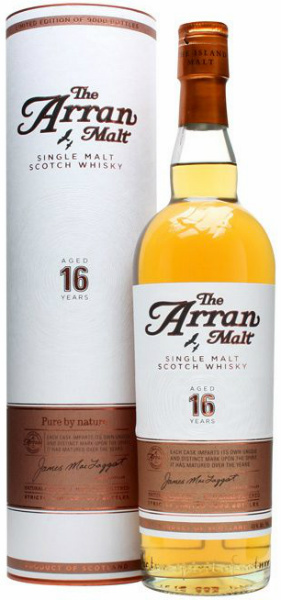
This will be my 18th Arran and I hope this is a good one. There were a couple of good ones in the past. It’s not all bad for me, you know. I remember a 1er Cru Bourgogne Cask Finish from 2006, and two different Single Casks from 2004. There are obviously more, but I have to admit, I haven tried a lot of the newer expressions for a while. Time to reacquaint myself with Arran and hopefully find out they got pretty good by now, I really would like that, no I would really love that!

Color: Light gold. Nose: Wow that’s more like it! A nice clean and slightly spicy woody attack. Ginger. New carpets on the floor. After that a full sweetish nose that also is pretty floral. Flowers that is, not perfume. Very elegant. Some acetone, mocha and toffee in the nose, but powdery as well. Not a bad start…

Taste: Sweet and perfectly woody. The sweetness drops off a bit, to show some slight hints of acidity, but the sweetness never relents, it keeps the whole in perfect balance. What a nice short sharp shock of spicy, maybe white peppery attack. And the wood is also very nice. The balance keeps up, but fades a bit in the finish, but who’s complaining! The finish is half long, and the wood aromas turn a bit into cardboard, not a lot, just a bit. Still a pretty good Arran. I love that.

This is a nice Arran, and considering it’s age and the distillate being from the early years, I’m guessing the 16yo, if they keep making it, it will only get better and better. Not being posh, it’s already very good, but I would like to see Arran to be stellar. I would love to like that a lot.

Points: 87

Thanks Richard for the sample!

Tomatin 12yo (40%, OB, Bourbon and Sherry Casks)

Not so long ago, this was the new-look entry-level malt from Tomatin, but in the quickly changing Whisky-world and especially the trend of releasing Whiskies without an Age Statement (NAS), Tomatin issued Legacy and they priced thát one even lower than this already inexpensive 12yo. Names hardly add something to whisky and I would have loved to see Legacy being released as a 10yo or a 8yo. Now that would have been exciting! Together with the wind of naming Whiskies, I sense a wind that loves young whiskies!
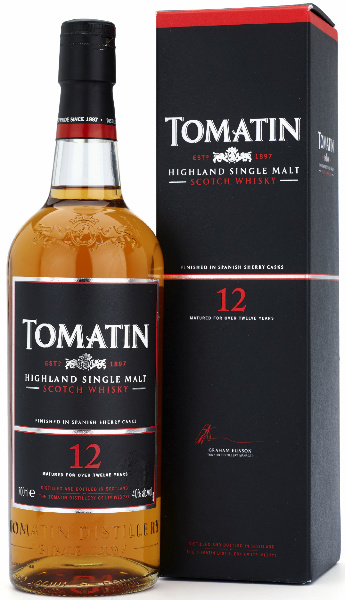
Legacy was made with new oak casks mixed with Bourbon casks. This 12yo is a mixture of Bourbon and Sherry casks, so there should be a lot of difference between the two. Besides this, the 12yo is bottled at 40% ABV, and Legacy gets three points more, 43% ABV.

Color: Ochreous gold (Chewbacca golden hairdo).
Nose: Creamy and alcoholic. Leafy and quite woody. Hints of Sherry mustiness and just a little bit of soap. Estery and thick. It smells chewy (how is thát possible), as if you could sink your teeth into this one, (do I detect a meaty touch?). Lots of vanillin from the cask, toasted cask and toast (bread). Behind the creamy vanilla a lot of sweetness (anticipated).

Taste: Thick and actually pretty good. Woody and spicy, but noting like wood in an old Whisky. To me the wood part is pretty similar to that of the Legacy and especially in the taste both are not worlds apart. The difference being some Sherry casks, that were used for the 12yo. It’s more “dirty”, more spicy and a has a different kind of sweetness to it. Leafy. I can’t imagine the Sherry part being more than 20 to 30% of all the casks used. For a sweeter malt, it is pretty drinkable and certainly well made and it has good balance to boot.

The 40% ABV is all right, it really doesn’t need more than that for the market it targets, but the Whisky doesn’t need it too. I tasted this 12yo a few times at festivals (Thanks Alistair), but never at home in my “controlled” environment. The score didn’t change, but it is nice to concentrate on this for a bit. Again bang for your buck from Tomatin!

Points: 83

Thanks Jennifer for the sample!

Domaine Louis Moreau Chablis ‘Domaine de Biéville’ 2011

After the Chardonnays from Languedoc and Chile, now we return to France for the Mother of all Chardonnays, or maybe the Stepmother of all Chardonnays: Chablis! (the mother being Montrachet).

Domaine de Biéville, located in Viviers, was founded in the 70’s by Jean-Jacques Moreau. The Domaine comprises of one piece of 65 ha, and its orientation is south /south-west. It has a mild climate. Today his son Louis with his wife Anna lead the company (it’s also a wine traders).

Domaine de Biéville has great terroir (former Truffel grounds) and orientation, which often makes it as good as a Premier Cru. The grapes for this wine grow on 40 year old vines (vieilles vignes). By the way this Chardonnay has an ABV of 12%. The website of Louis Moreau is full of Premier Cru and Grand Cru wines, so if this Domaine de Biéville is any good, it is probably safe to say that the rest is even better, or so it should…

Domaine Louis Moreau Chablis ´Domaine de Biéville´ 2011Color: White wine

Nose: Fresh citrussy (lemon) and flinty. Slight hint of meat (beef). Typical Chablis, but a bit dirty, and I like that. It the meaty/gravy bit that does that. The more I nose this, the better it gets. Fruity (hints of apricot) and creamy

Taste: Nice acidity and when that rolls of the tongue, again that fabulous flintyness and depth emerge. Even the dirty part from the nose is here. The nose and the taste match up completely, how’s that for balance. The acidity is quite up front in this one, but a very nice touch to this Chablis is that long into the finish some sweetness emerges. The aftertaste is great. Well made.

Nicely balanced Chablis. Nice acids that play the biggest part in this wine, but hiding after that  is some great meaty dirtiness and of course a typical flintiness. No off notes and for fans of Chablis, well this will come as no surprise. Very easily drinkable and not too complex. Since the acids are quite prominent, this wine can age for a few years more. Recommended with fish, crustations and some cheeses.

Points: 85

Merci beaucoup, Richard!

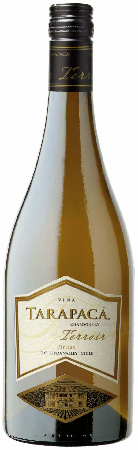
Tarapacá Chardonnay Terroir Piritas 2011

Last time we tried a Chardonnay from Languedoc, made by a Burgundian winemaker. All French thus. This time let’s fly halfway across the world and have a taste of Chilean Chardonnay. This Chardonnay comes from Maipo Valley that has a cool climate, granite soil and is located near the pacific. Like I said before, Chardonnay is an easy grape variety and can be found all over the world.

Viña Tarapacá, as it is called today, was founded in 1874 by Francisco de Rojas y Salamanca. It was then named Viña de Rojas. In 1892 the winery got a new owner, Manuel Zavala-Meléndez and gave it its current name. Today the winery is owned by Chili’s largest matchstick producer!

Tarapacá Chardonnay Terroir Piritas 2011 Color: White wine

Nose: Sweet and fresh, typical Chardonnay. Promises a nice balance between the acidity and the sweetness. Estery, meaty and flinty with a slight floral perfume. Dried apricots and maybe some pear, nectarine and banana. The fruity sweetness is quite thick. Licorice.

Taste: A dirty kind of sweetness. Its acidity is quite raw and different from what I expected, but then again, this is no Chablis. Quite good when it get in the mouth, but the middle and especially the finish are not very strong. The acidity is matched with a slight hint of bitterness which takes away the elegance. It’s a bit like a Roter Vitamin C tablet. This still needs some work.

At first this appears to be a pretty decent Chardonnay, but for me it has more than one rough edge. The sweetness is a little bit strange, and the acids are not refined. Sometimes it can attack you, hidden away behind the initial fruity sweetness. Add to that the hint of bitterness in the finish. Still, it’s pretty good, but not excellent. There ís a lot going on, but to me it almost tastes like a work in progress. We’re on  our way, but not quite there yet. Especially the second part could have been better. The wine has an ABV of 14%.

Points: 77

And yes, this wine was also provided by Richard, muchas gracias!

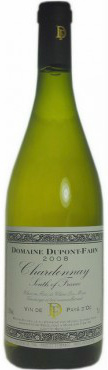
Domaine Dupont-Fahn Chardonnay 2011 Vin de Pays d’Oc Languedoc

While we’re at it, why not try another gem (hopefully) by Michel Dupont-Fahn. This time his Chardonnay from…Languedoc! For those of you who are alarmed, don’t worry, this Chardonnay is well made into the Burgundy style (whatever that is).
Chardonnay is a relatively easy grape variety. It doesn’t need a lot of care, and it does well in a lot of places and terroirs. Therefore the Chardonnay grape can be found all over the world. The wines made with the Chardonnay grape, can be utterly different, just compare Chablis to a Montrachet. Yes both from Burgundy, where Chardonnay is BIG.

The Chardonnay grapes are manually harvested. After pressing and fermentation the wine stays for six to ten months in oak casks. 80% of them are used casks and 20% are newly made casks. This Dupont-Fahn Chardonnay is 13.5% ABV.

Color: White wine

Nose: Light and acidic. Grassy with lime. Small hint of peach. Actually the nose is not very outspoken, yet very fresh. Small hint of new wood. Good balance. Light and flowery. It becomes fruity and slightly vegetal, when it warms up a little bit. Lovely nose.

Taste: Definitely sweeter than expected. Again good balance and the sweetness counterparts the (lemony) acidity very well. Lovely light aperitif wine that also will do pretty well with fish. The fruity sweetness is a bit syrupy, as if a drop of PX Sherry somehow found its way into this wine. Very fresh and lively, and not a lot of wood influence. A little bit of new wood, but nothing bitter.

Easy drinkable and not overly complex. This is a quality wine. Drink young and preferably outside in warm weather. Thoroughly enjoyable. Lovely light quality wine from Languedoc, made by a Burgundy winemaker. Recommended (just like the Dupont-Fahn Cuvée Rosée reviewed earlier).

Points: 84

Thanks again Richard for the wine.

Domaine Dupont-Fahn Auxey-Duresses 2011 Cuvée Rosée Bourgogne

Michel Dupont-Fahn is a wine producer from Burgundy. He makes modern wines like ​​Meursault, Puligny-Montrachet and some other wines. Michel makes modern wines that are meant to drink young.

As rumour has it, some ten years ago, Michel used part of the Pinot Noir harvest to make this Rosé Wine. Dad was not happy! Obviously red Burgundy Wine fetches more money than a Rosé would.

The grapes are harvested manually and quite late, pressed lightly and fermented in oak barrels that previously held, for ten months, Michel’s Meursault.

Color: Pink salmon, grapefruit.

Nose: Fresh, half acidic, citrus fruits, but also a brooding darker meaty element, that funnily enough, makes the whole very elegant. This smells the business! Perfect fruit-perfume nose (strawberries and blood oranges) and some most. There is actually a lot happening here. Fantastic balance.

Taste: Slightly more acidic at first sip, but that quickly is counteracted by some sweetness (not a lot) and a hint of wood. Taste wise it’s more in the vicinity of a red wine (Pinot Noir) than other Rosé wines. It still keeps its refreshing traits (without the tannins). No off notes whatsoever. The sweetness of the Wine that emerges near the finish is of a deep maple syrup nature, very classy! Great as an aperitif, with fish and salads. This goes down nicely, bring on the sun, I say!

I have to admit, I never was a big fan of Rosé wines, probably that so much of these wines are tampered with, or just not good enough. It’s treated as a sort of B-product after red’s and whites. This one however ticks all of my boxes. Maybe from the tasting notes it is not quite clear why I like this one so much, but I find this a real find! At this time by far my favorite Rosé. I know it’s a bit more expensive than the usual suspects, but in my opinion well worth the money. Recommended! By the way, the ABV on this one is 13%.

Points: 86

Thanks to Richard for the Wine!

Aultmore 36yo 1974/2010 (46%, Mo Òr, Bourbon Hogshead #3740, 264 bottles, 500ml)

Here we have an Aultmore from 1974. The one official bottling in the Rare Malts range was also from 1974. Three years ago Douglas Laing bottled a 1974, and even more recently, two bottlings from The Whisky Agency saw the light of day. There is one more by Adelphi, but more about that one later.

Aultmore was founded in 1896 by Alexander Edward who also founded the Craigellachie distillery with Peter Machie in 1891. In 1896, Mr. Edward also owned the Benrinnes distillery. Mr. Edward sold Aultmore to John Dewar’s and Sons in 1923. John Dewar’s and Sons naturally became part of what is today Diageo, but Diageo sold the whole of John Dewar’s and Sons to Bacardi in 1998. Aultmore was built with two stills and two more stills were added in 1971, so this 1974 Aultmore was already made with four stills.

Color: Full gold

Nose: Estery and full. Seems sweet and has a perfect woody touch. Powdery with vanilla, but also some vegetal sourness creeps in, but only in whiffs, it’s not always there. Malty freshness, and the slightest hint of cow-dung, great! This kind of organics in Whisky is the best, look at all those fantastic Brora’s. I really like the complete profile this nose shows me. A great, but toned down or laid back Whisky. It doesn’t shout from rooftops it’s great, but whispers. People who know, will hear it’s call.

Taste: Woody cannabis, and in this case that’s very nice. Sugary sweet, but the “wood” is the taste giver of this malt. Mind you this is not a woody malt. It’s like somehow there is some fruit in here but it isn’t allowed to get out. Medium, slightly disappointing finish, and probably the reduction could have been skipped, since the Whisky shows some laziness. Could have been fuller, if so I’m shure it would have scored in the 90’s. Nevertheless a great Whisky!

One of my favorite Aultmore’s is also from 1974, a bottling by Adelphi, Cask #3739, yes a sister cask! That one yielded only 101 bottles @ 49.6% ABV. Cask #3740 yielded 264 bottles reduced to 46%, so I’m guessing this was a lot higher in ABV (I can’t imagine Adelphi doing a cask share, but you never know). If memory serves me well, this sister cask also has a lot of yellow fruits, cask #3740 lacks. I have a bottle of Adelphi’s 1974 Aultmore, so in the future, that one will be reviewed on these pages too…

Points: 88

Thanks go out to Dirk for handing me this sample some time ago…

Rodenbach Grand Cru (6%, 33 cl)

More than a year ago I reviewed the “Original” Rodenbach and concluded I wouldn’t buy that one anymore since this Rodenbach Grand Cru is so much better. Obviously I had it before. Time to write a review about the “better” Rodenbach. And as I have said before, I like to age almost all of my Belgian beers, and this one is no exception (this time). This particular bottle was aged for another year and a half (past it’s best before date). Before my additional ageing, the beer was aged at the brewery for two years (in oak) and then mixed with young beer. 2/3 old beer with 1/3 young beer.

At this point I must give off a little warning. I was in a beer shop recently and overheard some clients talking about pouring the big bottle of Rodenbach Vintage down the toilet. The big bottle should even be better than this Grand Cru, but this is a Flemish Red Brown beer, it’s acidic, so probably not for everyone…

Color: Dark red with brown foam

Nose: Fresh, with a small hint of stale beer, acidic. Sour cherries. Deep brooding yeast (not a lot of it though). Spices. With time some raisins and plum, which adds another layer of depth to the beer. Beef jerky? wow!

Taste: Yeah! Acidic, but with extreme depth. Too much to comprehend all at once. This is so much better than the original Rodenbach! Cherries in alcohol (the alcohol taste is enhanced by the extra ageing). Black cherries, and even some other red fruits from the family of berries. Definitely a favorite of mine. Extremely refreshing. One bottle is not enough. Long finish, with a lemony finish.

This beer takes ageing very well, but also warnings are given off no to age for too long. I just don’t know how long too long is. Ageing add’s  a lot of complexity. Can’t wait to try a vintage Rodenbach! I’m pretty sure I won’t be pouring that one down the toilet!

Points: 88