Back in the lion’s den. Purely by coincidence, I recently reviewed some independent bottlings of Whiskies produced by distilleries of Pernod Ricard, like Braeval and Glenallachie, but also some official bottlings like Strathisla 12yo, Aberlour 16yo and The NAS Glenlivet “Founders Reserve”, but also the nice AS Glenlivet from 1983. Now another Glenlivet, and yet another new NAS bottling. I promise you, I’m not sponsored!
The Glenlivet Founders’ Reserve is the new entry-level Glenlivet that replaces the 12yo in Western European and some other markets except Asia and the US. This NAS Oloroso Nàdurra replaces the nice AS 16yo Nàdurra. I know, that one came from Bourbon casks only. However, the 16yo Nàdurra will be replaced by three new versions that will be called…Nàdurra. The first one of these is this NAS Oloroso version, soon to be followed by a NAS Bourbon version and later a NAS Peated version. Since both Aberlour and The Glenlivet have the same owner, everybody will be comparing this one to the Aberlour A’bunadh.
 Color: Dark gold, copper gold. Quite light for first fill Oloroso.
Nose: Lots of vanilla, new wood and a bit sharp on first sniff. A breath of fresh air. Spicy wood and pencil shavings. I get a lot of pencil shavings recently, maybe its me. I don’t get a lot of A’bunadh like first fill Sherry though. Considering the color and also the way this smells, my guess would be that this Oloroso Nàdurra is younger than its sister from Aberlour. A’bunadh is pretty up front dark first fill Oloroso, and this Nàdurra is not. It really does smell like a young whisky with nice notes of wood without being overpowered. Nice, but not complex. The wood also gives off light chocolaty notes and some sweetish vegetal bits. Old bar of soap (from the eighties) and some licorice. For me a lot of these aroma’s come from wood and obviously from the Sherry used, but for me they aren’t typical Oloroso aroma’s you get from an A’bunadh. Wood it is then.
Taste: Sweetish and a bit hot. New wood, tree sap with its light bitterness. Coffee and licorice, a nice combination. Hints of glue. Prior to swallowing a hint of, and here it comes again, pencil shavings. We all have chewed on a pencil some time during our lives haven’t we? Italian laurel licorice. When the wood, a slight hint of bitterness, and the high strength pass, not a very big finish remains. Youth?
A young Whisky that by itself is a study of wood and not of Sherry. It isn’t complex, slightly underdeveloped, and it surely does have its moments. I guess the choice is right to think of this Whisky a bit as a Whisky for…well, not entry-level, by bottling this with a high ABV. Another good decision is probably that it is made to another profile from the A’bunadh which is more about the Sherry itself, whereas this is more about the wooden cask itself. Nice stuff, helped along by the high strength and spicy wood. Younger and really no match for A’bunadh in my opinion, but those who like higher strength Whisky, but found the A’bunadh too much, will disagree. (maybe a comparison to Benromach 10yo 100 proof would have been a better angle…)
Points: 83
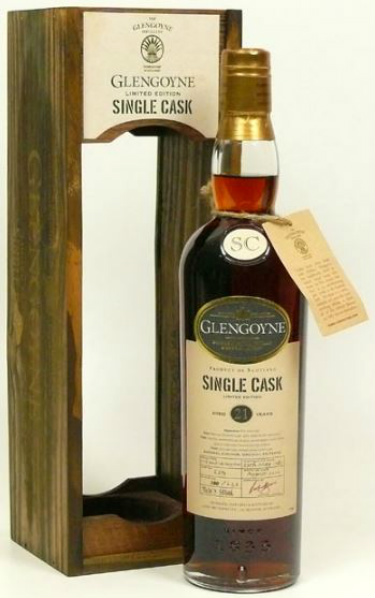 Color: Mahogany brown.
 Color: Light gold with a pinkish hue. Sherry all right.
 Color: Light gold
 This year the little brother of the four sisters Tempest was born. Both the Tempest’s and the Devil’s Casks are small batch releases, and hopefully are with us to stay. Each batch of the tempest counts at least 12.000 bottles and of this first Devil’s Casks only a measly 6.000 bottles were made.
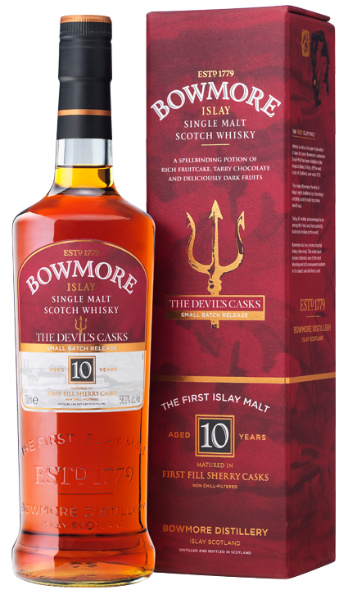 Color: Copper brown.
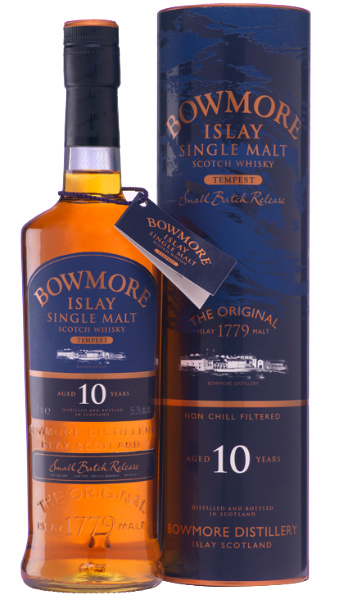 Color: Gold
 Color: Full gold.
 Color: Orange copper gold.
 Day three brings us another one of the three 2006 Mashman’s Choices. The first one being an American Oak Sherry Butt from 1991. That one was pretty special, since Sherry once only came from Spanish or French oak Butts and Puncheons. Today’s Glengoyne, comes form another atypical Sherry Cask, a Hogshead. No information this time where the wood came from. Charlie Murray, the Mashman, said the following about his choice:
 “In my time at Glengoyne this is the best cask I have tasted. Heaps of complexity with no rough edges.”
 Next up Glen Scotia, also a first on these pages. Glen Scotia hails from Campbeltown, once a big place for whisky with regional status (again). Try to imagine a place that has almost 30 distilleries working at one time in the 19th Century. Not so long ago this Glen Scotia was the ‘other one’ from Campbeltown after the well-known Springbank. Today Springbank makes also Longrow and Hazelburn. And from the same owners the recent ‘addition’ that is Glengyle Distillery (Kilkerran). Let’s say that Glen Scotia is the only Campbeltown distillery not owned by the people of Springbank. Owner today is Loch Lomond Distillery Co. and the place is fairly run down. When the distillery was mothballed in 1994, the staff of Springbank restarted intermittent production in 1999, not to lose the regional status of Campbeltown. A status lost eventually, but eventually reinstated.
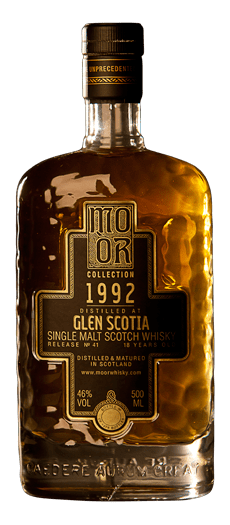 The distillery was founded in 1832 by the Galbraith family. For one reason or another the label on the bottles state 1835. Lots of changes of ownership during the years and even some closures in 1928 and 1984. Since 2000 Loch Lomond has taken over Glen Scotia and runs the distillery with its own staff.
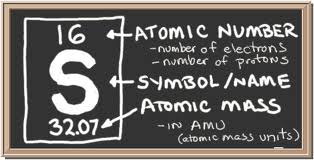 I was asked to keep an eye out for sulphur in this one. It’s there slightly on the nose (as a burning match). But it is more pronounced on the palate (the bite here comes not only from the wood, but also from the sulphur. Usually there is some sulphur in Sherried Glen Scotia’s. Lots of it in a 1991 Cadenheads offering if I remember correctly. It’s there on the palate and even more so in the finish (late). Is it ruining the balance or the palate? Does it disturb me? No, it’s some kind of good sulphur. it’s somewhat hidden. It’s there but not in the usual obvious way. That happens sometime, that’s why I called it good sulphur. Still, overall there isn’t a lot of sulphur in this one, so don’t worry. And hey, sulphur is good for the skin!
 Master Quill